
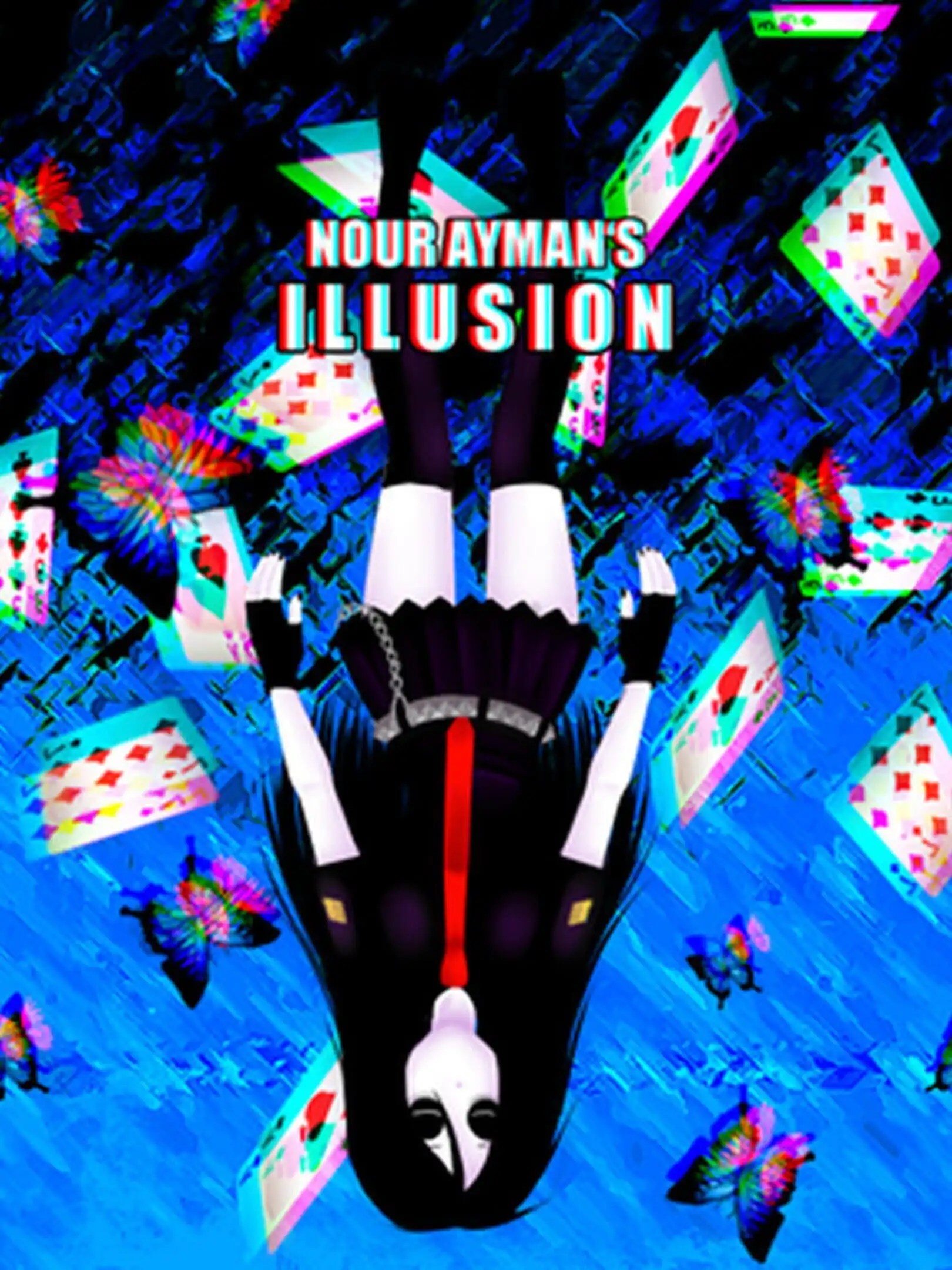
Summary
- Release Year: 2018
- Genres: Adventure, Indie
- Platforms: PC (Microsoft Windows)
Neon rain slashes the screen the moment you boot up Illusion, and it never really lets up. For the next eight to ten hours you’ll squint through holographic smog, chase glitching silhouettes across rooftop gaps, and second-guess every line of dialogue that comes out of anybody’s mouth—including your own. Illusion isn’t the first game to ask “what is real?” but it’s one of the few that lets the question infect every mechanic, every menu, and, most importantly, your own impulse to reload a previous save just to see if the world changes when you do. The result is a tight, cerebral cyber-noir that punches well above its indie weight class and, for twenty bucks, delivers one of 2024’s most pleasantly surprising adventures.
Story and Setting – The City That Lies Back
The marketing line—“a city where everything is possible, but where it could also be fake”—sounds like a tag-team of clichés until you realize the developers baked that exact tension into every system. You play as “Query,” a courier who transports raw memories on clandestine jobs in the vertical megacity of Elysia Heights. When a routine drop-off ends with a client’s brains fried on the pavement and a data cube stuck to your cortex, every faction in town—from corporate spooks to underground DJs—wants a piece of what’s in your head. Cue the classic “find out who set you up before the city eats you alive” plot, but with a wrinkle: the cube can rewrite perceptions in real time, meaning people, objects, even entire streets can phase in or out depending on how you deploy it.
Illusion’s narrative triumph is that you never quite feel safe inside your own skull. Hallucinations aren’t pre-baked cut-scenes; they’re dynamic overlays that can swap out billboards, re-skin NPC faces, or change a club’s soundtrack to a song that hasn’t been written yet. Walk down the same alley twice and you might overhear two entirely different conversations that both, unnervingly, reference choices you haven’t made yet. The script is razor-sharp, peppered with hard-boiled one-liners and data-stream poetry that feels like William Gibson ghost-wrote a season of Mr. Robot. By the finale—there are four wildly different conclusions based on who you trust and how much you lean on the cube’s power—you’ll question not just the plot but your own complicity in getting there.
Gameplay – Deception as a Core Mechanic
Illusion plays like a spiritual mash-up of Disco Elysium’s dialogue dives and Observer’s environmental horror, but with a tactical layer built around manipulating perception. Think of it as a point-and-click adventure that occasionally detours into immersive-sim territory. You collect “imprints,” essentially saved states of the city, then hot-swap them to solve puzzles or talk your way past checkpoints. Need to slip into a corp tower? Load the imprint where the lobby guard never saw you, swap back to the current timeline after you’ve taken the elevator, and presto—security footage shows you were never there. The catch is every imprint ages, accruing “data drift.” Let it drift too far and key NPCs forget you exist, locking off side quests and even romance subplots.
Combat, mercifully, is not a gun-fest. When confrontation pops up the game drops into a turn-based “Negotiation” mode where you literally weaponize facts, rumors, and forged evidence. Each piece of intel you’ve gathered becomes a card you can slot into a three-round argument grid. It sounds dry on paper, but figuring out that you can pair the mayor’s tax records with a deep-fake sex tape to shut down a blackmail attempt is the kind of sick brilliance that had me cackling at 2 a.m. Boss fights are multi-stage logic duels where the battlefield itself mutates based on which memories you’ve chosen to believe. One late-game encounter had me arguing with a version of myself who insisted none of this was happening; the only way to win was to deliberately lose the first two rounds, letting the impostor overwrite the arena, then play a hidden “existential paradox” card that crashed the level geometry and dropped us both into a secret subway line. It’s heady, but the game telegraphs solutions just enough that you rarely feel stranded.
Visuals and Audio – Neon-Soaked Mood Bomb
Illusion runs on Unreal 5, and the devs squeeze every last drop out of Lumen and Nanite. Reflections on wet asphalt look borderline photoreal until you realize they’re reflecting a skyline that isn’t there in the “real” timeline. Character models skew stylized—elongated limbs, holographic tattoos that stutter like bad streams—which sells the idea that flesh itself is negotiable. Texture pop-in is minimal on a mid-tier SSD, and I never saw a single crash in 12 hours of play, a feat some AAA studios can’t manage at triple the budget.
The soundtrack deserves its own paragraph. Composer Rhea Voss fuses vaporwave with glitch-hop and traditional noir brass, then layers in binaural whispers that fade in and out with your health state. Wearing headphones is practically mandatory; directional audio cues tell you when an imprint is about to decay, and the way certain bass lines drop out right before a jump scare is pure Pavlovian sadism. Voice acting is stellar across the board, especially the protagonist’s dry internal monologue that can be toggled between “stoic,” “snarky,” or “existentially exhausted,” each flavor subtly altering puzzle solutions and NPC responses.
Performance and Tech – Rock Solid on PC, Console Ports Incoming
I tested on a Ryzen 5 5600X/RTX 3070/16 GB RAM at 1440p. With DLSS on Quality I averaged 82 fps, 68 fps during the rain-drenched marketplace set-piece, and a rock-steady 60 fps locked when I capped it for my aging monitor. Load times sit under six seconds thanks to smart level streaming. The devs list an RTX 2060 / RX 6600 as minimum, and the game scales down to 1080p30 on a laptop 1650 Ti with only a few volumetric sacrifices. A PS5 and Xbox Series version drops next quarter; preview footage shows dynamic 4K/60 with possible ray-traced reflections toggled on, but the studio has been quiet about a Switch port, likely due to memory-bandwidth constraints for the imprint-swapping tech.
Replay Value – Four Endings, Infinite Doubt
A single playthrough clocks in at eight hours if you mainline the story, 12 if you poke the delightfully weird side content (karaoke in an android strip club; underground chess with a sentient vending machine). Replay incentive is high: mutually exclusive questlines mean you literally can’t see everything in one run, and the New Game+ option lets you keep your collected imprints while cranking data-drift to “masochist,” forcing you to re-validate every environmental change. One ending can only be reached if you never use fast travel, another requires you to fail every Negotiation encounter on purpose. Trophy hunters are looking at a minimum of three runs for the platinum, but the writing is sharp enough that I dove straight back in instead of feeling obligated.
Pricing and Value Proposition – Mid-Budget, High Reward
At $19.99 on Steam and EGS, Illusion lands in that sweet spot where you’re paying craft-cocktail money for a genuinely memorable evening. The closest comparisons—The Forgotten City, Genesis Noir, Disco Elysium—all launched at $30 or above. Given the production polish and the fact that the devs have already outlined two free DLC chapters (“Ghost Wire Love Letter” and “The Zero Sum Candidate”), it’s hard to argue against day-one purchase unless you’re philosophically opposed to anything that isn’t 200 hours of open-world checklist. Game Pass and PS+ Extra availability hasn’t been announced, but the publisher hinted at a six-month console exclusivity window, so PC is the place to be for now.
Criticisms – Not Every Trick Lands
For all its cleverness, Illusion sometimes trips over its own ambition. The imprint-swapping interface is slick early on, but juggling four timelines in the late game produces menu bloat; more than once I accidentally overwrote the wrong save and had to replay a 20-minute stretch. A mid-story antagonist who exists only in AR space is fascinating conceptually, but the fight drags on three phases too long, recycling the same argument cards. And while the script is mostly top-tier, there’s an edgy side character named “Glitch Barbie” whose dialogue feels like 2014 Twitter snark—funny for two lines, cringe by line ten. None of these issues derail the experience, but they do keep the game from the near-perfect 9/10 tier.
Final Verdict – Believe the Hype, Question the Source
Illusion is the rare cyberpunk game that understands the genre isn’t about chrome limbs or neon skylines—it’s about alienation in societies too slick for their own good. By weaponizing that alienation into actual gameplay, the devs deliver an adventure that feels both cerebral and immediate. It’s smart without being pretentious, stylish without relying on empty aesthetic, and mechanically experimental in ways big-budget studios won’t risk. If you’ve ever wanted to wander through a city that lies to your face and then hands you the tools to lie right back, this is your jam. Score: 8.3/10—boot it up, trust no one, and remember: just because the city is fake doesn’t mean the goosebumps are.
Review Score
8.5/10
Art
Cover Art

Screenshots


