
Summary
- Release Year: 2018
- Genres: Indie, Role-playing game (RPG)
- Platforms: Linux, Mac, PC (Microsoft Windows)
Turn-Based Champion: The Couch-Co-op RPG That Wants to Ruin (and Save) Your Friendships
There’s a moment—usually around the fourth minigame—when the room goes quiet except for the click-clack of Joy-Cons and the low hum of concentration. Someone just landed a perfect parry in the reflex-based “Wizard’s Duel,” stealing the last star needed to level up their mage. The player in last place eyes the turn order, realizes they’re about to fight the turn-ending boss, and quietly mutters, “Guys, I swear I’m not the traitor.” Welcome to Turn-Based Champion, the indie party-RPG hybrid that fuses Mario Party chaos with old-school JRPG tactics and somehow keeps the whole thing upright on a razor-thin balance of luck and skill. It’s not perfect, but it’s the most fun we’ve had yelling at each other since the pandemic.
What Exactly Is Turn-Based Champion?
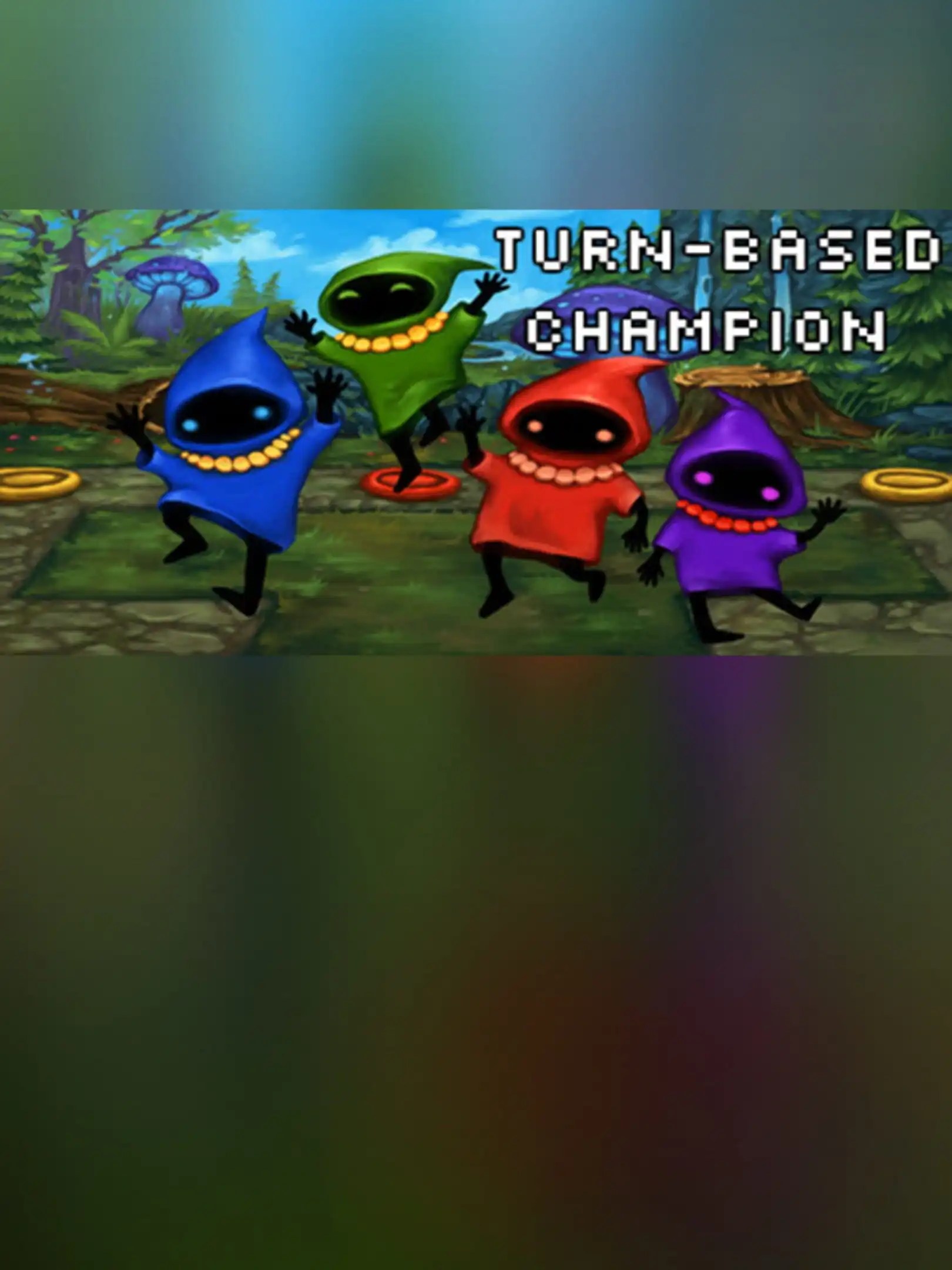
At first glance, Turn-Based Champion looks like a board-game overlay: four cute chibi avatars hop along a linear track of event spaces, landing on loot, traps, shops, or the headline attraction—minigames. Winning those minigames earns “Stars,” the universal currency that buys gear, revives, and crucial “Champion Points.” Every three rounds the party is hurled into a turn-based boss brawl where Champion Points translate directly into action dice, special moves, and party-wide buffs. Beat the boss and you keep your loot; lose and everyone drops a chunk of hard-won Stars. After five bosses (or roughly 90 minutes on default settings) the player with the most Champion Points claims the eponymous title, a gaudy golden crown, and bragging rights until the next session.
The genius twist is that every minigame outcome ripples into the RPG layer. Land a critical hit in the timing-based “Potion Brew-Off” and your whole party starts the next fight with Regen 2. Flub the memory game “Runes of Recall” and the boss enters with a free shield. It’s party-game stakes with raid-boss consequences, and it keeps even eliminated players leaning forward.
Gameplay: Minigames Meet Min-Maxing
Turn-Based Champion ships with 30 minigames, playable with single Joy-Cons, full Pro Controllers, or even touch on the Switch handheld. They’re split across five genres—reflex, rhythm, memory, physics, and deception—and difficulty scales with round number so the first bout is never more complicated than a Quick-Time Event while the finale can feel like a Platinum encounter. None of the games are revolutionary on their own, but the contextual pressure of knowing a lost mini could cost everyone the run elevates them. Our group’s standout was “Loot Luge,” a downhill sled that has you tilt the controller to steer between gem clusters and explosive barrels while your teammates scream contradictory directions.
Once the minigame phase ends, the game pivots to a classic JRPG menu. Each player brings two abilities—mapped to face buttons—plus an ultimate that charges as you take damage. Positioning is Final Fantasy-style 2D, but enemies telegraph next-turn AoE, encouraging timed blocks and party synergies. The warrior can taunt to redirect an AoE away from a glass-cannon mage; the rogue can spend Champion Points to “steal” a buff off the boss and give it to an ally. The system is simple enough that newcomers grasp it in a round, yet deep enough that our third run already produced speed-kill strategies and heated debates over optimal DPS rotations.
Progression and Buildcraft: Deeper Than It Looks
Between bosses you’ll visit the Bazaar, a shared shop where items are on timers—hesitate and the rogue can swipe the last “Flame Tongue” sword right before your turn. Gear is class-specific but Stars are universal, leading to tense negotiations: “If I front the cash for your revive, I get the next two chests.” Persistent progression is intentionally light; each character has a meta-level that unlocks alternate ultimates and palette-swap skins, but every match resets stats so a level-1 mage can outplay a level-20 tank with smart minigame wins. The approach keeps the playing field level across skill tiers without removing that dopamine hit of long-term goals.
Solo, Online, and Local: Where the Modes Shine and Stumble
Solo mode replaces human opponents with surprisingly competent bots and a branching “gauntlet” of optional challenge modifiers (think Hades Pact of Punishment). It’s a fun score-chaser but lacks the social pressure that makes the game sing. Online play supports both private lobbies and ranked 1v1 “duels” where you and an opponent alternate minigames and CPU-controlled boss fights. Netcode is rollback-based and held up in our U.S.-to-Europe test with only the occasional micro-stutter. Still, the magic is local: four people on a couch, passing chips, shouting accusations, and high-fiving when the underdog clutches the final boss with 2 HP left.
Visuals and Audio: Saturday-Morning Charm
The art direction lands somewhere between a modern mobile RPG and a Cartoon Network short. Characters are bobble-headed and expressive, bosses are screen-filling without obscuring telegraphs, and spell effects pop like confetti. On Switch handheld the resolution hovers around 720p with rare drops in the busiest ultimates; docked mode hits 1080p 60 fps with minor fan noise. The soundtrack bounces between chiptune minigame anthems and orchestral boss themes, though after the 20th run you’ll probably mute the former. A nice touch: each minigame has its own musical “sting” that seamlessly transitions into the boss arena, creating a cohesive flow that other party games often miss.
Performance Across Platforms
Turn-Based Champion launched simultaneously on Nintendo Switch, PC (Steam), and Game Pass. The PC build offers ultrawide support, uncapped framerates, and hot-swappable keyboard or controller inputs per player. On a Ryzen 5 3600 + GTX 1660 we averaged 144 fps at 1440p with occasional dips to 110 during multi-hit spell spam. Crucially, cross-platform lobbies are supported, so our Switch-owning editor could join a Steam party with no fuss beyond an eight-digit room code. Cloud saves are enabled on all platforms except Xbox, where Microsoft’s infrastructure handles it automatically.
Replay Value: The “One More Run” Loop
Because every session randomizes the minigame order, item lineup, and boss modifiers (think “takes 50% more magic damage but reflects 20% physical”), no two runs feel identical. After your first clear you unlock “Nightmare” difficulty—harder telegraphs, harsher penalty for death, and a final superboss that demands near-perfect minigame performance. Our group averaged three hours per session across two weeks and still encountered new boss-minigame pairings. Developer Pixel Piston has already roadmap-teased seasonal “gacha” events that add three new minigames and one boss per quarter, all free.
Microtransactions and Pricing: The Good Kind of Free
The base game is $19.99 on every platform, undercutting Mario Party Superstars by half and throwing in cross-play to boot. Cosmetics are earnable through gameplay only; there is no cash shop, no battle pass, no paid DLC on the horizon. The only monetization in sight is a physical collector’s edition with an art book and a plush “Star” that, frankly, we kind of want.
What Could Be Better
- Minigame Balance: A handful of reflex games heavily favor players with wired Pro Controllers over single-Joy-Con users. A post-launch patch is promised but not yet dated.
- Accessibility: There are colorblind filters but no remapping for one-handed players, and subtitle backgrounds are inconsistent.
- Story: There’s a breezy framing narrative about a tavern hosting interdimensional trials, but it’s window dressing. If you crave Fire Emblem-level melodrama, look elsewhere.
- Endgame Grind: Unlocking the final set of hero skins requires 100 wins; that’s a tall order unless you’re addicted to the ranked 1v1 scene.
The Verdict
Turn-Based Champion doesn’t reinvent either the party or RPG wheel—it welds them together, polishes the rims, and adds a turbocharger. The result is a riotous hybrid that’s easy to learn, tough to master, and endlessly replayable with the right group. Solo players will find a light but competent roguelite; online warriors can chase leaderboard glory; but the game’s true arena is the living room, where friendships are tested, junk food is consumed, and legends are born at 1 a.m. For twenty bucks, that’s an absolute steal.
If you’ve been waiting for a reason to dust off extra controllers—or an excuse to yell “I NEED HEALS” at your best friend—Turn-Based Champion is the party-RPG mash-up you didn’t know you needed. Just remember: when the mage promises they’ll “totally share the next chest,” trust nothing. Champion Points are temporary, but betrayal is forever.
Review Score
8/10
Art
Cover Art

Screenshots


