Summary
- Release Year: 2019
- Genres: Indie, Simulator, Sport
- Platforms: PC (Microsoft Windows)
- Developers: Mana Games
- Publishers: Mana Games
Tennis Elbow Manager 2 – The Hidden Gem That Lets You Live the Coach Life
(And Why It’s the Best Tennis Sim You’ve Never Played)
I still remember the first time I fired up Tennis Elbow Manager 2. The splash screen is a pixelated close-up of a racket, the menu music sounds like royalty-free elevator jazz, and the default resolution hasn’t changed since 2012. “This is it?” I muttered. Sixty hours later I was yelling at my 17-year-old Czech prodigy for blowing a match point in the Roland-Garros juniors, scouting a 14-year-old South Korean serve-and-volleyer at 2 a.m., and practicing the dark art of re-training a one-handed backhand without wrecking the kid’s morale. Tennis Elbow Manager 2 (TEM2) is the most addictive, deepest, and jankiest sports-management sim on PC. If that sentence doesn’t scare you off, keep reading—this thing is crack for tennis nerds.
What It Actually Is
TEM2 is a pure-management offshoot of the long-running Tennis Elbow series by one-man French studio Mana Games. You don’t swing the racket; you sign the paychecks. You start as an unknown coach with 250K in the bank, a generic academy logo, and a single-player ranked somewhere around world No. 1,000. Your job: turn that nobody into a Grand-Slam champion, keep the cash flow positive, and maybe, just maybe, build a stable of players that dominates the ATP or WTA. The entire pro tour is simulated year-round—about 3,500 male and female players aging, improving, retiring, and breaking hearts across 400+ tournaments, from ITF Futures to the big four majors. The database is so complete that I once looked up a real-life qualifier I saw lose in the first round of the Australian Open and found his virtual doppelgänger with eerily similar stats.
The Loop That Eats Nights
Every in-game week follows the same rhythm:
- Check the rankings.
- Decide who’s playing where.
- Book flights, hotels, and practice courts (prices scale by country).
- Set training schedules—clay boot camp before Paris, grass-court net drills before Wimbledon, etc.
- Simulate the tournament or watch ball-by-ball in 2D top-down view, barking instructions from the sideline.
- Deal with the fallout—fatigue, injuries, press conferences, parents who think you’re overworking junior, and sponsors who want a top-20 ranking by October or they’re pulling the shoe deal.
It sounds like spreadsheet hell, but the magic is in the granularity. Each player has 42 visible attributes plus hidden traits—”Clutch,” “Dropshot Lover,” “Choker,” “Iron Will”—and 25 different surfaces affect bounce speed and footwork differently. You can tell your guy to “go for winners down the line on big points” and he’ll actually try it, then watch in horror as he balloons a backhand long and the commentator code spits out: “What was he thinking? That’s a low-percentage shot!” It’s Football Manager levels of storytelling, except the players have names you can’t pronounce and the ball kids run on court between points.
New in TEM2: Coaching Licenses and Staff
The sequel adds a proper coaching skill tree. You begin with a Level 1 license that caps how high you can train a player’s stats. Earn coaching points by fulfilling objectives—win a Challenger, develop a top-100 junior, keep a client injury-free for six months—and you unlock tiers that let you push a forehand past 80 % or teach a kick serve that kicks. You can also hire physios (reduce injury risk), mental coaches (lower “Stress” trait), and even a data analyst who emails you scouting reports like: “Opponent’s 2nd-serve return stats on clay are 12 % below tour average—stand in and crush.” It’s the first time a tennis game has made analytics feel sexy.
Injury System: Sadistic but Brilliant
TEM2’s injury model is ripped straight from hospital nightmares. Every joint—shoulder, elbow, lower back, knees, ankles—has a wear value. Hard courts chew knees; grass is easier on joints but brutal on the sliding hip. Push a teenager through three consecutive tournaments and you’ll watch his “Patellar Tendon” bar creep into the red. Ignore it and suddenly your 19-year-old phenom is out nine months with micro-fractures. The only cure: expensive surgery that nukes your bank balance and drops his Speed by three points. The first time it happened to me I rage-quit; the second time I started scheduling like Rafael Nadal’s physio.
Training: From Generic to Genius
Old TEM let you pick “Global, Physical, Technical.” TEM2 splits sessions into 16 micro-categories—topspin forehand, slice backhand, net reflexes, mental toughness, even “Footwork on High Balls.” You can create custom weekly plans and save them as templates. I have one called “Clay Monster” that hammers topspin, stamina, and drop shots; another called “ServeBot” that maxes out flat serve, power, and height. The UI is still just text dropdowns, but the feedback loop is delicious: watch a 130-km/h serve jump to 185 after one off-season and you feel like a proud parent.
Match Engine: Ugly, Unpredictable, Unbeatable
The 2D match viewer won’t win graphics awards—players are tiny stick figures sliding around a green rectangle—but it captures tennis flow better than any big-budget attempt. Ball physics are calculated at 1,200 Hz; spin, court friction, and wind all matter. You’ll see moonball rallies on clay, 200-km/h ace fests on indoor hard, and absurd net skirmishes at Wimbledon. You can shout “Stay Back” or “Approach Net” at any point and the AI adapts on the fly. The commentary is robotic but weirdly quotable (“He’s painting the tramline like a graffiti artist!”) and the crowd gasps feel earned. After 500 hours I still scream at unforced errors because the game respects momentum: one sloppy game and the AI runs away with the set.
Economy: Where Dreams Meet Bankruptcy
Prize money is true to life, which means even a first-round loser at a 15K Futures earns $156—barely enough to cover the flight. You survive on sponsorships: local shop, regional energy drink, national bank, then the holy grail—global apparel brand that pays $250K a year plus free rackets. But sponsors have clauses: maintain top 150, play at least one exhibition in Asia, don’t lose in qualies three weeks in a row. Fail and you pay a 20 % penalty. I once had to choose between keeping my No. 1 player healthy or flying him to Shanghai for a meaningless promo event. I risked it, he twisted an ankle on court, missed the US Open, and I lost $400K in endorsements. The game teaches you why real-life agents drink.
Mod Support: The Secret 500-Hour Sauce
The Steam Workshop is stuffed with real-life megapacks—ATP/WTA logos, 3D kits, player photos, even crowd audio that plays “SI-MON! SI-MON!” when Gilles Simon walks on court. You can import the entire 2024 tour calendar, including the new ATP Next-Gen Finals in Saudi. A heroic modder named Sam.Sam re-rates every teenager on the planet so Carlos Alcaraz has 90+ potential at age 18. With mods, TEM2 becomes a living database you can sim decades into the future. I’m currently in 2042; a Norwegian 6’10” kid just broke the 300-km/h serve record and my original coach avatar is now 65 years old with gray hair. The save file is 400 MB and I back it up to the cloud like family photos.
Graphics & Sound: Functional, Not Fancy
Let’s be blunt: TEM2 looks like a Flash game from 2009. Menus are resizable but still use Windows 95 drop shadows; player faces are passport-photo JPEGs smacked onto polygons. Sound is limited to crowd hum, ball thwacks, and chair umpire calls (“Time, thank you”). There’s no licensed music, no Hawkeye replays, no 4K sweat beads. And yet, after an hour you stop noticing because the information density is intoxicating. Every screen is crammed with numbers that matter: RPM on topspin, break-point conversion, 2nd-serve points won, W/L on indoor hard in deciding sets. It’s the anti-EA: gameplay over presentation, forever and always.
Performance & Accessibility
The game runs on a potato. My eight-year-old laptop with integrated graphics holds 120 FPS during matches. RAM usage sits under 400 MB. You can sim an entire year in under five minutes on a modern CPU. Color-blind support is limited—no custom ball color yet—but fonts scale and you can remap every hotkey. A recent patch added cloud saves and Steam Deck verification; I’ve played on a plane with the track pad and it felt weirdly natural.
Multiplayer: Niche but There
You can run a 32-human online league where each coach controls one player and you advance one week every 24 hours. Discord groups organize drafts, trade deadlines, and banter threads. It’s the digital equivalent of fantasy tennis mixed with pen-and-paper role-play. Latency is irrelevant because you only upload results, not real-time inputs. My league lasted eight months; the winner was a French guy who trained a defensive counter-puncher nicknamed “The Wall.” We still meme about his 56-shot rally in the Davis Cup final.
Pricing & Editions
TEM2 retails for $34.99 on Steam, no microtransactions, no season pass. A free demo lets you play one month of in-game time with no save restrictions. The developer, Emmanuel Rousseaux, has released 25 patches since early access 2021, every one free. Compare that to AAA sports titles that charge $69.99 plus $40 year-one DLC and the value proposition is absurd. If you wait for a sale it drops to $19.99, but honestly, you’ll get 200 hours before you even blink; that’s 10 cents per hour of entertainment.
Verdict: Should You Buy It?
Buy Tennis Elbow Manager 2 if you:
- Have ever stayed up until 3 a.m. tweaking training schedules in Football Manager or Out of the Park Baseball.
- Know what “clay-court specialist” actually means.
- Want a sports game that respects your intelligence and your wallet.
- Don’t care that the graphics peaked with Pong.
Skip it if you:
- Need ray-traced sweat or licensed stadiums.
- Expect online ranked lobbies with quick-time events.
- Hate reading numbers on screens.
For everyone else, TEM2 is the most engrossing sports sim on PC. It’s the only game where you can turn a gangly 15-year-old from Sri Lanka into the world No. 1, suffer a heartbreaking five-set loss in the Wimbledon final, and immediately start planning next year’s off-season like a true tennis tragic. The highs are Everest, the lows are Mariana Trench, and the replay value is infinite. I’ve poured 600 hours into it and I still get goosebumps when my guy wins his first ATP 500. At $35 it’s the best bargain in gaming—unless you value sleep, relationships, or sunlight. In that case, stay far, far away.
Review Score
8/10
Art
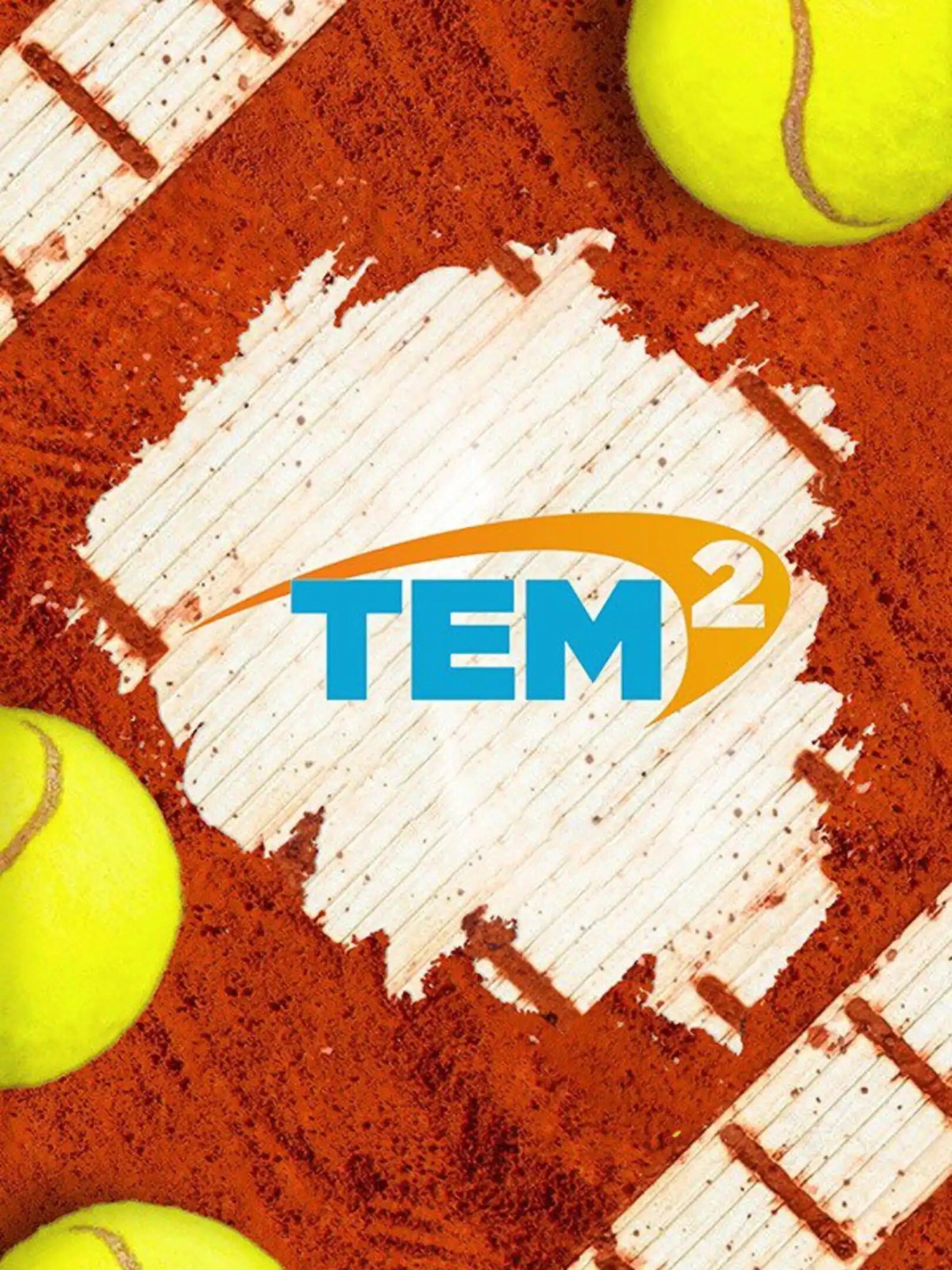
Cover Art

Screenshots


