Summary
B.I.T – short for “Biont Integrated Toolkit” – is the kind of game that sounds like homework on paper: a top-down, twin-stick roguelite where you juggle inventory tetris, DNA crafting, and permadeath. In practice, it’s one of the most compulsive “just one more run” experiences I’ve had this year. Developer Flowdrop’s debut looks like a forgotten PS1 cult hit that’s been cryogenically frozen and re-animated with modern netcode and a razor-sharp sense of progression. After 30 hours and more failed runs than I care to admit, here’s the full breakdown on whether B.I.T deserves a slot on your SSD.
Gameplay: Gun-Play Meets Gene-Splicing The elevator pitch is simple: you’re a disposable drone sent into a procedurally generated derelict starship to exterminate a mutagenic outbreak. Each deck is a self-contained biome—med-bay, engine room, hydroponics, etc.—with its own enemy ecology and loot table. You clear rooms, hoover up crafting scrap, and dive deeper until you either reach the AI core or die trying.
The twist is that every weapon, mod, and even your own body is built from collectible DNA fragments. Kill a razor-winged Strigoi? It might drop a wing segment that, when socketed into your cybernetic frame, grants a mid-air dash. Stack three of them and you unlock gliding. Slot in a reptile myocyte and your reload animation becomes a muscular tongue that whips magazines back into the magwell, shaving off precious milliseconds. The system looks bewildering at first—imagine Resident Evil 4’s attache case fused with Path of Exile’s skill tree—but the drag-and-drop interface is snappy, and the game pauses while you tinker, so there’s no pressure to gene-edit under fire.
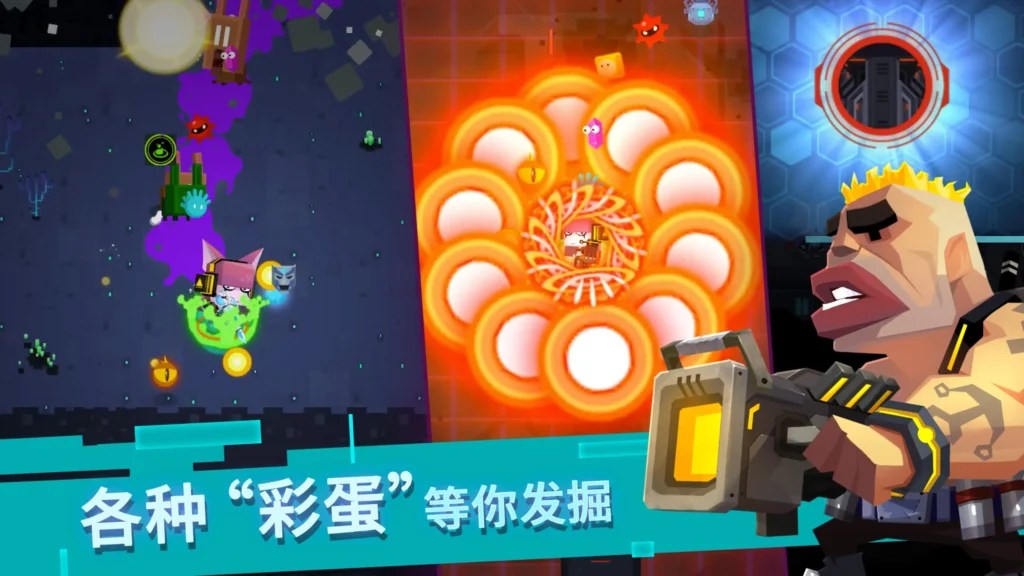
Gunplay feels weighty in the best twin-stick tradition. Starting pistols are pea-shooters, but within two or three rooms you’ll cobble together something obscene: a hollow-point SMG that leeches health, or a rail-gun that over-penetrates and ricochets off walls, clearing entire corridors with one charged blast. Enemy design is tuned to counter power creep. Early grunts explode into acid puddles that melt your freshly crafted rifle in seconds; later, stealth hunters disable your HUD and force you to rely on muzzle flash and audio cues. It’s tough but rarely unfair—when you die, you know exactly which mod combo you should have unearthed sooner.
Meta-progression comes via “genetic memory.” Between runs you plug harvested DNA into a holographic family tree that permanently unlocks starting archetypes—Tank, Scout, Viral—each with bespoke slots and stat biases. You can also spend “data residuals” (souls, basically) to increase drop rates for specific body parts, letting you target a build rather than praying to RNGesus. It scratches the same itch as Hades’ mirror upgrades, but with more mad-scientist flavour: who doesn’t want to grow a scorpion tail that injects armor-melting venom?
Story & World-Building: Environmental Horror, Not Exposition Dumps B.I.T isn’t here to rival Disco Elysium’s prose. Logs are short, sardonic snippets from the ship’s now-dead crew: “Note to self—stop hiring scientists who worship entropy.” The overarching narrative—rogue AI, corporate malfeasance, yada yada—serves mainly as scaffolding for atmosphere. Where the game excels is environmental storytelling. Each biome has distinct colour grading and ambient audio: hydroponics drips with condensation and distant frog chirps, while the engine deck rumbles with bassy turbines that drown out your footsteps. The result is a world that feels cohesive without wasting your time with 20-minute cutscenes. After all, you’re here to shoot aliens, not read Shakespeare.
Graphics & Art Direction: PS1 Nostalgia Without the Eye-Strain Flowdrop calls the aesthetic “low-poly 2.5D,” which translates to crunchy quadrilateral enemies and pixelated gore that would make a Nintendo 64 blush. The crucial part: everything is readable. Enemy weak-points glow neon yellow, loot crates emit a faint hum, and your crosshair dynamically changes colour when line-of-sight is broken. On OLED handhelds like the Steam Deck or Lenovo Legion Go, the high-contrast palette pops spectacularly. I played mostly at 1080p/120 fps on an RTX 3060; the frame-rate never dipped below 100 even when the screen filled with bouncing projectiles and dismembered tentacles. Older GPUs should have zero trouble: the minimum spec lists a GTX 950 for a reason.
Performance & Polish: The Real Test for a Roguelite Crashing 40 minutes into a promising run is the fastest way to sour a player forever. In 30 hours, I experienced two hard locks—both during the victory shuttle extraction, so no progress was lost. Flowdrop pushed a hotfix within 24 hours of both reports on the Discord, and the public roadmap promises daily patches for the remainder of launch week. That’s the kind of post-launch support that separates indie darlings from abandonware. Load times are sub-three seconds on an NVMe, and the online co-op (up to three players) uses rollback netcode that felt indistinguishable from local play with friends on the US East servers.
Replay Value: The Numbers Game There are seven biomes, but you’ll see three to four per run, Dark Souls-style. Each biome has two alternate bosses, and DNA drop tables shift depending on the day’s “mutational rotation,” so a Tuesday run can feel drastically different from Thursday’s. Unlocking every archetype took me roughly 18 hours; finishing the secret “true ending” added another 10. After that, daily challenge modifiers—think “explosive corpses” or “reverse-recoil”—keep the grind spicy. If you measure value in $/hour, B.I.T’s $24.99 asking price is already cheaper than a large pizza and will last you longer.
Accessibility & Approachability Roguelites live or die on whether newcomers feel they’re making headway. B.I.T includes an Assist Mode that lets you toggle 30 % damage reduction, start with a free revive, or even freeze the level timer so you can scour every corner for parts. Purists can ignore it, but for players with motor issues or limited gaming time, it’s a welcome olive branch. Controls are fully remappable, and colour-blind filters are available for protanopia, deuteranopia, and tritanopia. Text is crisp at 1080p and scales cleanly to 4K, though UI elements occasionally overlap in ultrawide resolutions—another known issue on the roadmap.
Sound & Music: Ear-Worms You’ll Hum Between Runs The soundtrack fuses industrial breakbeats with Vangelis-style synth pads. Each biome has its own leitmotif that dynamically layers in intensity as your combo counter climbs. Headshot a flying enemy and the snare adds an extra hit; chain five melee kills and a distorted guitar joins the fray. It’s a clever way to make you feel like a mix-master of carnage. Weapon audio is equally crunchy: shotguns sound like you’re snapping redwoods in half, while energy weapons charge with a menacing build-up that makes clearing a room feel like popping bubble wrap. Wear headphones if you can; positional audio is crucial when hunters cloak.
Micro-transactions & DLC: None, Nada, Zero There is no store, no season pass, no cosmetic hats shaped like sea-urchins. Flowdrop has stated all post-launch content—new biomes, bosses, and Archetypes—will be free updates, funded by sales of the base game and eventual console ports. In 2024, that’s practically a super-power.
Steam Deck & Handheld Play The game is verified for Steam Deck and runs at 60 fps on medium settings with 6–7 hours of battery life if you cap TDP to 10 W. Text is legible on the 7-inch panel, though you’ll want to bind the gene-splicing menu to one of the rear paddles for convenience. On the ASUS ROG Ally, I squeezed 90 fps at 1080p native, but the fan noise ramps up like a jet turbine—nothing a good pair of ANC headphones can’t solve.
What Could Be Better
- Inventory bloat: by biome 4 you’re drowning in DNA chunks. A “dismantle all duplicates” button is desperately needed.
- Boss variety: the alternate bosses are palette-swaps with one new attack. Here’s hoping future updates add completely new monstrosities.
- Narrative payoff: the secret ending is more “aha” than heartfelt. A little emotional catharsis after 30 hours wouldn’t hurt.
- Ultrawide UI: as mentioned, text overlaps in 21:9. A minor gripe, but worth noting for the sim-rig crowd.
Bottom Line: Should You Buy B.I.T? If you bounced off Returnal because you can’t commit two-hour uninterrupted windows, or loved Dead Cells but wished you could craft your own absurd weapons, B.I.T is the perfect middle ground. It’s deep without being opaque, challenging without sadism, and respects your time with snappy 20-minute runs that can still spiral into epic 60-minute marathons if you’re on a heater. At $24.99, it’s an easy recommendation for fans of roguelites, DIY experimentation, or anyone who wants to glide through a derelict spaceship with a scorpion tail and a rail-gun that fires homing saw-blades. B.I.T might stand for “Biont Integrated Toolkit,” but after 30 hours it really means “Brilliantly Intoxicating Time-sink.”
Review Score
8.5/10
Art
Cover Art
Screenshots