
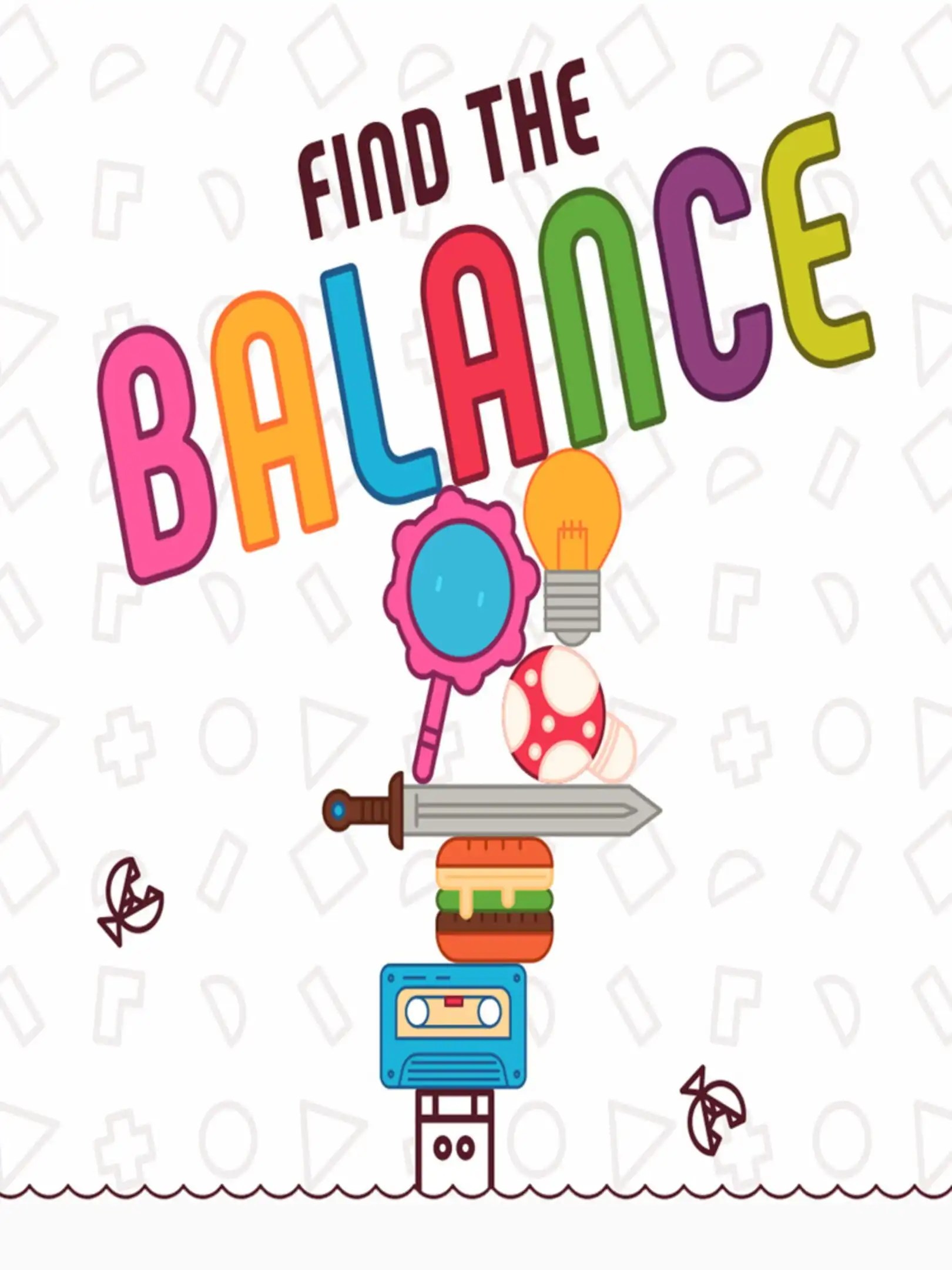
Summary
- Release Year: 2017
- Genres: Indie, Puzzle
- Platforms: Android, iOS, Mac, Nintendo Switch, PC (Microsoft Windows)
- Developers: Digital Melody, Wastelands Interactive
- Publishers: Wastelands Interactive
Find the Balance sounds like the sort of title a marketing exec scribbles on a white-board during a brainstorm for “chill mobile games.” In practice, it’s closer to a late-night Jenga session with Looney Tunes props and the sadistic glee of a physics engine that’s had one too many espressos. Originally a 2018 mobile puzzler from Digital Melody (the Polish studio behind Tap Tap Trillionaire and Surfingers), it has quietly hopped over to Steam and consoles, stacking up enough micro-addictions to earn a cult following. After balancing bananas on dinosaur bones for the better part of a week, here’s the long and short of whether this wobbly tower deserves room on your home screen—or in your Steam library.
1. Core Concept: Tetris Meets Jenga, Minus the Panic Attacks
The elevator pitch is stupidly simple: you’re given a random assortment of objects—everything from rubber ducks to battle axes—and one by one you must rotate, cut, and drop them onto a platform to build the tallest, sturdiest tower possible. Once an object touches the base you can’t move it again; the goal is simply to survive the increasingly wonky physics long enough to clear a height line. No shot-clock, no combo meter, just you versus gravity and your own questionable spatial intelligence. It’s the antithesis of twitch gaming: a slow, methodical, “oh-one-more-try” loop that feels engineered to hijack your commute.
2. Gameplay Loop: Zen, Then Sudden Disaster
Each level starts serene. Gentle ukulele strums play while you nudge a skull three pixels left, eyeing a banana’s center of gravity. The first three pieces lock in satisfyingly, the tower barely quivers, and you’re lulled into a rhythm. Somewhere around the eighth object, the pile develops a drunk swagger. By the tenth you’re rotating a grand piano 47 degrees, whispering “please, please” as it lands, only to watch the whole thing pirouette like a ballerina on a bouncy castle. The collapse is always spectacular—melons catapult, axes clang, the screen shakes—and you immediately restart because, surely, you can fix that one fatal overlap. Rounds last anywhere from thirty seconds to five minutes depending on your perfectionism, making it the perfect “waiting-for-the-kettle” game.
3. Controls & Interface: Built for Thumbs, Friendly to Mice
On mobile you drag with one finger, rotate with a second, then swipe a dotted line to sever the rope and drop. The swipe-to-cut feels tactile; there’s a tiny haptic buzz the instant you slice, which never gets old. The Steam port maps rotation to the scroll wheel and cutting to right-click, and while it lacks the tactile joy of a touchscreen, the precision is welcome on bigger, heavier objects. Both versions offer an optional “ghost” outline that projects where the piece will land—great for kids, but purists can kill it for an extra score multiplier. Cross-save isn’t officially supported, yet levels are short enough that swapping devices isn’t painful.
4. Physics: Chaotic, But Fair (Mostly)
Digital Melody uses Unity’s 2D physics with some behind-the-scenes tweaks. Density, friction, and center-of-mass feel internally consistent: you’ll quickly learn that the baguette is basically a floppy lever, while the anvil is your anchor. Still, randomness is deliberately baked in—objects spawn with subtle rotation jitter, meaning no two attempts play out identically. Purists may scoff at the “luck” factor, yet it’s what keeps the game from becoming a sterile optimization puzzle. You’re improvising, not engineering.
5. Content: 100 Levels, 5 Themes, Infinite High-Score Chase
The campaign is broken into five themed worlds (Pirate, Prehistoric, Halloween, Medieval, Sci-Fi) each with twenty handcrafted levels. The layouts never change, but the object queue is semi-randomized, so replays stay fresh. Three bonus objectives per stage—use all pieces, reach gold height, and zero wobble for five seconds—push perfectionists to master every scenario. Beyond that, an endless mode lobs an infinite stream of oddities at you until the inevitable avalanche. It’s here the game finds real longevity; my current tower record is 42.8 meters and I’m itching to crack 43.
6. Difficulty Curve: A Slow Climb, Then A Cliff
For the first 30 levels you’re coasting. Somewhere around the midway mark the game introduces moving platforms, wind gusts, and slippery ice surfaces. The final world adds gravity anomalies: pieces suddenly weigh half as much, meaning your tried-and-true anchors now bounce like balloons. It’s brutal, but checkpoints every five levels prevent you rage-deleting the app. If you’re the type that 100-percented Getting Over It, you’ll feel right at home.
7. Graphics & Personality: Saturday-Morning Whimsy
The art direction is crisp, colorful, and meme-ready. Every object is rendered with thick black outlines and soft gradients, giving the game a storybook pop. Backgrounds are parallax-heavy—drifting pirate ships, volcanoes, neon cities—yet never distract. Tiny cosmetic touches sell the charm: when a piece settles, it emits a faint sparkle; when the tower leans past 15°, your little avatar (chosen from 24 unlockable skins) covers its eyes in horror. Performance is rock-solid on an iPhone 11 and ran at 240 fps on a mid-tier RTX 2060 setup. Battery drain on mobile is modest; thirty minutes cost me about 7%—ideal for commute play.
8. Sound & Music: The Ukulele That Launched 1,000 Naps
The soundtrack leans hard into acoustic whimsy. Expect gentle guitar plucks, marimbas, and the occasional glockenspiel. It’s pleasant but repetitive; after two hours I flipped it off and listened to a podcast, which the game kindly supports via background audio. Sound effects are punchy—each object type carries a distinct timbre. Dropping the rubber chicken produces a rubbery squeak; the sword gives a satisfying shing! It’s ASMR-adjacent and perfect for TikTok clips, explaining why the game blew up briefly on that platform.
9. Progression & Monetization: No Paywalls, Plenty of Hats
The mobile version is free-to-play with two monetization hooks: a one-time $3.99 “Premium” upgrade that removes ads and doubles coin gain, and optional cosmetic loot boxes purchased with soft currency. Coins unlock new avatar skins and trails; none affect gameplay. Ads are voluntary: watch one for a second chance after collapse or skip entirely. Steam asks $4.99 upfront and includes all cosmetics unlocked through regular play. No season pass, no FOMO—refreshing in 2024’s landscape of endless battle passes.
10. Social Features: Leaderboards & Shareable Replays
Every run auto-records as a 30-second GIF. One button uploads it to Twitter, Reddit, or Discord. Global leaderboards reset weekly, segmented by platform, and a clever “challenge code” lets you send a specific object seed to friends—think daily Wordle for wobbling towers. It’s lightweight but effective; the Discord community is already trading 50-meter ghost seeds and speed-run strats.
11. Steam vs. Mobile: Which Version Should You Buy?
- Mobile: Best for touch, perfect for commutes, free entry point.
- Steam: Bigger screen, better for precision, no ads, all cosmetics unlocked faster, but you pay upfront.
Cross-platform leaderboards mean you’re never locked out of the competition. If you’re strictly a PC gamer, wait for a sale; it hits $1.99 every major Steam festival.
12. Educational Angle: Stealth STEM
Believe it or not, my 9-year-old nephew spent an afternoon figuring out that placing the triangular cheese wedge base-down stabilizes floppy objects. Teachers have embraced the game for basic physics demos—center of gravity, leverage, friction—all without the liability of real anvils. There’s genuine learning under the goofy antics, though the game never moralizes about it.
13. Bugs & Rough Edges
I ran into three soft-locks on PC when rapidly alt-tabbing during cut-scenes; the mobile build occasionally mis-reads a two-finger rotation as a cut, ending runs prematurely. Both issues are rare and quickly patched—developer support is active on Discord with updates roughly every six weeks.
14. Replay Value: 7/10
Once you’ve conquered all 100 levels and topped the leaderboard, the only reason to return is chasing centimeters in endless mode or speed-running campaign stages. The lack of user-generated levels hurts longevity, but weekly challenge seeds keep die-hards engaged. I clocked 14 hours before feeling sated—more than most $5 puzzlers.
15. The Verdict: Worth Your Time, Worth Your Money
Find the Balance is the gaming equivalent of a fidget spinner: simple, oddly soothing, and inexplicably hard to put down. It won’t dethrone Portal 2 or Baba Is You in the physics-puzzle pantheon, but it nails the “one-thumb, one-brain” sweet spot that mobile gamers crave and PC players secretly love. The fair monetization, charming presentation, and bite-sized sessions make it perfect for commutes, classrooms, and coffee breaks alike. Minor control niggles and a repetitive soundtrack keep it from true greatness, but for the price of a fancy latte you’ll get more grins per minute than most AAA season passes manage in a season.
If you enjoy tower-building, physics tomfoolery, or just need something to keep your hands busy during Zoom calls, Find the Balance deserves a spot in your library. Just don’t blame us when you’re still muttering “one more piece” at 2 a.m., watching a watermelon teeter on a single pixel of dinosaur jawbone.
Review Score
7.5/10
Art
Cover Art

Screenshots


