
Summary
- Release Year: 2015
- Genres: Adventure, Platform, Role-playing game (RPG), Strategy
- Platforms: Nintendo Switch, PlayStation 3, PlayStation 4, PlayStation Vita, Xbox One
- Developers: Ubisoft Montreal
- Publishers: Ubisoft Entertainment
Aurora’s journey begins with death. One moment you’re the restless daughter of an Austrian duke; the next you’re plummeting through stained-glass darkness into Lemuria, a fairy-tale continent where the sun has been stolen, the stars are dying, and every line of dialogue is sung in rhyming couplets. It’s a premise that could collapse under the weight of its own whimsy, yet Child of Light: Ultimate Edition never once loses its balance. Nine years after the original launch, this compendium—bundling the base game and seven DLC packs—remains one of the most confident, cohesive, and flat-out beautiful RPGs you can buy on any modern platform. At a current street price of under ten bucks on sale, it’s also one of the easiest recommendations I can make in 2024.
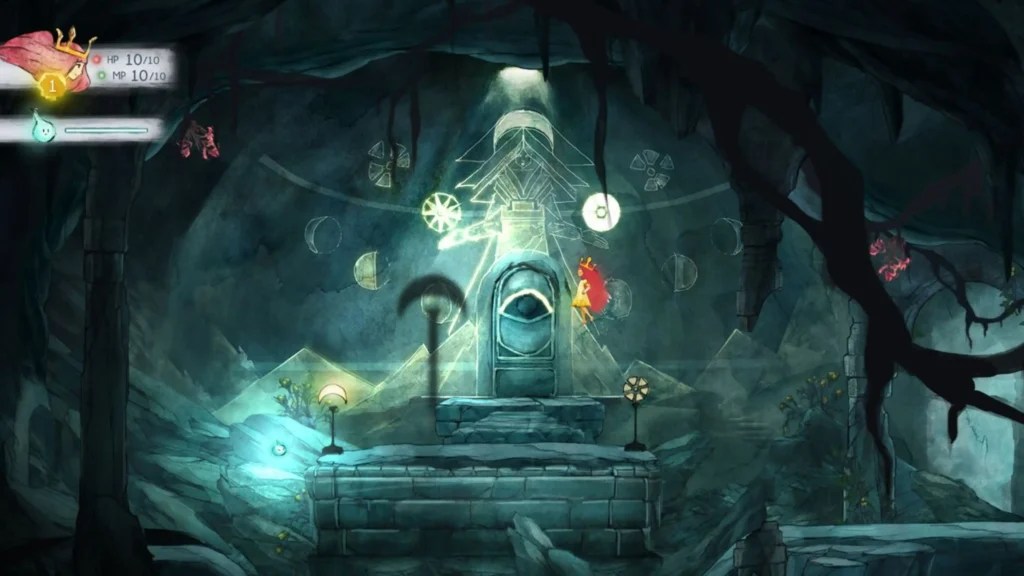
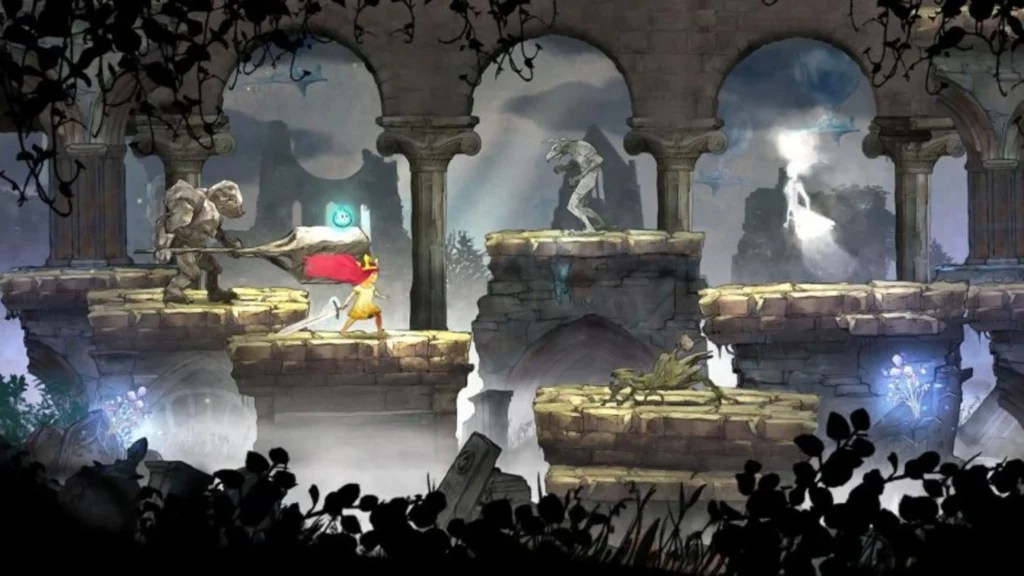
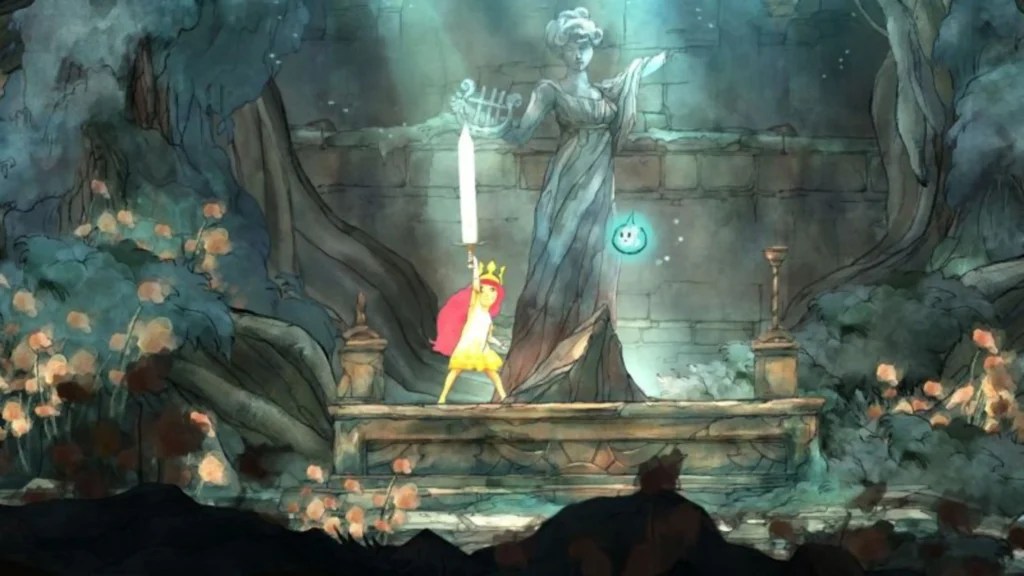
The first thing that hits you is the art. Ubisoft Montreal built Lemuria entirely in the UbiArt Framework, the same engine that powers the modern Rayman titles, and every frame looks like a watercolor paused mid-brush-stroke. Forests drip with cobalt moss; castles crumble in gradients of rose and lavender; moonlight pools on marble like liquid mercury. On Switch’s portable screen the visuals shimmer; on an OLED in handheld they’re downright hypnotic. Resolution holds rock-steady at 1080p docked/900p handheld, and the Ultimate Edition adds a subtle CRT-style scan-line filter you can toggle if you want that story-book flicker. Performance is locked 60 fps on every platform except Switch, where minor drops to 55 fps appear only during the most spell-saturated boss fights. In short: this is still one of the best-looking indie-style games ever shipped, and the DLC armor sets—especially the celestial “Stardust” robe—make Aurora look like she stepped out of a Studio Ghibli production of Hamlet.
But Child of Light was never just a pretty face. Under the fairy-tale wrapping lies a rigorously designed turn-based JRPG that borrows the timeline mechanic from Grandia and trims every ounce of fat. Random encounters? Gone. Lemuria’s enemies are hand-placed and respawn only when you want to grind. Turn order is displayed on a living scroll at the bottom of the screen; if you land a hit while an enemy is casting, you interrupt and shove them backward on the bar. Stack enough slows and interrupts and you can “turn-lock” even late-game bosses, but doing so demands tight timing and correct gem load-outs. It’s elegant, fast, and—once you internalize the rhythm—absurdly satisfying.
Combat depth comes from the Oculi system: socketable gems that drop from enemies, hide in treasure chests, or bloom on the backs of giant frogs you’ve just walloped. Rough Rubies add fire damage; Tumbled Sapphires add healing to each strike; combine three Faceted Topazes in the crafting menu and you’ll forge a Princess’ Cut that grants lightning thorns to the entire party. The Ultimate Edition starts you with every non-story Oculi in the game, meaning you can break the curve if you choose. Purists can stash the DLC gems in the inventory and ignore them, but New Game+ runs become delightful playgrounds of elemental chaos when you let yourself experiment. Either way, the system is transparent and deterministic—no gacha, no loot boxes, just predictable alchemy that respects your time.
Speaking of time, a standard play-through clocks in around 12–15 hours; completionists who want every confessional letter, every hidden poem, and every “Golem’s Plight” side quest will push 20. That may sound slight, but the pacing is so tight that I’d rather have these 15 hours than the 80 bloated ones many open-world games demand. New Game+ bumps the level cap to 99, unlocks a nightmare difficulty, and lets you keep your Oculi and skill trees. Run it back with fresh enemy placements and remixed boss patterns and you’ll squeeze another 10 hours without tedium. For parents, commuters, or anyone with a backlog, that’s a goldilocks zone: long enough to feel epic, short enough to actually finish.
Narratively, Child of Light is Shakespeare for the Saturday-morning-cartoon crowd. Every line rhymes, a conceit that should grate after the prologue yet somehow stays charming. Credit goes to writer Jeffrey Yohalem, who uses slant rhyme and enjambment to keep cadences lively, and to a cast that includes a pessimistic jester who speaks only in limericks and a mouse archduke who ends every sentence with “…old chum.” The plot—rescue the sun, overthrow the night—never surprises, but the emotional stakes land because Aurora’s arc is one of grief and autonomy rather than the usual power fantasy. When she finally chooses to return home, the game asks whether escapism can coexist with responsibility, and the answer it offers is nuanced enough to resonate with adults while still being comprehensible to my ten-year-old niece.
Sound design remains a masterclass. Composer Béatrice Martin (a.k.a. Cœur de pirate) blends French chanson with Celtic strings and piano motifs that pivot from wistful to menacing in a single bar. The Ultimate Edition includes a digital soundtrack of 22 tracks—accessible from the main menu—and hearing “Pilgrims on a Long Journey” swell as Aurora takes flight still raises goosebumps. Play with headphones; this is a game whose whispers, crackling torch-fire, and distant harpsichord deserve your full auditory attention.
So what, exactly, does the Ultimate Edition add beyond the soundtrack? Seven packs, most of which are cosmetic or quality-of-life:
- Golem’s Plight: a mid-game side quest that nets you an optional golem companion and a unique two-handed sword. It’s a 45-minute detour with some of the funniest verses in the game.
- Light & Dark Aurora sets: alternate armor skins that boost light and dark resistance respectively. Fashion is the true endgame.
- Rough, Tumbled, and Faceted Oculi packs: 30 high-tier gems right out of the gate. Useful for second play-throughs, overpowered on a first.
- Stardust Pack: a robe, a crown, and a sigil that increase XP gain. Great if you want to out-level the story and focus on narrative.
None of it is essential, but nothing feels cynical either. You’re getting a curated “easy mode” for replays and some gorgeous new threads without a single $5 rainbow gem in sight.
Value proposition: the Ultimate Edition routinely drops to $4.99 on eShop, PlayStation, Xbox, and PC. Even at the full $20 MSRP you’re looking at a dollar per hour of high-polish JRPG comfort food. There’s no season pass, no cosmetic shop, no “definitive” upgrade next year. Buy once, own forever, including cloud saves on Steam Deck and Switch.
Caveats are minor. The English voice track is still the only one included; if you want French or Japanese VO you’ll need the PC mod scene. The co-op mode—where player two controls Ignicule as a cursor that can heal or slow enemies—is cute but superficial, more toddler-friendly than tactically deep. And while the Switch port is excellent, it lacks the ultra-widescreen support found on PC, where 21:9 monitors turn flight sections into living panoramas.
Yet these are quibbles. In an era where every JRPG wants to be a 100-hour epic, Child of Light proves that compression can be generosity. It gives you a world you’ll want to live in, systems that reveal themselves without YouTube deep-dives, and an ending that—spoiler-free—earns its bittersweet tears. If you missed it in 2014, consider this your second chance to catch a falling star.
Review Score
9/10
Art
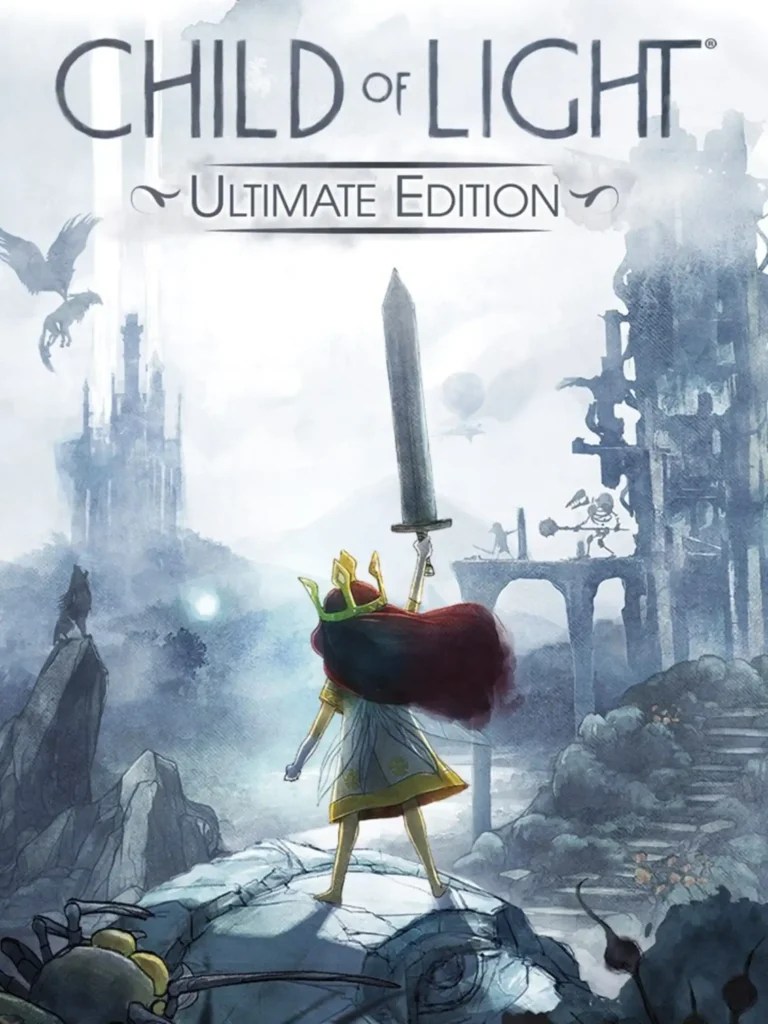
Cover Art
Screenshots