Summary
- Release Year: 2011
- Genres: Adventure, Shooter
- Platforms: PlayStation 3
- Developers: Ubisoft Montreal
- Publishers: Ubisoft Entertainment
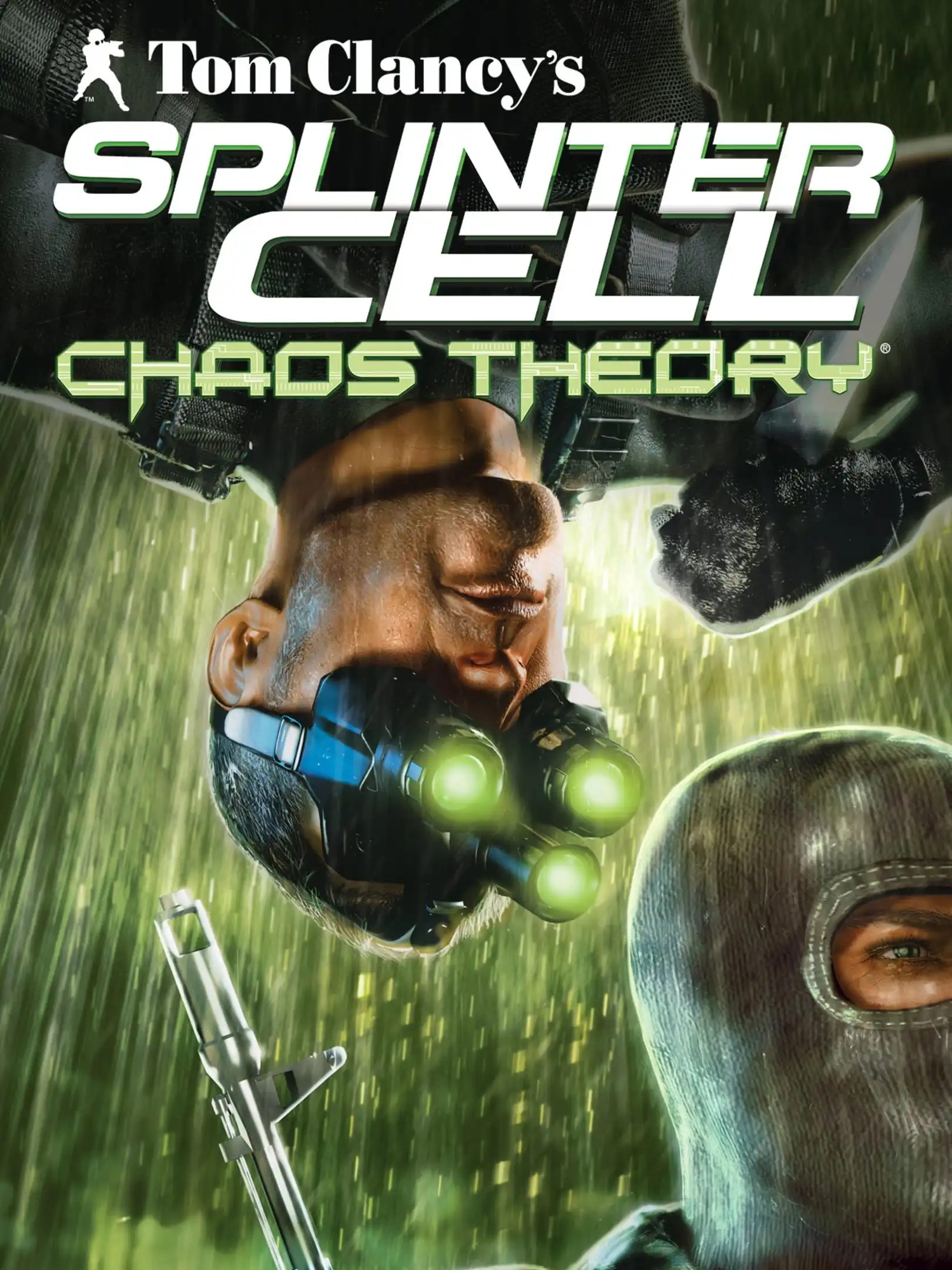
Tom Clancy’s Splinter Cell: Chaos Theory HD is the rare remaster that doesn’t need nostalgia goggles to feel essential. More than fifteen years after the original shipped on Xbox and PC, this 1080p re-release for PlayStation 3 and Xbox 360 still plays like the future stealth games never reached. If you’ve only heard veterans whisper “Chaos Theory is the best one,” believe the hype—then boot it up, because the HD coat of paint makes the experience easier than ever to slip into in 2024.
The Setup: World on the Brink, Goggles On
Chaos Theory’s single-player campaign drops you into 2007 as Sam Fisher, NSA Third Echelon’s irascible super-spy. A rogue North Korean general jams GPS signals, an ultra-nationalist Japanese admiral saber-rattles in the Sea of Japan, and shadowy data-mining company Displace International may be orchestrating the whole mess. What follows is ten missions of globe-trotting intrigue that feels ripped from yesterday’s headlines—cyber-warfare, information laundering, private military contractors, and weaponized algorithms.
The plot is classic Clancy techno-thriller stuff: jargon-heavy briefings, geopolitical chess, and gravel-voiced men saying “We’re out of time, Fisher!” But it’s also self-contained; you don’t need to have played the earlier Splinter Cells to jump in. Each mission is a self-contained sandbox—whether you’re infiltrating a Panamanian bank at dusk or eavesdropping on a black-market deal inside a Tokyo penthouse, objectives evolve mid-level, forcing improvisation that keeps tension sky-high.
Core Gameplay: Stealth Perfected
Chaos Theory didn’t invent the stealth-action genre, but it crystallized it. Every mechanic feeds into player expression:
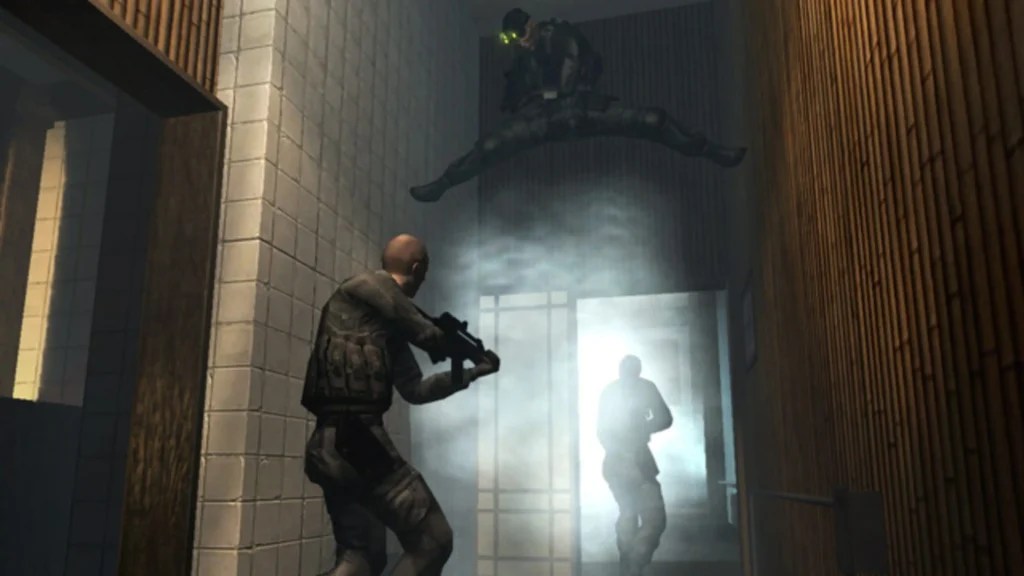
- Dynamic Lighting: Every bulb can be shot out, every switch flipped. The game’s lighting engine—revolutionary in 2005—still impresses. Shadows move realistically across surfaces, forcing constant re-evaluation of cover.
- Sound Propagation: Footsteps echo differently on metal grates versus carpet. You can whistle to lure guards, shoot a light to mask the sound of breaking glass, or disable a generator to drown out your movements. Headphones are practically mandatory.
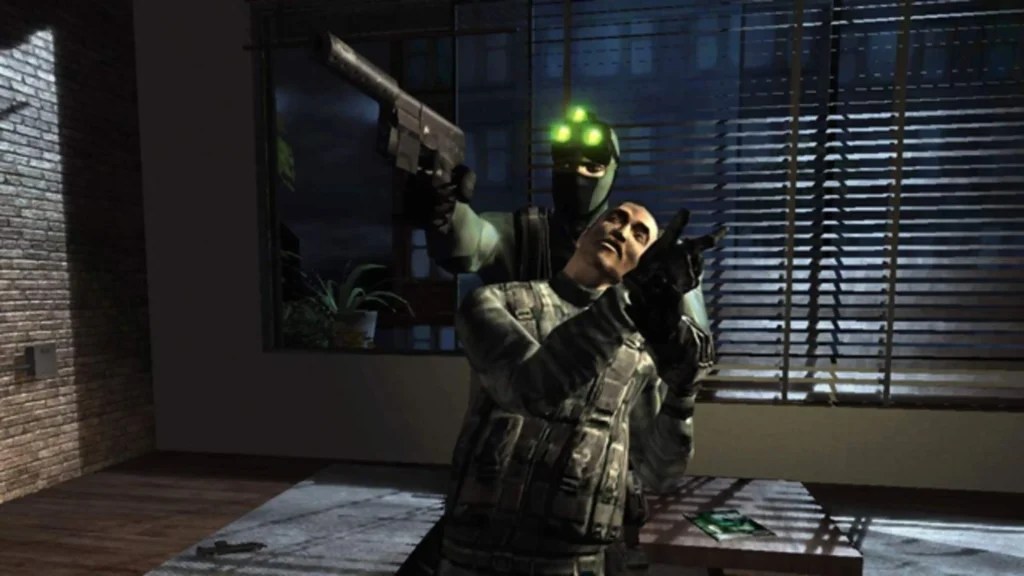
- Non-Lethal Options: Sticky shockers, airfoil rounds, and elbow-to-throat takedowns let you ghost entire missions without a single fatality. Conversely, you can go full wetwork with suppressed rifles and wall-mines. The game never tells you which is “correct.”
- Aggro AI: Guards communicate by radio, notice missing comrades, sweep rooms in pairs, and even get scared if they find too many bodies. Their behavior feels organic rather than scripted, so improvisation is always rewarded.
Mission Design: Sandboxes Before Open-World Was Cool
Unlike corridor-heavy stealth contemporaries, Chaos Theory’s levels are multi-path mini-metros. “Penthouse” lets you rappel from a skylight, sneak through an elevator shaft, or stroll in disguise as a courier. “Battery” strands you in a massive lighthouse during a driving rainstorm—every lightning flash can expose you. Optional objectives like hacking laptops or photographing documents layer in extra tension, because lingering for that last piece of intel might mean a guard discovers your handiwork.
The crown jewel is “Hokkaido,” set in a snow-blown Japanese medical estate. You can cross a rickety bridge, swim through an aqueduct, or crawl through a bamboo forest. Guards patrol with flashlights that dance off the flakes, and the soundtrack—an airy, unsettling piano motif—perfectly matches the hush of fresh snow. It’s arguably the finest stealth level ever built.
Presentation: HD Face-Lift, Timeless Aesthetics
The remaster up-reses textures to native 1080p and adds 4x MSAA on PS3, 2x on Xbox 360. Character models look blocky by today’s standards, but the lighting and rain shaders still sing. The HDR bloom is dialed back compared to the PC mod scene, yet the console versions run at a near-locked 30 fps with rare dips in the largest explosions. Cut-scenes are pre-rendered 720p assets, so expect some softness, but in-game visuals are crisp on modern displays.
Audio remains untouched—thankfully. The 5.1 mix is positional nirvana; you can pinpoint a guard’s jingling keys behind two walls. Amon Tobin’s soundtrack, a glitchy, bass-heavy masterpiece, is dynamic: percussion layers intensify when you’re spotted, then melt away when you vanish back into darkness. Bring a subwoofer.
Controls & Quality of Life
Purists will argue the original Xbox controller is the ideal vessel, but the HD remapping to DualShock 3 and Xbox 360 pads feels natural. Triggers control movement speed, bumpers handle optics, and face buttons cycle gadgets. The only wrinkle is the lack of pressure-sensitive buttons on PS3, so gently opening a door defaults to a hold-QTE rather than analog push. It’s a minor concession.
Mid-level checkpoints are generous, and the save-anywhere function returns for perfectionists. Loading times on SSD retro-consoles are under ten seconds, a huge improvement over the original DVD spin-ups.
Co-Op: Two Agents, One Playbook
The remaster includes the full two-player cooperative campaign—four bespoke missions that dovetail with the main story. You and a partner share night vision, boost each other over fences, and perform tandem sniper shots. Coordination is everything: one agent can create a distraction by turning off lights while the other slips behind a guard for a synchronized knockout. Split-screen is sadly absent, but online play over PSN or Xbox Live still functions as of 2024 (community lobbies are small but active on weekends).
Competitive Multiplayer: Spies vs. Mercs (Kinda)
The original game shipped with the iconic asymmetrical multiplayer. Sadly, Ubisoft did not port it to the HD edition due to server architecture headaches. If you crave the cat-and-mouse brilliance of spies in third-person versus first-person mercenaries, you’ll need to fire up the PC version or track down a vintage Xbox. It’s the remaster’s single biggest omission.
Longevity & Replay Value
Each mission is scored on stealth, bodies left, and objectives completed. Leaderboards foster speed-running and ghost runs. Because enemy patrols are semi-randomized, no two replays feel identical. Throw in multiple difficulty modes—Hard disables save-anywhere, while Expert removes the on-screen reticle—and you’ve got a stealth playground that can devour dozens of hours.
Collectibles like NSN laptops and hidden dead drops unlock development videos and concept art. Trophies/Achievements are fair, requiring only two full playthroughs for the platinum/1,000 GS, making it a satisfying weekend hunt.
Pricing & Platform Availability
Chaos Theory HD launched at $20 on PSN and Xbox Live Arcade, and it still hovers around that price digitally. Physical PS3 copies are scarce in North America, but PAL regions saw a retail disc. Backwards compatibility on Xbox Series X|S via the 360 version offers auto-HDR and stable 60 fps in legacy mode, arguably the slickest way to play today. PS3 emulation on PC (RPCS3) can hit 4K/60, though you’ll wrestle with controller prompts.
The Verdict: Worth Your Time in 2024?
Absolutely. Chaos Theory HD is a masterclass in systemic stealth design that remains unmatched outside of PC niche titles like Dishonored 2 or Hitman 3. The lack of competitive multiplayer stings, but the campaign and co-op represent 12-15 hours of white-knuckle espionage that rewards patience and creativity. At $20 or less, you’re buying a front-row seat to the genre’s high-water mark.
If you’ve grown weary of open-world bloat or hand-holdy tutorials, Sam Fisher’s minimalist toolset and open-ended levels will feel like a palate cleanser. Slip on the goggles, kill the lights, and remember: the fewer bullets you fire, the louder the impact.
Review Score
9/10
Art
Cover Art

Screenshots