
Summary
- Release Year: 2016
- Genres: Racing, Strategy
- Platforms: PC (Microsoft Windows)
- Developers: ZQGame
- Publishers: ZQGame
FinalFire is the newest free-to-play armored-warfare sim to roll out of China, and it arrives with one hell of a flex: every major Chinese MBT from the humble Type-59 to the cutting-edge Type-99A, rendered in obsessive detail and dropped into 32-player slugfests that span the planet’s most tank-friendly real estate. After 30 hours of track time, multiple garage upgrades, and more HEAT shells to the face than I care to count, the big question remains: is FinalFire a must-enlist tour of duty or just another grindy F2P treadmill wrapped in olive drab? Let’s pop the hatch and find out.
The first thing veterans of War Thunder or Armored Warfare will notice is how instantly familiar everything feels. WASD for hull movement, mouse for turret traverse, range finders, penetration calculators, and a handy armor viewer straight out of the modern-tank playbook. But FinalFire isn’t a copy-paste job. The devs at FireTech Studio have tuned the ballistics model to sit somewhere between War Thunder’s sim seriousness and World of Tanks’ chunky arcade snap. Shell drop is pronounced past 800 m, but you won’t spend five minutes calculating wind speed. A well-aimed APFSDS round will still punch through a T-72 Ural’s turret cheek at 2 km if you know the weak spot, yet the game’s generous aim-assist circle keeps the skill ceiling approachable for newcomers. The result is a sweet spot that rewards map knowledge and weak-spot targeting without demanding a degree in terminal ballistics.
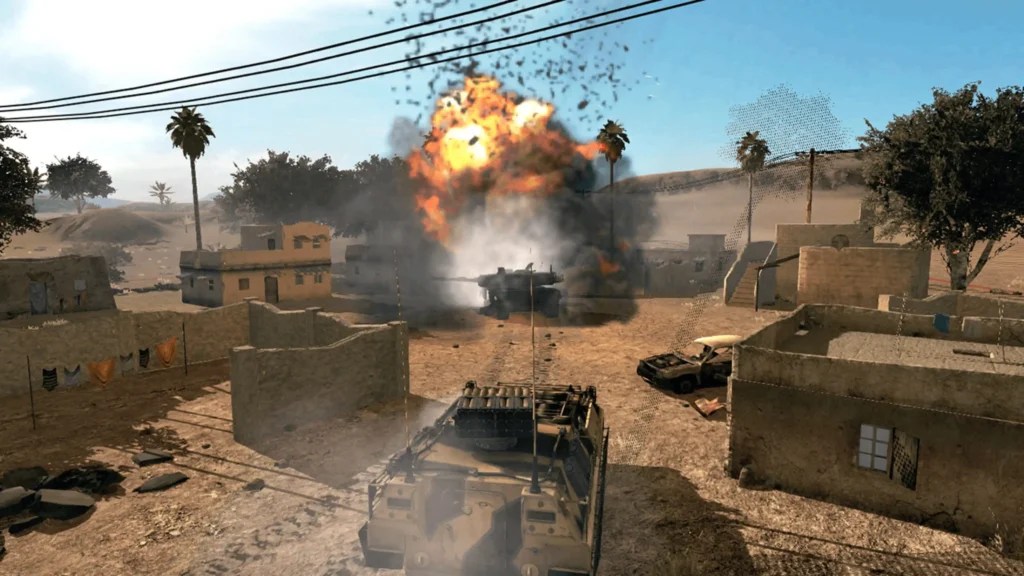
Speaking of maps, FinalFire launches with 18 arenas split across three broad climates: East Asian paddy fields and karst hills, Central Asian steppes dotted with pipeline infrastructure, and a Middle-Eastern urban sprawl that feels like someone dropped Mosul into a Nevada training range. Each 4 km² map is partitioned into three horizontal lanes with generous flanking valleys, allowing light tanks and wheeled tank destroyers to ghost behind enemy lines while heavies trade hull-down on ridgelines. Dynamic elements—collapsible bridges, night variants with thermal optics, and rolling sandstorms that knock 15% off spotting range—keep matches from devolving into static camp-fests. During one assault on the “Oil Dawn” map, an enemy squad collapsed the main overpass, forcing my platoon to detour through a wadi where T-72BU ambushers waited in infrared-camouflaged nets. We lost three tanks in 30 seconds and still talk about it on Discord; that emergent chaos is exactly what keeps you queuing “just one more match.”
Progression is where FinalFire starts to show both its strengths and its F2P scars. You begin the tech tree with the iconic Type-59, a solid all-rounder that can hold its own in tier-8 skirmishes thanks to a stabilizer retrofit you earn after your first 20 matches. From there, you can branch into three lines: Light/AFV (ending with the ZTL-11 wheeled destroyer), Heavy MBT (climaxing in the monstrous Type-99A with twin-ammo autoloader), and Artillery/MLRS hybrid, which plays like a love-child of WoT’s arty and Battlefield 4’s M142 HIMARS. Unlocking each tier is classic XP-and-credits, but FireTech layers on “Research Boost Coupons” that drop in daily crates or sell for premium currency. Pop one and you’ll earn 200% XP for 30 minutes; skip one and your grind slows to a glacial crawl. After tier 6, the credit cost for new modules becomes eye-watering: 1.2 million for the Type-96B’s ERA kit. You can farm that in about 60 matches with a premium account, or closer to 150 without. Translation: if you hate spending money, prepare for repetition.
Premium tanks thankfully avoid pay-to-win territory. The Type-79 (an alternate-universe prototype sporting a 120 mm smoothbore) sits at tier 9 and earns 50% more credits, but its turret ring is a glaring weak spot that good players will exploit. Meanwhile, the free-to-earn Type-99A boasts better turret armor and a faster reload once elite, so wallet warriors don’t get an I-win button. Consumables follow the same philosophy: premium repair kits cost 12 k credits but only shave two seconds off track-fix time—nice, not mandatory.
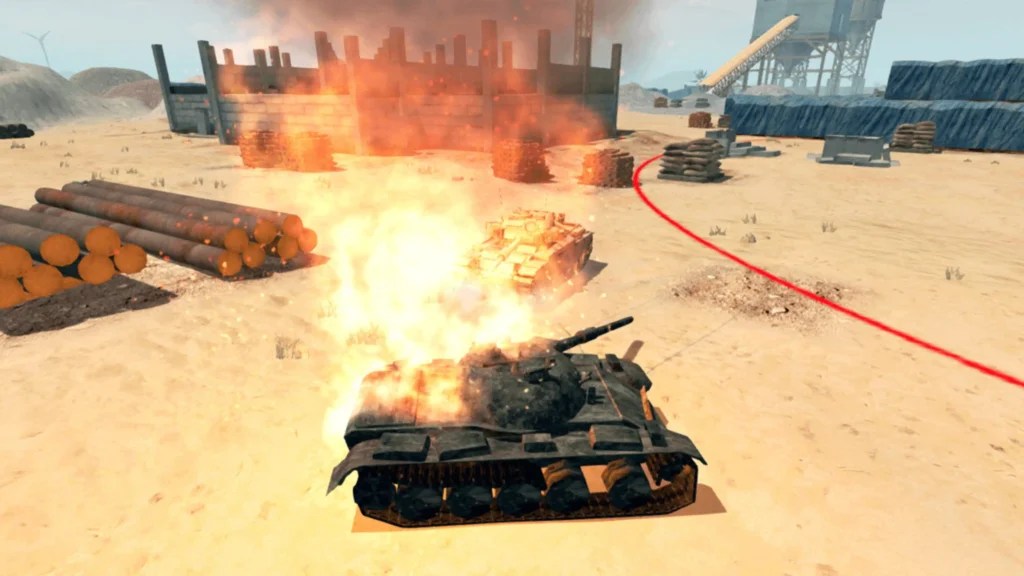
Gunplay remains satisfying across all vehicle classes. Sim fans will appreciate the granular damage models: shoot a T-80’s ammo carousel and watch the fireworks; plink the driver’s periscope on a Type 63A and you might kill the commander instead. Shell types include APFSDS, HEAT-FS, gun-launched ATGMs, and tandem warheads, each with distinct post-penetration behavior. HE rounds are actually viable for soft targets and can overpressure open-top tank destroyers, something War Thunder still struggles to model consistently. Netcode holds up well on 120 ms Singapore servers; I recorded only one desync death in 150 spawns. Audio design deserves a salute—tank engines rumble with a guttural bass you feel through a subwoofer, and the metallic clang of a ricochet is so convincing I flinch every time.
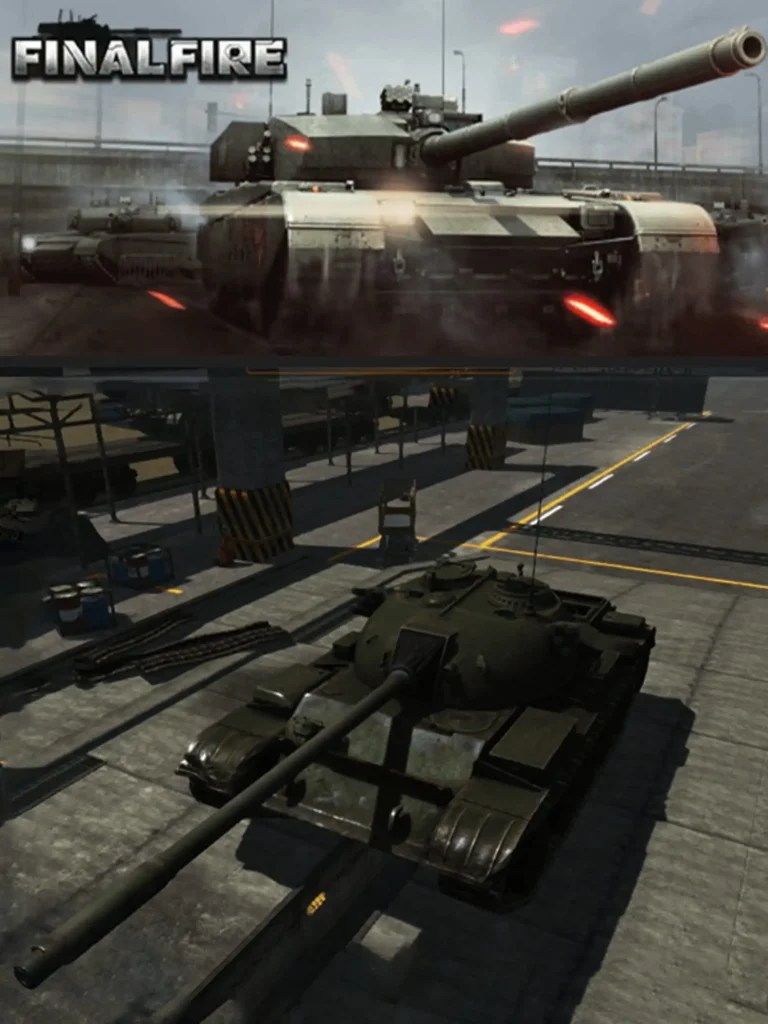
FireTech’s commitment to Chinese military hardware is both the game’s calling card and its creative cage. Encyclopedia-level nerds will gush over the modeled smoke grenade launchers on the ZTZ-96A or the welds on the Type 63’s retro armor. But if you crave Abrams, Leopards, or Armata flair, you’ll have to wait for seasonal “Global Armory” events that temporarily add foreign MBTs as rentals. The first such event arrives in July with the M1A2 SEP and T-14, but locking iconic Western armor behind limited-time loot boxes feels like a missed opportunity for a broader, more inclusive roster. On the flip side, focusing on Chinese kit gives FinalFire a unique identity in a genre saturated with NATO vs. USSR tropes, and the devs clearly relish showcasing indigenous tech evolution from the 1950s to today.
Graphically, FinalFire punches above its weight for a 15 GB install. FireTech’s proprietary “IronCore” engine delivers photogrammetry-grade terrain textures at 4K, while a dynamic weather system layers on volumetric fog, heat shimmer, and procedural mud splatter that darkens your tank’s lower hull as matches progress. On an RTX 3060 and Ryzen 5 5600 combo, I averaged 110 fps on high settings with DLSS quality mode. The only hiccup: occasional texture pop-in on hills when you zoom at 16x magnification through the commander’s thermal sight. Console players aren’t left in the dust either; the PS5 build targets 1440p/60 fps with adaptive triggers that tighten as your turret traverse speed decreases—subtle but immersive.
The audio-visual fidelity feeds directly into the game’s VR mode, a surprising bonus that lets you sit virtually inside the turret. VR support is currently limited to HTC Vive and PSVR2, and while the player base is small, screaming “FIRE!” in Mandarin over proximity chat while lobbing a 125 mm shell in first-person is a uniquely chaotic experience. Just be warned: motion sickness is real when your driver yanks the tank into a J-turn.
Replay value hinges on a robust endgame ecosystem. Daily missions refresh every 22 hours and include PvE horde modes where four players defend a firebase against waves of AI-controlled T-55s backed by attack helicopters. Clear 10 waves and you’ll earn rare “Legendary Camouflage” tokens that sell for serious in-game cash on the player market. Clan Wars, dubbed “Steel Meridian,” runs in six-week seasons and awards exclusive tier-10 prototypes like the mythical Type-99A2-140. The mode uses a tug-of-war map reminiscent of World of Tanks’ Clan Wars, but with destructible objectives: blow up the enemy’s pontoon bridge and their respawns are delayed 30 seconds—enough to swing a 15v15 battle. Top clans already field coordinated 10-tank pushes with scout-screening and MLRS suppression that feels closer to ArmA than an arcade shooter.
Microtransactions loom large, but they’re mostly cosmetic: digital camouflage, PLA parade decals, and commander voice packs (my favorite is the Sichuan-accented sergeant who shouts “吃我一炮!”—roughly “Eat my shell!”). Loot boxes exist, but drop rates are published (3% for tier-9 premiums), and duplicates convert to crafting shards that guarantee the item after 50 opens. It’s not Belgium-friendly, yet far less predatory than FIFA or Genshin Impact.
Story is, unsurprisingly, thin. A bare-bones campaign frames China’s armored brigades as peacekeepers responding to a global energy crisis, told through static comic panels between chapters. It’s serviceable nationalism that never veers into outright propaganda, but narrative junkies will shrug and skip straight to multiplayer. Voice acting in English is passable, though the Mandarin VO packs carry way more swagger—worth toggling if you understand the language.
So, should you enlist? If you’re a tank aficionado burnt out on War Thunder’s repair-cost masochism or World of Tanks’ gold-spam chaos, FinalFire offers a fresh, focused alternative with a unique national tech tree and kinetic combat. The grind is real unless you’re willing to budget $10–15 a month for premium time, but skill still trumps wallet size in head-to-head duels. FireTech’s post-launch roadmap—submarine-launched ATGMs, night-vision infantry squads, and a Balkans map—suggests long-term support. For everyone else, FinalFire is worth downloading just to marvel at how far Chinese game development has come; the fact that it’s genuinely fun is the cherry on top. Final verdict: 7.2/10—an explosive, slightly grindy love letter to modern armored warfare that finally lets the East roar as loud as the West.
Review Score
7/10
Art
Cover Art
Screenshots