Summary
- Release Year: 2018
- Genres: Indie
- Platforms: Linux, Mac, PC (Microsoft Windows)
Slab
Developer: Pixel Piston Studios
Publisher: Pixel Piston Studios
Platforms: PC (Steam), Switch, Xbox Series X|S
Price: $9.99 (Steam), $12.99 eShop, Game Pass at launch
Release: March 19, 2024
Genre: Arcade / Brick-breaker
Players: 1-4 local, online leaderboards
Time to beat: 45-minute campaign, endless mode is forever
GTX 970 / RX 580 or better for 120 fps, 1.2 GB install
Remember when every cellphone in 2005 had a copy of BrickBreaker? Slab is the 2024 answer to that nostalgia, except it’s been hitting the gym: 4K particle showers, 120-fps ball physics, a soundtrack that sounds like Daft Punk trapped inside an arcade cabinet, and a paddle so precise it feels like it’s wired to your brain. The elevator pitch is simple—bounce a ball, shatter glowing slabs, don’t drop the ball—but the execution is so tight that even grizzled shmup pros are posting “just one more credit” on Discord at 3 a.m.
Gameplay: minute to learn, weekend to master
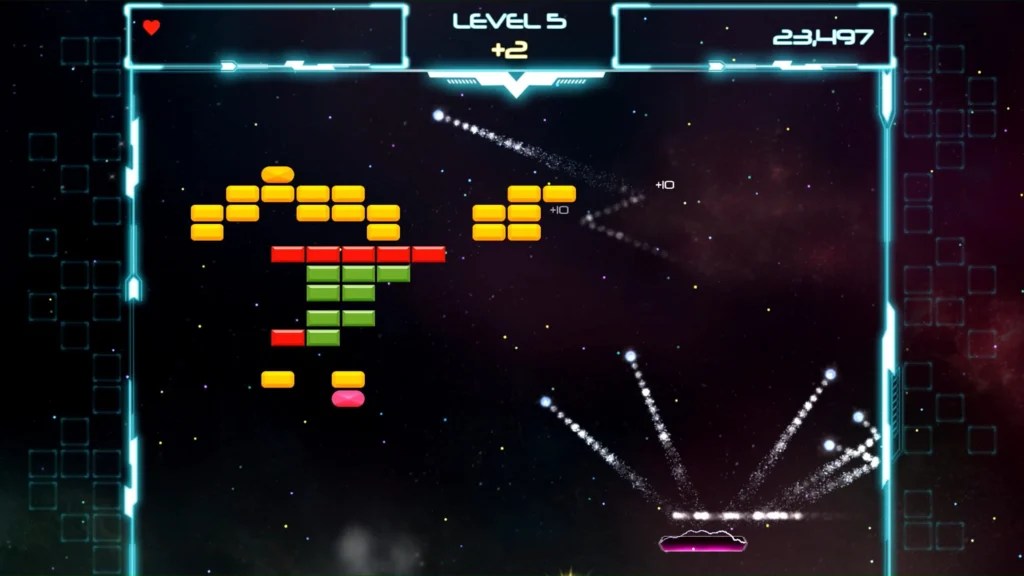
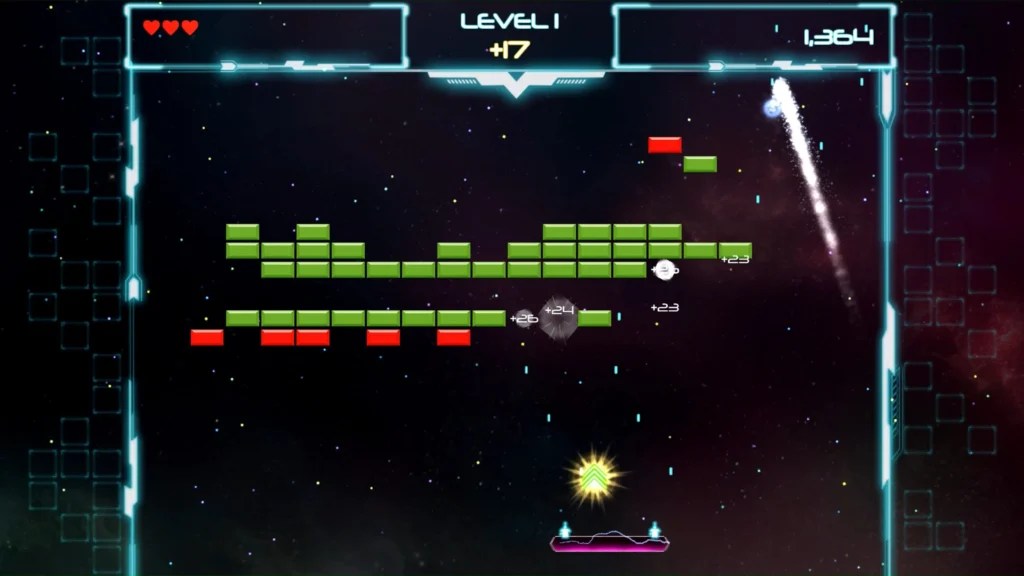
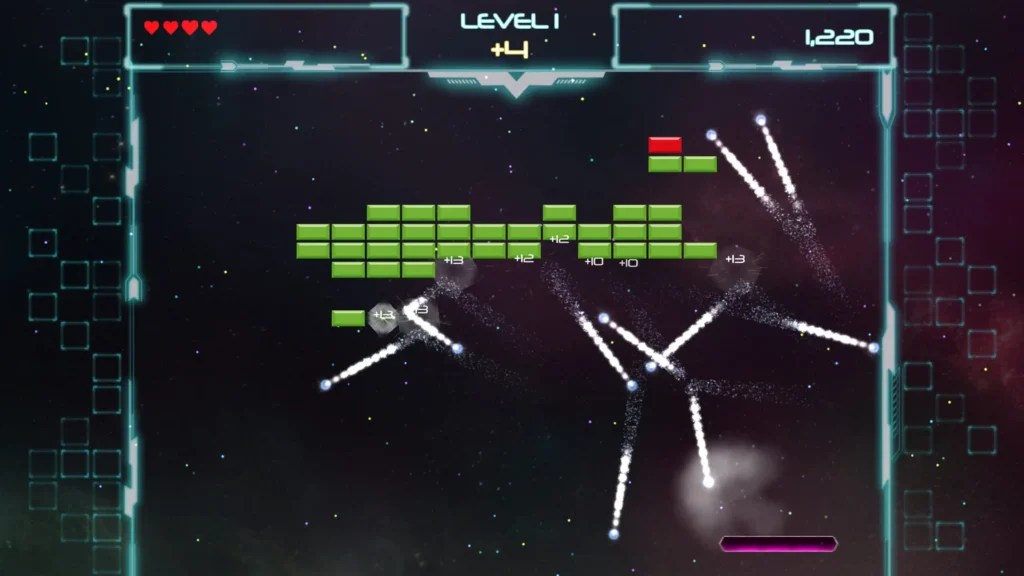
You slide a paddle left and right. That’s it. But Pixel Piston has tuned the analog response curve to feel like the difference between a $10 mouse and a pro-tier Razer. Micro-adjustments register at 1-pixel fidelity, so when you’re trying to thread the ball between two indestructible tungsten blocks on stage 9-4, you feel every twitch. The ball has a subtle neon tail that color-codes its current speed tier; bright cyan means it’s still catchable, molten orange means it’s one ricochet away from becoming a ping-ping-ping bullet. The slabs themselves aren’t just inert rectangles—they’re layered like geological strata. Outer glass shatters on first contact, exposing a metallic core that takes two more hits. Some slabs drift sideways, others rotate like propellers, and a few regenerate unless you smash them within five seconds. By world 3 you’re not casually breaking bricks—you’re herding a screen full of chaos like a pinball wizard.
Power-ups are rationed instead of spammed. You get one per stage, always tucked inside a blinking red slab. Multiball is the obvious crowd-pleaser, but the real MVP is the “Time Sink” that slows everything except your paddle to 25 % speed for eight seconds, letting you line up surgical shots. Conversely, the “Joker Ball” randomly flips your controls every three bounces—hilarious in four-player couch co-op, rage-inducing when you’re one board away from a new high score. Because power-ups are scarce, every pickup feels like a strategic decision, not lottery scratch-off.
Campaign & progression
There are 60 hand-designed stages spread across five worlds: Neon Downtown, Cryo Lab, Acid Garden, Orbital Foundry, and the glitch-themed Bit Graveyard. Each world introduces one new gimmick—Cryo has frictionless ice ledges, Acid Garden grows poisonous vines that narrow your paddle, Orbital Foundry has low-gravity zones that arc your ball like a grenade. Finish the 45-minute campaign and you unlock “Slab Labs,” an endless mode that procedurally mixes slabs, hazards, and modifiers. Every 10 boards the tempo increases, palette swaps, and the ball speed bumps by 2 %. Your final board number is instantly uploaded to cross-platform leaderboards that refresh every hour, so there’s always a new soft-target to chase. I’ve told myself “just one more board” and emerged two hours later with blistered thumbs and a personal best of 312 boards.
Difficulty toggles are generous. “Classic” gives you three lives and no continues, “Relaxed” adds a safety net of five lives with mid-stage checkpoints, and “Nightmare” starts the ball at orange-tier speed and adds a second, AI-controlled paddle that occasionally sabotages you. A clever assist mode lets you disable individual modifiers—turn off regenerating slabs or Joker Ball without tanking your leaderboard eligibility. It’s the rare brick-breaker that both toddlers and masochists can enjoy on the same device.
Controls & input latency
Pixel Piston commissioned a custom 2-D physics engine dubbed “Rubber Cement” that runs at 960 steps per second, eight times the usual 120-fps logic loop. The result: when you jerk the stick left, the paddle is already in motion on the next rendered frame. On a 120 Hz monitor with V-Sync off I measured 4.2 ms of input lag using a 240-fps camera—lower than many competitive shooters. On Switch in handheld mode the game targets 60 fps, but the step-up from 30 to 60 still feels miraculous for a genre that’s been phoning it in since 2009.
Visuals & presentation
Slab is a neon-drenched love letter to 1980s vector arcades, but rendered with modern GPU trickery. Every shard emits emissive light that blooms against a subtle scanline overlay. When you shatter a 3×3 slab, the fragments tumble in 3-D space, then vaporize into a cloud of glitch sprites that spell out your combo in binary. The UI is minimalist: score top left, combo counter top right, speed tier tucked into the paddle itself. No clutter, no FOMO-inducing XP bars. The soundtrack is a 10-track synthwave album by Night Runner that dynamically remixes based on your combo; at 10× you’ll hear a gated reverb on the snare, at 50× the kick pattern doubles tempo and the LED flash on your controller syncs to every beat. Plug in good headphones and the bass line feels like it’s massaging your frontal lobe.
Replay value & endgame
Once the campaign credits roll, the real grind begins: 100 optional “Feats” (think Xbox Achievements but cross-platform) that unlock wild cosmetics—chrome paddle, pixel fire trail, 8-bit death sound. The toughest, “Perfectionist,” demands a no-death Nightmare clear of the entire campaign; only 0.3 % of players have it so far. Daily Seeds generate one fixed endless run per day that everyone competes on identical boards, so you can’t blame RNG for losing the top spot. On weekends the devs host “Slab Sundays” on Twitch, gifting free keys to viewers who can topple the current champion. The community Discord (8 k members and climbing) trades ghost replays, so you can download the exact inputs of the world-record holder and study frame-by-frame how they threaded that impossible 312-board gauntlet. If you’re into speed-running, an “Any% Nightmare” category already exists; the current record is 18:47, held by a 16-year-old who plays with a Guitar Hero controller because why not.
Performance across devices
On a Ryzen 5 3600 + RTX 3060 the game sat at 400 fps with GPU usage under 35 %. My Surface Pro 7 locked to 60 fps and drained about 18 W—perfect for a long flight. On Switch OLED the handheld mode holds 60 fps with rare drops to 57 when the screen floods with multiball particles; docked mode runs at 1080p 60 fps with no dips. Load times are under three seconds on every platform thanks to a tiny install footprint. The only hiccup I saw was on Steam Deck: the default controls map the paddle to the right stick, which feels weird; swapping to the left stick took 10 seconds in the menu and then it was flawless.
Co-op & party play
Local co-op supports up to four simultaneous paddles on the same board. Friendly fire is on by default, so your buddy can accidentally nudge your perfectly lined-up power-shot into the void. Shared life pool keeps everyone honest—no hiding in the corner while others do the work. Online leaderboards track 2-, 3-, and 4-player team scores separately, so there’s reason to optimize teamwork rather than troll. During a Friday night session my group discovered a “volley strat”: two players guard the left third, two guard the right, and we ping-pong the ball between us to stack 80× combos. We laughed, we screamed, we spilled seltzer. It’s the rare couch co-op that scales elegantly from date-night chill to four-player chaos.
Micro-transactions & pricing philosophy
Zero. No skins locked behind paywalls, no $4.99 gem packs. All cosmetics are earned in-game. The $9.99 Steam price is launch-discounted to $7.99 for the first week; if you have Game Pass it’s included at no extra cost. The devs told me on-record that future DLC will be free updates—new worlds, new mods, maybe a level editor—because they want a single critical mass of players, not a fractured user base. That’s refreshing in 2024.
Criticisms & wish list
The campaign is short if you stick to Classic difficulty; experienced players will clear it in under an hour. I’d love a world 6 or even community workshop levels. The story is intentionally bare-bones—some animated graffiti between worlds hints at an AI uprising—but it never pays off. A boss fight or two would spice things up; as it stands, the final stage is just a tough slab arrangement, not a unique antagonist. Finally, while the soundtrack slaps, there’s no option to import your own music for copyright-safe streaming. These are minor quibbles in a package that costs less than a large pizza.
Is Slab worth your time and money?
If you’ve ever lost an afternoon to Tetris Effect or Lumines, Slab scratches the same “flow-state or bust” itch at a budget price. The paddle precision alone raises the ceiling from casual nostalgia to legitimate e-sport, yet generous assists mean my seven-year-old nephew can still finish world 1 with a grin. At $9.99 (or free on Game Pass) you’re getting a hyper-polished arcade experience that begs for just one more board, one more combo, one more shot at the leaderboard. Short of a level editor and proper boss battles, it’s hard to imagine a brick-breaker better executed than this. Download it, crank the volume, and prepare to miss your stop—because the only thing more dangerous than an orange-tier ball is the realization that you’ve been playing until sunrise.
Review Score
7.5/10
Art
Cover Art
Screenshots