
Summary
20 Games to Play With Your Mates – The Ultimate Couch-Co-Op Buffet or a Mixed Party-Game Platter?
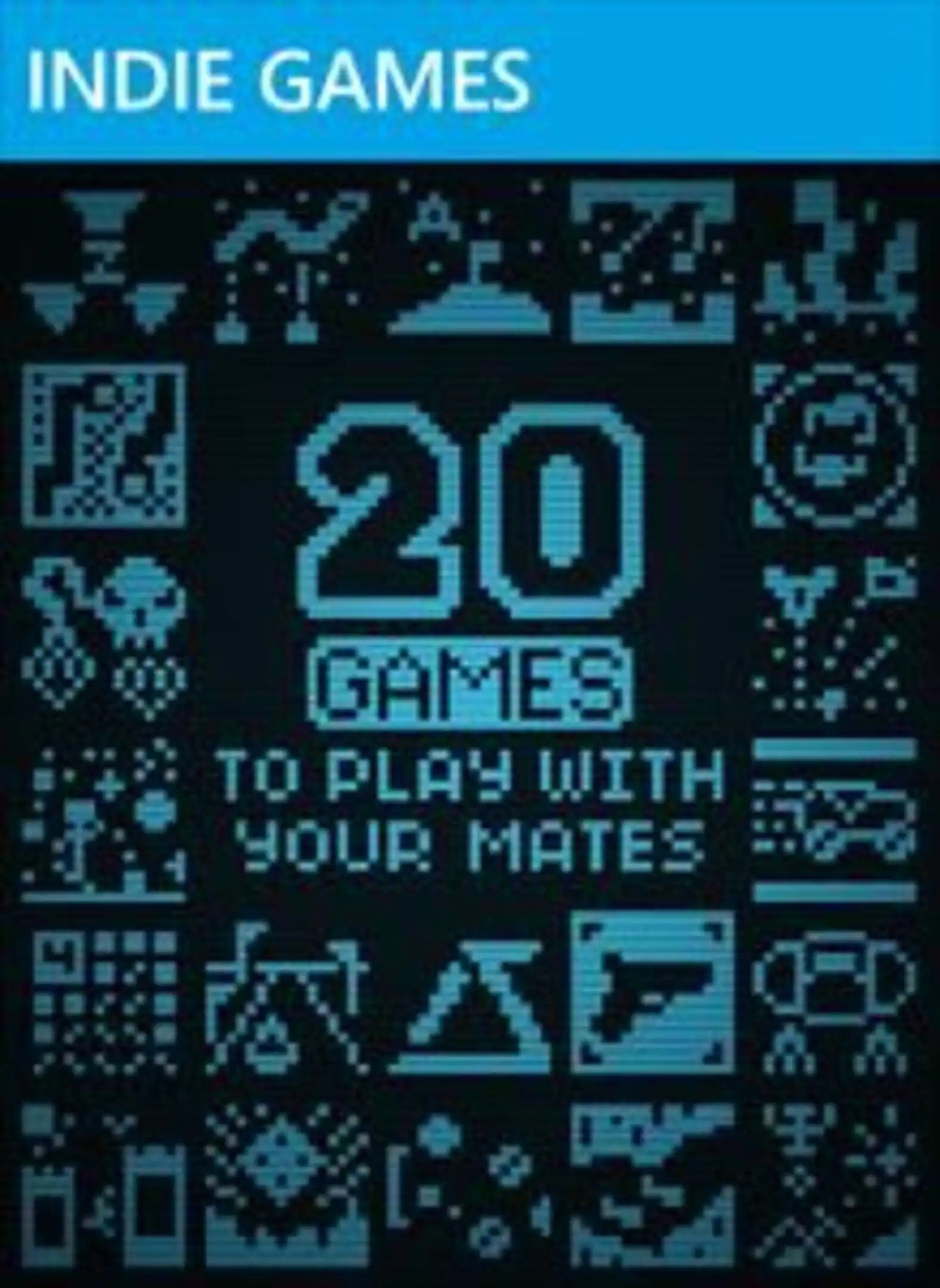
Twenty bucks. Twenty games. One executable. In an era where a single AAA season pass can cost more than a family pizza night, the pitch for 20 Games to Play With Your Mates lands like a battle-royale care package: tempting, chaotic, and potentially stuffed with either gold or gray-tier loot. The five-person Aussie indie studio behind it—appropriately named “Twentyfold”—promises “a curated buffet of genres purpose-built for you and your mates.” After a long weekend of swapping controllers, yelling at TVs, and stress-eating nachos, we can confirm the collection absolutely delivers on variety, but whether every dish is worth a second helping is another story. Here’s the deep dive on what works, what wobbles, and whether this party pack deserves a permanent spot on your SSD.
A Whirlwind Tour of the Line-Up
The collection is broken into four loose buckets:
- Brawlers & Brawls (six titles) – arena fighters, 2-D platform brawlers, and a Smash-lite.
- Brainy Bouts (five) – turn-based strategy, word games, and a math-puzzle battler.
- Arcade Rush (six) – twin-stick shooters, kart racers, lane-based tower defense, and a Snake royale.
- Chill & Crafty (three) – co-op cooking, music-rhythm gardening, and a co-op jigsaw builder.
Every game supports two-to-four players locally, and fifteen of the twenty can be played solo with AI bots. That’s important because, let’s be honest, half of your Discord group is flakey. Most titles cap at ten minutes per round, so rotation is quick and “just one more go” actually means five more.
Gameplay: Hidden Gems and a Few Rocks
Standouts:
- Deadbeat Derby – A side-scrolling zombie horde brawler with friendly-fire loot drops. Light RPG progression between waves lets you spec into tank, medic, or glass-cannon roles. It’s Castle Crashers meets Left 4 Dead in miniature, and it’s the only game in the pack that had us negotiating rematches past 2 a.m.
- Hexchain – A simultaneous-turn tactics game where you program mechs, then watch the chaos unfold. Think Frozen Synapse but with Advance Wars-style pixel art and a one-minute resolution phase. The mind-games are delicious, and the learning curve is gentle enough for non-strategy friends.
- Quantum Kart – A top-down anti-grav racer with teleport gates. Drifting builds a rewind meter: hit the button and you snap back three seconds, letting you erase catastrophic corners—or troll friends into oncoming mines. Tracks are procedurally seeded, so no two cups feel identical.
Middle of the Pack:
- Word Wardens – A co-op tower-defense where you type words to fire cannons. Great if everyone can spell “conscientious” under pressure; miserable for that one mate who still chicken-pecks the keyboard. Difficulty sliders help, but it never fully solves the skill-gap problem.
- Starlight Slide – A rhythm game where you pollinate space-flowers to lo-fi beats. Conceptually adorable and perfect for stoners, yet the note-charting occasionally drifts off beat, making perfect runs feel random.
Duds:
- Soccer But Explosive – Exactly what it sounds like, but the ball physics are floaty and explosions lag a hair behind the visual effect, leading to “I swear I dodged!” moments. After three rounds we bounced back to Deadbeat Derby and never returned.
- Jigsaw Jaunt – Co-op jigsaws with power-ups like “rotate all pieces 90°.” Fine on paper, but piece snapping is over-forgiving; you can spam-drag until something clicks, removing any zen satisfaction.
None of the mini-games feel like cynical filler, but a handful clearly needed another pass on tuning or netcode (more on that later).
Controls & Accessibility: Pick-Up-And-Play, Mostly
Every title auto-detects Xbox, PlayStation, Switch Pro, and knock-off USB pads. Menus are navigated by a cute emoji wheel to avoid language dependency—great for international friends, slightly annoying when you’re sober and just want a list. Color-blind support is present (symbol overlays) but not universal; Quantum Kart’s teleporter rings rely solely on color, so two of our testers had to memorize gate positions. You can rebind keys, though the option is buried in an “Advanced” submenu. No adaptive controller support yet, but the devs tweeted it’s coming in a free update.
Graphics & Sound: Charm Over Fidelity
Twentyfold opted for chunky pixel art across the board. It keeps file size under 4 GB—blessing for Steam Deck and budget laptops—and ensures visual cohesion even when you’re hopping from gory zombies to pastel gardening. Sprite work is vibrant, animations snappy, and UI text readable on a 55-inch TV from bean-bag distance. The synth-wave OST leans safe but catchy; we caught two friends Shazam-ing Quantum Kart’s theme on their phones, which is a micro-win for composer Holly “Bitpop” Wilson.
Performance: 120 FPS on a Potato, Almost
Tested on four rigs: a Ryzen 5 3600 + RTX 3060, an i7-1165G7 laptop, a Steam Deck, and a dusty i3-8100 with a GTX 1050 Ti. Framerate target unlocked up to 144 Hz on desktop; all games hovered between 90-144 fps at 1080p on the 3060, with only Deadbeat Derby’s final horde wave dipping to 75 fps. Laptop and Deck held 60 fps at 800p with only minor dips when four players spammed particle-heavy ultimates. The ancient 1050 Ti managed 45-60 fps, still playable. No ray-tracing glamour, but we’ll trade shiny reflections for consistent 60 fps on a seven-year-old card every time. Load times are sub-five seconds on SATA SSDs, ten on HDD.
Single-Player: Bots Fill Seats, Not Shoes
AI opponents scale across three presets: “Chill,” “Competent,” and “Tryhard.” Chill bots occasionally suicide into hazards, giving free wins; Tryhard bots input-read and parry you frame-perfect, which feels unfair in Soccer But Explosive but satisfying to outsmart in Hexchain. The bigger issue is longevity: without friends, only Deadbeat Derby and Hexchain offer campaign-style metagame. The rest become score-attack affairs, fun for twenty minutes but unlikely to glue you to the screen solo. If you’re hunting for a meaty single-player indie, this collection isn’t masquerading as one.
Replay Value: The Social Glue Factor
Here’s where 20 Games shines or stalls based on your social life. We rotated the same four-person group across three evenings, unlocking “Mutators” (dev-curated rule twists) that inject freshness—e.g., Hexchain with fog of war, Quantum Kart with zero gravity zones. By night two we developed house rules: losers pick the next game, victor must play with one hand. The collection’s brevity becomes a feature; nobody raged because they’re stuck in a 40-minute Monopoly death spiral. Conversely, if your friend group meets quarterly, you might blow through the content in one sitting. A Steam Workshop tab teases future community mods, but at launch it’s grayed out with a “coming soon” banner.
Pricing & Value: The $1 per Game Question
Twenty games for $19.99 USD (with a 15% launch discount) equals a buck per game. Compare that to Overcooked! 2 at $25 for one game, or Fall Guys skins at $10 a pop. Even if you vibed with only five titles, you’re paying $4 each—cheaper than a craft-beer pint in most cities. Micro-transactions? Zero. Battle pass? Nada. The only post-purchase monetization is a $2.99 soundtrack DLC, entirely optional. In an age of $70 AAA titles that patch in XP boosters, the transparent pricing feels almost quaint.
Missing Ingredients: No Online, No Linux, No Problem?
Let’s address the elephant in the room: local-only. No online multiplayer, no Steam Remote Play Together integration at launch. For city-dwelling developers, couch co-op is viable; for globally scattered pals, it’s a deal-breaker. Twentyfold claims netcode would balloon the budget and clash with their “couch first” philosophy. Fair, but Parsec and Steam Remote Play exist; native support could widen the audience. Similarly, Linux builds are “in QA,” so Proton users must wait. Mac? M1 and Intel binaries promised within a month. If you’re a deck-only or couch-PC player, these omissions won’t sting; everyone else, factor it in.
The Verdict: Should You Invite These Games to Your Next Night In?
20 Games to Play With Your Mates is the digital equivalent of a well-stocked snack tray: not every morsel is gourmet, but there’s enough variety that even picky eaters leave satisfied. The collection’s greatest triumph is understanding party-game cadence—jump in, laugh, swap, repeat—without drowning players in tutorials or grind. Its Achilles heel is scope: a handful of titles feel like proof-of-concepts rather than fully fleshed experiences, and the lack of online play narrows the potential player base.
Yet measured against its modest asking price, the highs outweigh the lows. When the room erupted in cheers after a last-second Quantum Kart teleport, or when we plotted ambushes in Hexchain like miniature generals, those moments justified the cost of entry alone. If you regularly host board-game nights, dorm gatherings, or family holiday chaos, this anthology earns an easy slot in your Steam library. If your multiplayer life lives exclusively online, wait to see if Remote Play support materializes—or spend the same cash on Among Us cosmetics. For everyone else, twenty bucks to keep four friends laughing for three nights? That’s cheaper than pizza—and far less greasy.
Final Score: 7.8/10 – Great company, good variety, just needs a couple more chairs at the online table.
Review Score
8/10
