Summary
- Release Year: 2018
- Genres: Adventure, Indie
- Platforms: PC (Microsoft Windows)
- Developers: PDDS
- Publishers: PDDS
Pre:One – A Brave Little Cyborg Steps Outside the Walls
The elevator pitch for Pre:One writes itself: “Far-future androids finally grow curious about the world beyond their city walls, so they build a scout, give it a rifle, and shove it into the unknown.” It’s a lean, cyber-punk fairy tale, and—on paper—it sounds like the perfect setup for a tight, six-hour FPS adventure with a couple of neat twists. In practice, Pre:One is a scrappy, often frustrating, occasionally brilliant indie that feels like it was soldered together in a garage with equal parts love and caffeine. If you’ve ever wished for a lower-budget cousin to Deus Ex, Ghostrunner, or Echo, this might be your jam—provided you can stomach some serious jank.
Story & World – Less is More (Until it Isn’t)
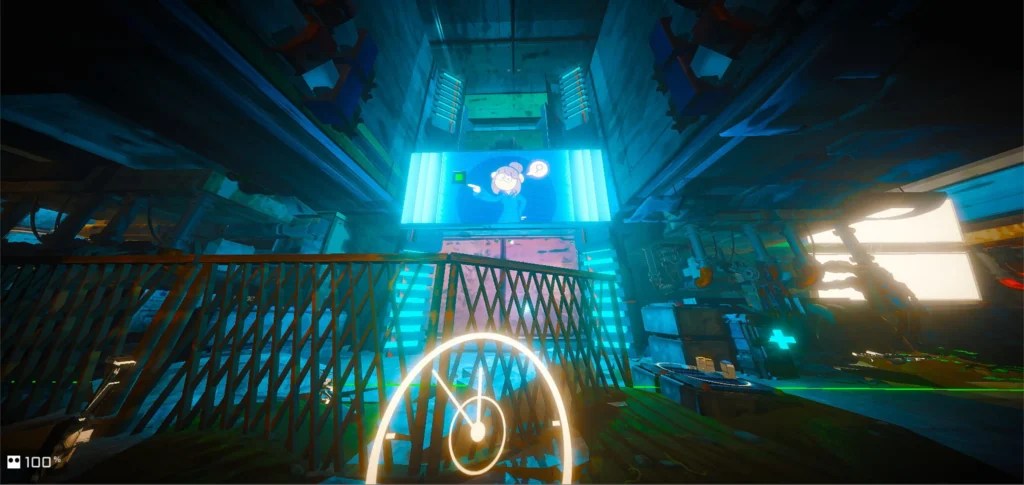
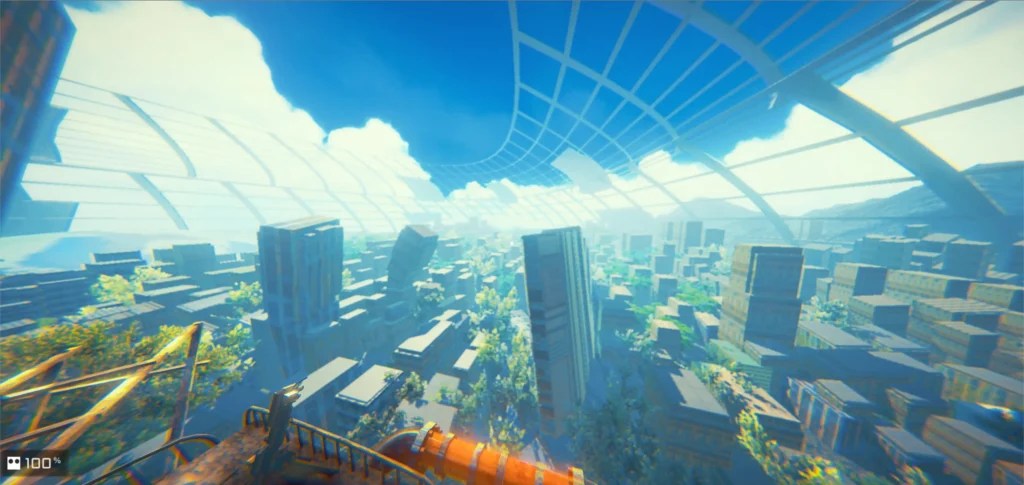
You play as the first (and apparently last) explorer droid designated “M-12.” There’s no grand intro cut-scene, just a quick hologram briefing: “Go outside, find out why our ancestors never came back, try not to die.” Then the hatch opens, and you’re staring at a ruined cityscape wrapped in eternal dusk. Environmental storytelling does the heavy lifting here: broken statues of chrome-plated humans, graffiti in multiple dead languages, audio logs left by previous expeditions that end abruptly with wet, crunchy sounds. The vibe is somewhere between Nier: Automata’s melancholy and Blame!’s vast, indifferent architecture.
The problem is pacing. Pre:One only lasts four to six hours, yet the narrative front-loads mystery and then forgets to pay it off. The final area introduces a cool faction twist (no spoilers) but rushes you into an unceremonious boss fight followed by a single-sentence ending screen. It feels like the team planned a trilogy, ran out of money, and simply stamped “To Be Continued” on whatever they had. For players who value closure, that stings.
Gameplay – Gunplay, Platforming, and Cheap Shots
Pre:One is a first-person shooter with light RPG sprinkles: find new guns, scavenge ammo, upgrade your shield capacitor, and hunt for key cards. Think 1998 – a year when shooters still had crouch-jumping and colored keycards – but layered with 2018 lighting tricks and a double-jump that arrives three hours too late.
Weapons feel great for an indie studio. The starter plasma rifle is weak but pin-point accurate, encouraging headshots. The burst-nailgun you find in the subway chews through armored drones like a hot knife through butter. My favorite is the disc launcher that banks off walls and carves through multiple androids with a satisfying “thwip-thunk.” Each gun has an alt-fire, and experimenting with them inside claustrophobic corridors never gets old.
Enemy variety is decent: spider drones that wall-run, heavies with energy shields, snipers that mark your last known position with a red laser, and creepy humanoid robots that mutter garbled English as they flank you. Encounters are hand-placed, so the game can be speed-run once you memorize patrol routes.
Where Pre:One falters is fairness. Checkpoints are sometimes five minutes apart, and death can send you back to a quiet corridor with only 12 bullets and a prayer. Certain rooms have one-hit-kill turrets that spin 360° faster than you can strafe. Platforming sections over instant-death pits would feel more at home in a Sonic game. More than once I died because a ladder animation locked me in place while a mini-boss pummeled my spine. If you have a low tolerance for “gotcha” design, expect to Alt+F4 at least once.
Level Design – Verticality Without a Compass
The campaign is broken into four hubs: the city outskirts, an abandoned metro, a skyscraper interior, and the “Black Shard” fortress. Each area loops back on itself with Metroid-style shortcuts. Finding a new keycard and back-tracking through previously locked doors provides that warm, brain-tickling sense of progression. Verticality is the star here; rooftops connect via zip-lines, ventilation shafts hide ammo caches, and you can often look three stories down to the very spot where you started.
Unfortunately, the game’s lack of a map or objective compass turns navigation into guesswork. Objective markers only appear when you’re within ten meters of the switch you need to hit. I spent 40 minutes hunting for a neon-green card in a neon-green city before realizing it was clipped inside a broken vending machine. A simple “Show last keycard location” button would have cut my playtime by a quarter.
Graphics & Art Direction – Beauty in the Eye of the Beholder (and the Unreal Asset Store)
Pre:One was built in Unreal 4 by a four-person team, and it shows—both for better and worse. Character models are store-bought but retextured with a custom shader that gives every surface a slick, oily rainbow sheen. The result is uniquely alien; sunlight hits a concrete slab and explodes into purples and teals like an 80s synthwave album cover. Particle effects—sparks, steam, electrical arcs—are lavishly over-used in ways big-budget games would never allow. It’s messy, but mesmerizing.
On the downside, texture pop-in haunts every new area. Enemy death animations occasionally T-pose. One cut-scene rendered inside a wall for me; I could only hear the protagonist monologuing in first-person while staring at masonry. If immersion-breaking bugs ruin games for you, wait for a deeper discount.
Performance – A Light Lift for Modern Rigs
Good news: Pre:One runs on a potato. Minimum spec is a GTX 660 and a dual-core i3; I booted it on a Steam Deck and held 60 fps on medium settings with only the occasional stutter during autosaves. Load times are under eight seconds on an NVMe drive. The engine scales well to 1440p and even 4K, though anti-aliasing options are limited to FXAA. No ray tracing, no DLSS, but for a game that costs less than a large pizza, that’s forgivable.
Sound & Music – Lo-Fi Beats to Explore Dying Worlds To
The soundtrack is a surprise highlight: moody downtempo tracks full of reverb-soaked pads and 808 kicks that pulse in sync with your health bar. It feels like wandering through a cyber-punk Spotify playlist at 2 a.m. Voice acting is in Korean with English subtitles; the translation is charmingly stilted (“I will explode you now!”) but never unclear. Weapon audio packs a punch, especially the disc launcher’s metallic ricochet that echoes off concrete. There’s no 5.1 surround mix, so headphone users get the richer experience.
Replay Value – One and Done, Unless You’re a Trophy Hunter
A single playthrough on normal difficulty yields about five hours. Higher difficulties remix enemy placements and remove ammo drops, tempting speed-runners. There are 20 collectible memory shards that unlock concept-art wallpapers, plus three branching dialogue choices that change the final text box by exactly one line. Beyond that, incentive to replay is thin—no New Game+, no procedural modes, no mod support. Achievements are generous, though; I earned 80% of them without trying.
Pricing & Value Proposition – The $5 Question
Pre:One regularly drops to $4.99 on Steam and frequently appears in $3 bundles. At that price, it’s cheaper than a coffee and offers moments you’ll remember longer than your latte. The campaign is short, but the gun-feel and art direction punch above their weight class. If you’ve ever spent $15 on a two-hour VR “experience,” Pre:One is a bargain.
What You’re Really Paying For
Think of Pre:One as a proof-of-concept pilot for a much larger universe. It’s the TV episode that got shot on spec to impress Netflix executives. You’ll glimpse tantalizing lore crumbs—cryptic references to “The Great Severance,” a wall mural of a cyborg goddess, a single line about “The sky used to be blue”—but the curtain falls before any of it pays off. Whether that frustrates or delights you depends on your tolerance for cliff-hangers.
The Verdict – Should You Pull the Trigger?
Pre:One is a scrappy little cyborg of a game: half polished chrome, half exposed wiring. It won’t rival AAA immersion, but it scratches an itch for anyone who loves retro-tinged shooters, cyber-punk cityscapes, and the thrill of finding a hidden rooftop cache you weren’t supposed to see. Buy it on sale, forgive its bruises, and enjoy a brisk Saturday afternoon of neon, bullets, and existential dread. Just don’t expect closure—because the machines haven’t found it yet, and neither will you.
Score: 6.5/10 – Flawed but fascinating, and absolutely worth a fiver if you can stomach jank.
Review Score
6.5/10
Art
Cover Art
Screenshots