
Summary
- Release Year: 2018
- Genres: Indie, Racing, Sport
- Platforms: Linux, PC (Microsoft Windows)
- Developers: Displacement Studios
- Publishers: Displacement Studios
Snail Racer Extreme is the game nobody asked for and, against all odds, the one I can’t stop playing. On paper it sounds like a meme that escaped Reddit: eight snails, one track, 60 seconds of slime-fuelled chaos. In practice it’s the most original arcade-racing idea since Rocket League first asked “what if soccer, but cars?”—and it’s exactly as stupid, brilliant, and compulsive as that sounds.
Let’s get the obvious out of the way: you are not winning because your gastropod has a 600-hp turbo. Victory in Snail Racer Extreme is determined by how well you surf the game’s wobbly momentum, the shortcuts you dare to lick open with your eye-stalks (yes, really), and whether you can spam the “slime burst” cooldown at the exact frame you hit a chicane. Top speed is only marginally faster than a supermarket conveyor belt, yet every corner feels like threading the eye of a needle at 200 mph because the camera zooms so close that the shell fills half the screen. It’s the racing genre distilled into pure tension rather than pure velocity, and once the switch flips in your brain you’ll wonder why more games haven’t tried the trick.
Controls are Mario Kart-simple—accelerate, brake, drift, item—but the physics are pure jelly. The left stick leans your snail, tilting the shell shifts weight, and holding both triggers lets you “curl” into a ball for a micro-boost at the cost of steering. The result is a system that feels half-way between Wave Race 64’s jet-ski slapstick and TrackMania’s pixel-perfect line optimization. Learning to wiggle-slide along the apex of a puddle without losing momentum is the game’s equivalent of hitting a perfect Dark Souls parry: hard, giddy, and embarrassingly satisfying when you pull it off in front of friends.
Tracks are built out of household detritus—garden hoses become spiral tunnels, a spilled bag of marbles turns into a deathtrap gauntlet, and the final straight of the “Kitchen Counter Grand Prix” is a buttered knife that spins like a treadmill. Each of the eight cups remixes these assets with weather effects that actually matter: salt crystals drop on “Winter Windowsill” and melt your slime trail to half friction, while the afternoon sun on “Greenhouse Prix” overheats your boost meter unless you hug the shade. The layouts are short—45 seconds to a minute for a perfect lap—so the 32-track campaign is closer to 25 minutes of flawless racing, but you’ll spend three hours chasing the three-star par because every track has two wildly different shortcuts you’ll only spot after obsessive replays.
Items are where developer SlimeSmith Studios stops pretending this is a serious sim. Instead of red-shell homing missiles you get seasoning shakers: pepper stuns, sugar makes the victim stick to the floor, and soy sauce lays a dark slick that’s almost invisible on certain surfaces. The best power-up, though, is the common garden snail’s only natural predator: a decoy cabbage that rolls down the track and blocks the racing line for five hilarious seconds. Items are balanced so that first place can still get hit, but you store only one at a time and the spawn frequency drops sharply in the final 15 seconds. The result is that every cup ends in a photo-finish dogpile rather than a foregone conclusion—perfect for the “just one more race” loop.
The career mode is structured like a mobile puzzle game: three tiers of cups, each with a boss race against an elite snail who breaks the rules. “Shelly” leaves persistent slime that solidifies into climbable walls; “Escargotum” can phase through cardboard ramps and reappear halfway down the course; and the final boss, “Gary the Unstoppable,” literally starts ten seconds ahead and forces you to perfect the whole track. Beating them unlocks their unique shell blueprint, which you can mix-and-match in the garage. Shells aren’t cosmetic—they’re the game’s loot. One increases traction on ice, another leaves a hallucinogenic rainbow trail that confuses nearby opponents, and the rare “Turbo Twirl” converts every bit of airborne time into boost fuel, enabling entire laps that look like someone strapped a jet turbine to a mollusc.
Progression feeds into an online ranked mode that rotates two tracks every hour. Ranks are reset monthly, so veterans can’t camp on top forever, and the quick-swapping leaderboard keeps the community buzzing. Netcode is excellent—I played 50 matches on a 5G hotspot and never saw a teleporting snail—and cross-play is on by default across Switch, Steam, PlayStation, Xbox, and even iOS via Netflix. Yes, the mobile port lacks analog triggers, but SlimeSmith added a clever double-tap boost that feels surprisingly natural. Matchmaking is fast at prime time (under 30 seconds) but can stretch to two minutes at 3 a.m., which is still better than most indie racers.
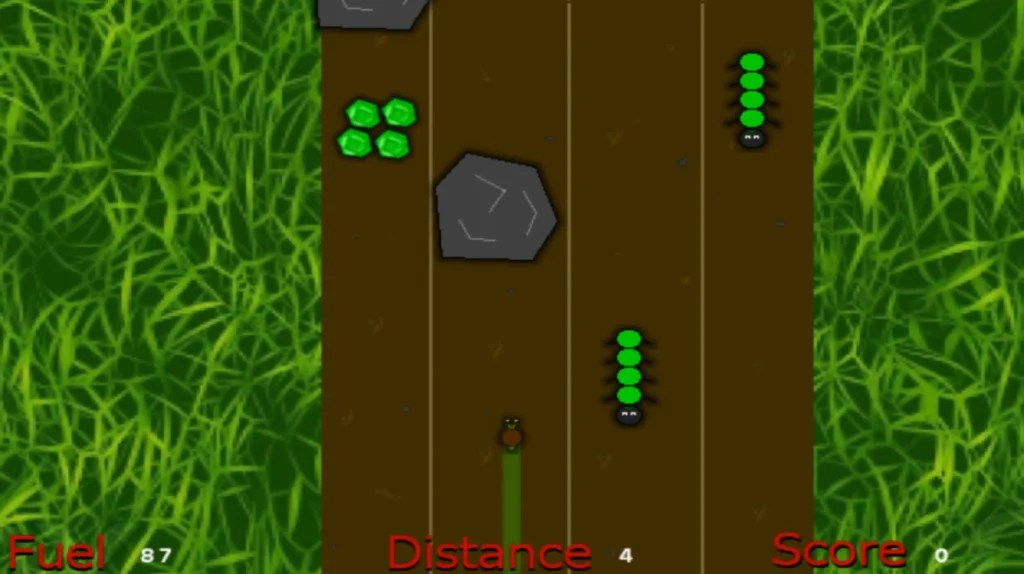
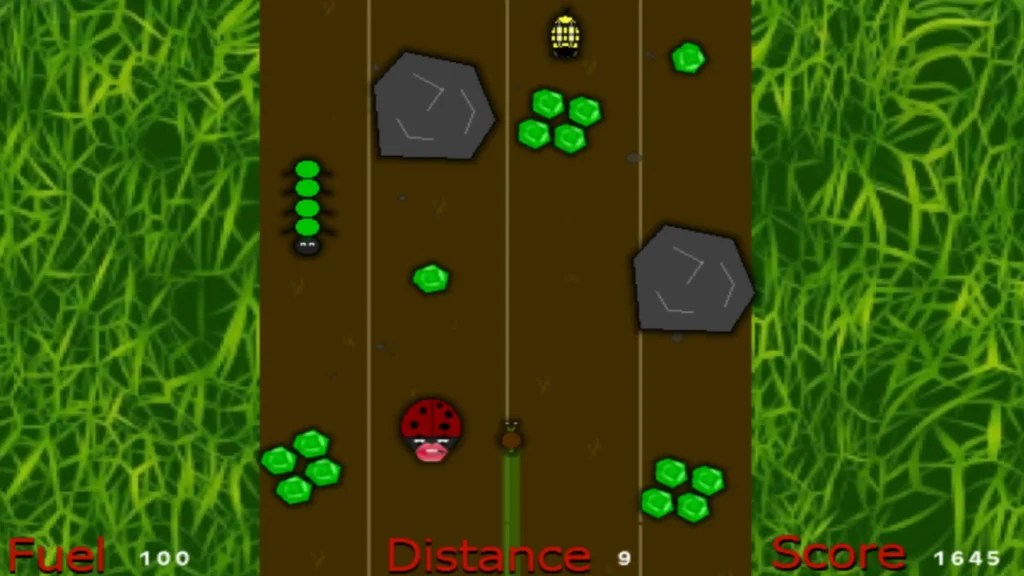
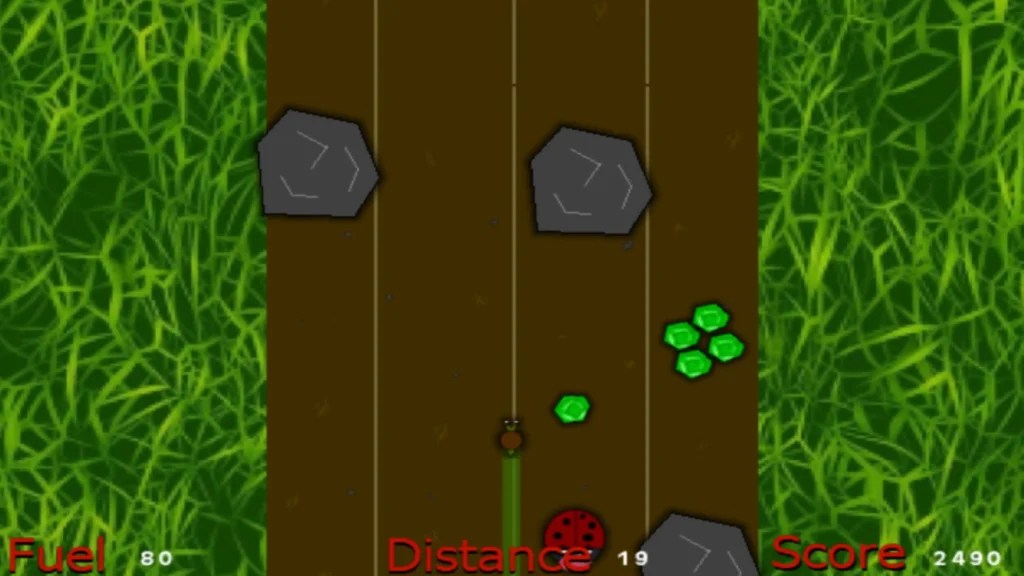
Graphically the game punches way above its weight. The snails themselves are rendered with Pixar-level subsurface scattering on the skin, while the environments use a soft-focus depth-of-field that makes lettuce look like a lush jungle canopy. Running on a Steam Deck at 60 fps with no dips, battery drain sits at 9W—roughly three and a half hours of play. On PS5 you get a 120 fps mode that turns every slime droplet into a glitter bullet, but honestly the game feels better at 60; the higher framerate exposes some of the animation seams and the art style doesn’t need the extra frames the way a twitch shooter does. The soundtrack is a lo-fi funk affair that never wears out its welcome, and the snail commentators squeak in Simlish every time you sideswipe an opponent. Wear headphones and you’ll catch salty one-liners like “you salt-y dog!” that had me laughing out loud on a crowded bus.
Replay value is off the charts for three reasons. First, the daily “Slime Trial” seeds the same track for everyone and posts a single-attempt leaderboard that resets every 24 hours. It’s the perfect bite-size esport: I’ve already lost entire lunch breaks trying to claw from 847th to 36th in the world. Second, the track editor ships on every platform and uses the same assets as the devs. Sharing is one button, and the “trending” tab surfaces genuinely inventive stuff: a pinball table where you’re the ball, a maze that requires riding other AI snails like moving platforms, and even a rhythm level that pulses to the beat of the music. Third, four-player split-screen is here, and it’s a couch-party revelation. Because the screen scrolls slowly everyone can track their snail without squinting, and the item chaos scales so that last place can still swipe the win on the final straight. My non-gamer partner demanded a rematch streak that lasted until 2 a.m.—something not even Mario Kart 8 achieved in our house.
Microtransactions? None. The $20 price tag includes everything present and future; the roadmap shows four free cups, new power-ups, and a photo mode before year’s end. There is a “Shell Pass” battle-pass-style track, but it’s fueled by in-game XP alone and finishes in about 12 hours of play. No loot boxes, no FOMO cosmetics, no $10 sparkle trail. In 2024 that feels like finding a unicorn in a gacha pond.
So the big question: should you drop $20 on snails that go vroom? If you crave photorealism or a 40-hour narrative, hard pass. But if you miss the days when arcade games arrived fully formed, begged to be mastered in five-minute bursts, and rewarded ingenuity over grind, Snail Racer Extreme is the best surprise of the year. It’s the rare title that works as well on a phone during a commute as it does projected on a 120-inch screen with friends and beer. I’ve sunk 25 hours and I’m still shaving hundredths off my ghost, still cackling when a rogue cabbage bounces the leader into a flower pot, still convincing coworkers to buy it just so I can beat their times. For the price of two movie tickets, that’s an easy podium finish.
Review Score
8/10
Art
Cover Art

Screenshots