
Summary
Power Hover: Cruise – The Endless Runner That Wants to Steal Your Afternoon
(And Your High-Score Crown)
The elevator pitch is simple: strap a robot to a hoverboard, fling him down a procedurally-generated gauntlet of lasers, buzz-saws, and bottomless pits, then try to last longer than your friends. But Power Hover: Cruise, the follow-up to 2015’s well-loved Power Hover, isn’t content to be “just another auto-runner.” It wants to hypnotize you with style, hook you with leaderboard drama, and—when you least expect it—make you fist-pump because you just threaded the needle between two spinning blades at 200 kph. After a week of late-night “one more run” sessions, I can confirm: mission accomplished.
-
First Impressions: Style for Days
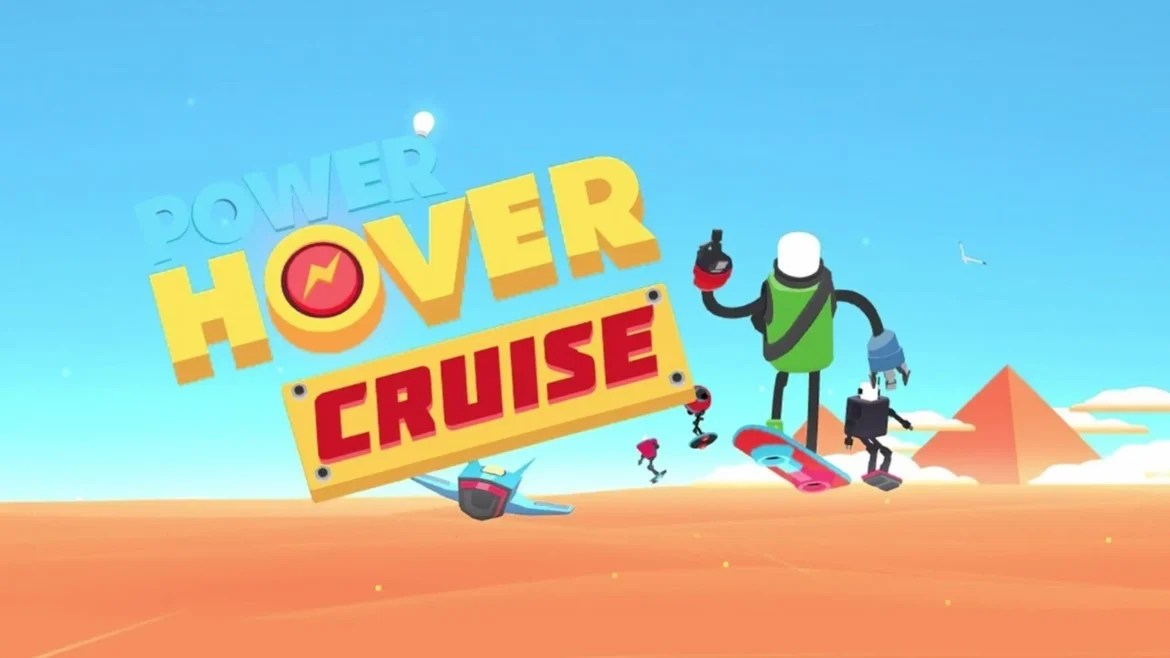
The original Power Hover turned heads with its low-poly, high-contrast art direction, but Cruise cranks the saturation dial until it snaps off. Every stage drips with color: cobalt canyons, magenta sunsets, and caverns lit by glowing teal mushrooms. The game runs at a locked 60 fps on my three-year-old Pixel 5a and iPhone 11, even when the screen fills with explosions, laser grids, and collectible batteries spinning like golden gears. Developer Oddrok has a background in advertising motion graphics, and it shows—every menu swipe, every score tally, every wipe-restart is animated like a premium phone commercial. You half expect a Scandinavian voice-over to whisper “Designed for life.” -
Gameplay Loop: Easy to Grasp, Pain to Master
You start each run with a single tap. Your character (more on the roster later) auto-accelerates down a cylindrical track suspended in space. Swipe left/right to switch lanes, swipe up to jump, swipe down to dive under obstacles. Collect batteries to build your score multiplier, grab power-ups for shields or slow-mo, and pray the RNG gods don’t spawn a wall directly after a jump ramp. Hit something, you explode into a shower of polygons, reload instantly, and try again. That’s the whole loop—and it’s fiendishly addictive.
The secret sauce is the hazard generator. Instead of hand-crafted levels, Cruise seeds obstacles on the fly, Dark Souls-style: buzz-saws, energy beams, collapsing bridges, moving platforms, boost rings, even reverse-gravity sections. The farther you go, the denser and faster the spawns. By the 3 km mark (about four minutes in) you’re juggling lane-switches, mid-air dodges, and twitch reflexes that would make a Touhou fan sweat. Yet it never feels unfair. When you die, you know exactly which micro-second you mistimed.
-
Roster & Progression: 60 Characters, Zero Pay-to-Win
There are no stat upgrades, no coin-doublers, no loot boxes—just 60 purely cosmetic characters to unlock. Some are riffs on pop culture (a Jedi-robed bot, a neon Evangelion plug-suit), others are minimalist wireframes that make it easier to see hitboxes in the chaos. Unlock conditions range from “finish a run without jumping” to “collect 500 batteries in a single session,” so completionists always have a side quest humming in the background. The only currency is batteries, earned by playing. A single $4.99 “tip the dev” purchase doubles battery gain and removes ads (of which there are very few). That’s it. No $99 gem packs. In 2023, that feels like a super-power. -
Stage Variety: Five Biomes, Infinite Remixes
Desert Canyon, Cyber City, Glacier Pass, Magma Core, and Orbital Elevator. Each biome has unique ambient hazards—sandstorms that obscure vision, ice patches that reduce friction, magma geysers that launch you into low-gravity arcs. You unlock new biomes by reaching distance milestones, but the game keeps rotating them mid-run so the scenery never overstays its welcome. One second you’re grinding rails through a neon metropolis; the next you’re free-falling through an asteroid field. The transitions are seamless, and the soundtrack (a pulsing synthwave bop by composer Karl Flodin) shifts tempo to match the biome, ratcheting tension like a John Wick club scene. -
Leaderboards & Social: The Real Endgame
Local leaderboards are displayed after every death, so you immediately see that your roommate beat your 5.2 km by 12 meters. Global leaderboards reset weekly, giving casual players a shot at glory while hardcore runners chase the all-time top 100. A slick replay system lets you watch the exact run that dethroned you—then copy the ghost to race against it in real time. During pre-launch beta, the Discord community already spawned micro-metagames: “no-jump” challenges, “left-lane only” runs, even photo-mode glamor shots. If you thrive on external validation, Cruise will eat your free time. -
Difficulty & Accessibility: Ramps Up, But Offers Crutches
By default the game is punishing: one hit equals death. However, an Assist Mode grants three shields per run and halves speed after 4 km, letting newcomers taste later biomes without mastering frame-perfect inputs. Purists can toggle “Iron Mode” for one-life, no-power-up masochism. Color-blind filters, adjustable text size, and haptic-feedback toggles round out the accessibility suite. It’s a thoughtful package that welcomes grandparents and speedrunners alike. -
Performance & Battery Life: A Technical Show-Off
I tested on a 2022 Moto G Power (budget Snapdragon), iPhone 11, and a Galaxy S22 Ultra. Every device held 60 fps; the mid-range Moto dipped to 58 fps once during a Magma Core explosion fest but recovered instantly. After an hour of continuous play the phone battery dropped 11 %—better than TikTok and miles ahead of Genshin Impact. The install size is a featherweight 180 MB, perfect for airplane mode commutes. Offline runs sync to the cloud the moment you reconnect. -
Longevity: Will You Still Care Next Month?
Endless runners live or die on the compulsion to improve. Cruise counters skill plateaus with layered mastery: learn spawn patterns, optimize battery routes, exploit speed-boost physics, then chase the perfect biome-seed for your playstyle. Weekly challenges (e.g., “score 1 million using only the cube character”) keep the meta fresh. After 30 hours I’ve unlocked 42 of 60 bots, reached 7.8 km on two biomes, and still feel there’s room to shave milliseconds off my reactions. The lack of monetized shortcuts means every milestone is earned, so leaderboard positions feel permanent rather than purchasable. -
Comparisons: How It Stacks Up
Alto’s Odyssey offers serene sandbox boarding, but its difficulty plateaus early. Subway Surfers has deeper cosmetics, yet its pay-to-win economy cheapens high scores. Jetpack Joyride pioneered mission variety, but its randomness can feel luck-based. Cruise sits in the Goldilocks zone: skill ceiling high enough for Twitch streamers, progression transparent enough for casual commuters, and monetization ethical enough that you won’t hate yourself (or the devs) after spending money. -
The Verdict: Should You Buy It?
At $0 up-front with unobtrusive opt-in ads, trying Power Hover: Cruise is risk-free. If you enjoy chasing high scores, digging into subtle mechanics, or just vibing to synthwave while neon saws whiz past your face, you’ll get your money’s worth within the first hour—and probably drop that $4.99 tip before the day is out because you’ll feel bad getting this much fun for free. The only caveat: if you despise leaderboard games or reflex-based challenges, Cruise won’t convert you. Everyone else? Download now, tell your friends, and prepare for the gentle agony of being 42nd in the world at 2 a.m. and thinking, “I can totally crack top 40 before sleep.” (You won’t. And you’ll keep trying anyway.)
Score: 8.2/10 – A neon-drenched, white-knuckle ride that proves endless runners can still feel fresh, fair, and fashionable in 2023.
Review Score
8/10