
Summary
- Release Year: 2004
- Genres: Fighting
- Platforms: Arcade, PlayStation 2, PlayStation 3, Xbox
- Developers: Capcom Production Studio 2
- Publishers: Capcom
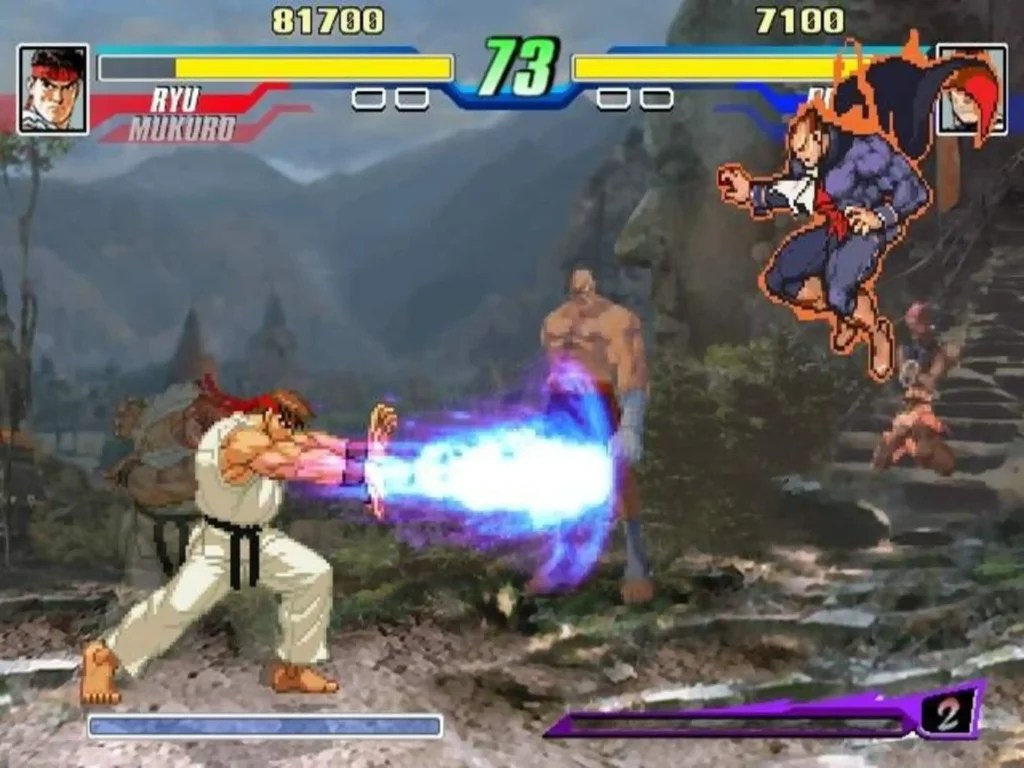
Capcom Fighting Evolution is the gaming equivalent of a greatest-hits mixtape that skips halfway through every track. Released in arcades in 2004 and hustled onto PlayStation 2 and Xbox the same year, it promised the dream crossover Street Fighter die-hards had scribbled in school notebooks for a decade: Ryu versus Demitri, Chun-Li versus Leo, Zangief versus a giant mummy. On paper it’s fan-service nirvana. In practice it’s a rushed, lopsided package that feels like it left Capcom’s oven half-baked. Twenty years later, the game is best remembered as a cautionary tale about what happens when ambition collides with a deadline. Yet, paradoxically, it’s also the only place you can legally pit 2D sprites from five different hardware generations against each other without resorting to emulated mugen chaos. That alone makes it worth dissecting.
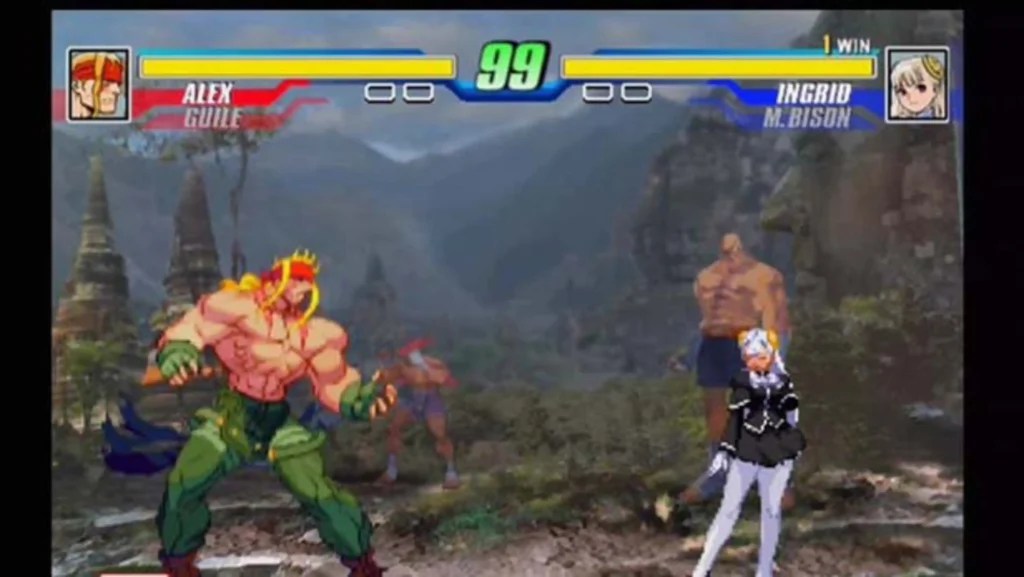
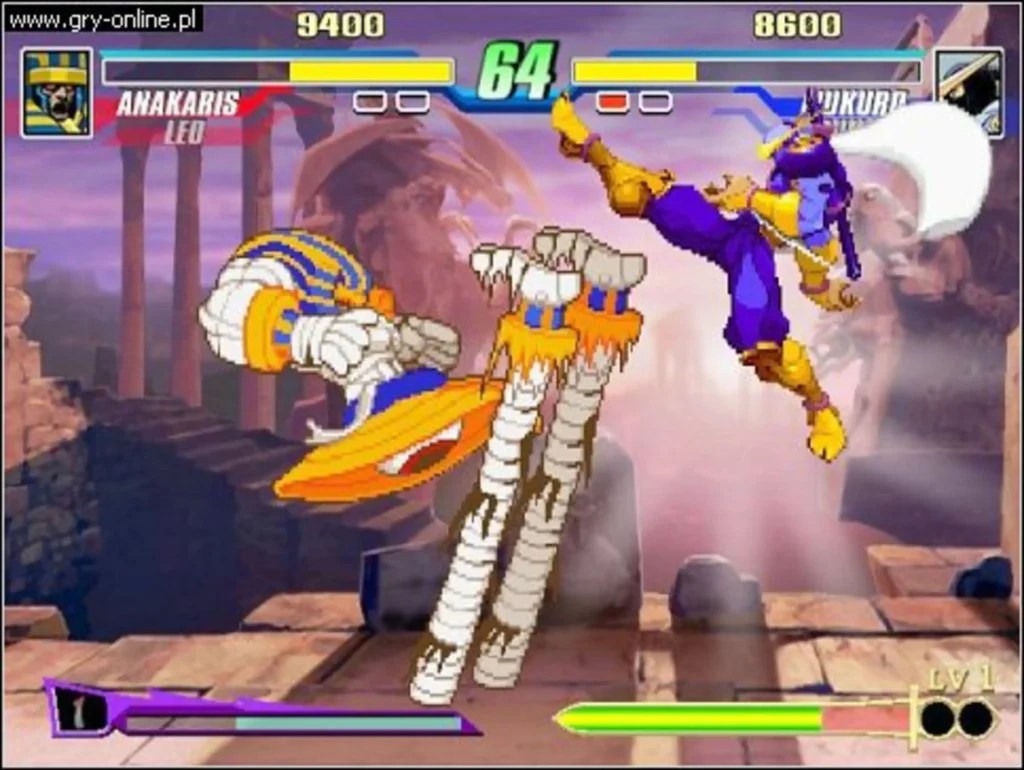
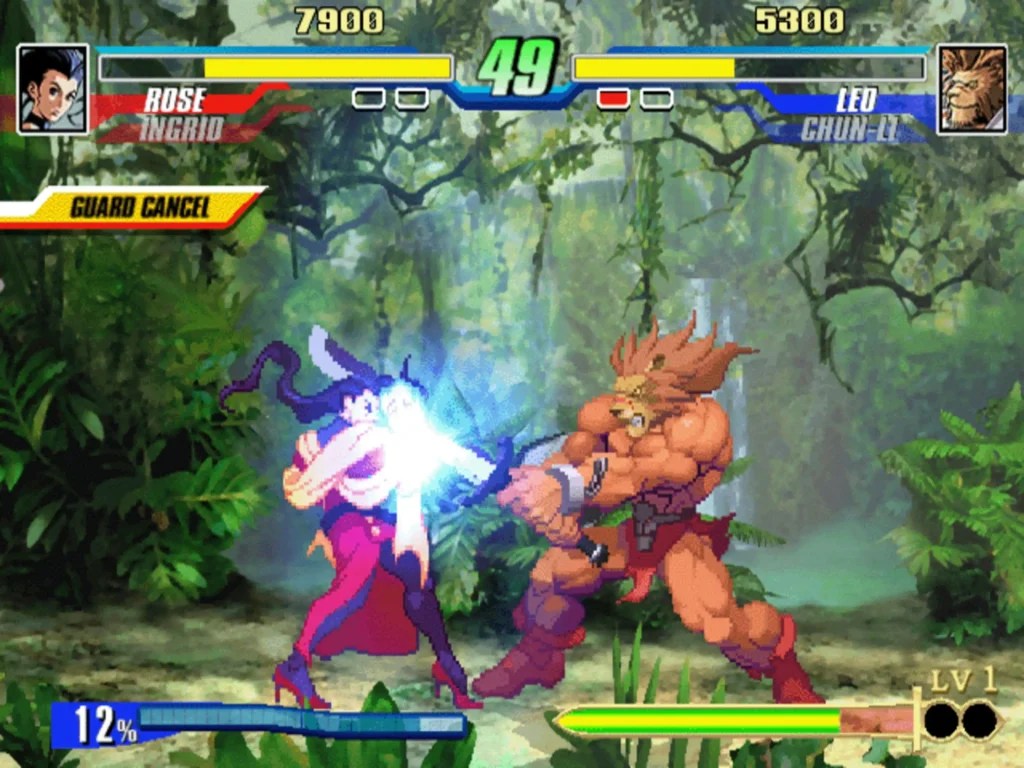
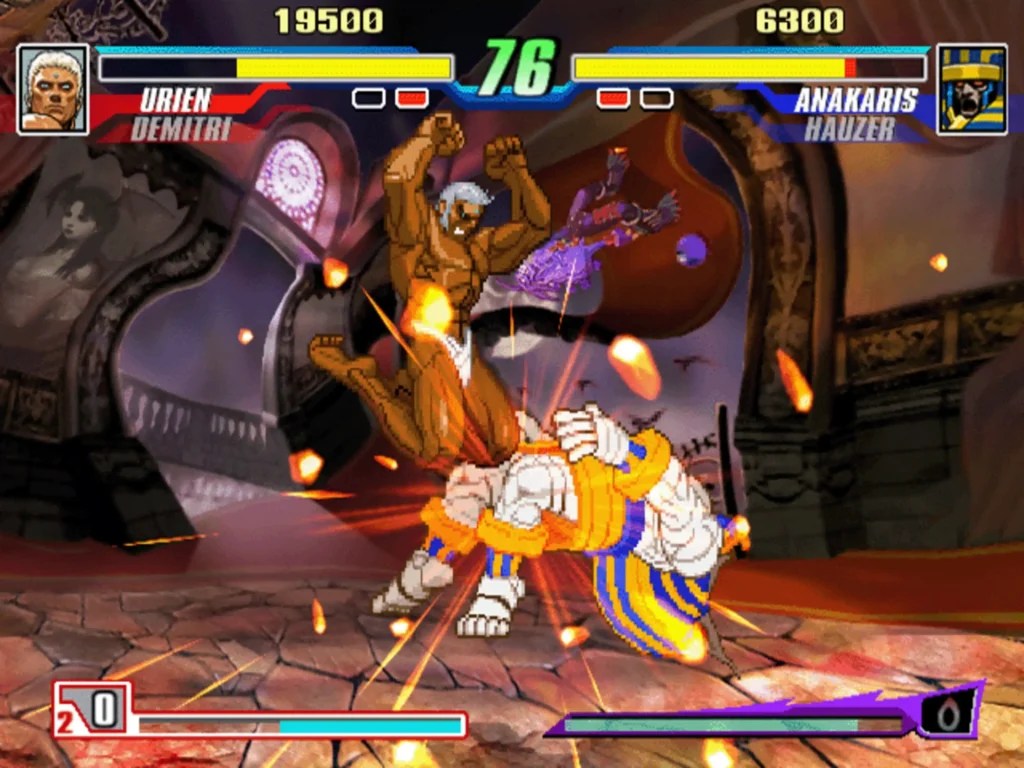
The elevator pitch is irresistible. Capcom plucks 20 characters from four franchises—Street Fighter II, Street Fighter Alpha, Darkstalkers, Red Earth (War-Zard in Japan) and the never-before-ported CPS-III gem Red Earth—and lets them keep the exact mechanics of their parent games. Ryu can Alpha-counter and air-block; Demitri still has Darkstalkers’ chain-combo magic; Red Earth’s Leo plays with the massive hit-stop and guard-meter of a game that never needed to worry about human balance patches. Two-on-two tag battles last one round, with a mid-match character swap that can either blow the opponent’s strategy wide open or leave you helplessly watching a half-life Guile eat a full-juggle from Jedah. The concept is so daringly asymmetric that modern fighters like Dragon Ball FighterZ and Street Fighter 6 borrow its “preserve the source game” philosophy, albeit with far more polish.
But the first red flag appears the moment you open the character-select screen: only four Red Earth characters, four Darkstalkers, and a grand total of nine Street Fighter representatives, three of whom are shoto variants. No Cody, no Guy, no Donovan, no Lord Raptor—just the safest mascot picks. Worse, every series is locked to its own backgrounds and music, so you’ll never see a Darkstalkers stage with a Street Fighter soundtrack or vice versa. The presentation screams “budget project” louder than Sakura’s recycled Alpha sprites.
Gameplay: beautiful chaos or broken mess?
If you walk in expecting modern frame-data symmetry, you’ll recoil. Health values are wildly uneven (Zangief 1,200, Felicia 900), jump arcs are incompatible, and damage-scaling is nonexistent. A Red Earth super can erase 70 % of a life bar in one flashy swipe. The result is a meta that stratifies within hours: top-tier is Red Earth (Leo, Hauzer), high-tier is Darkstalkers (Jedah, Demitri), mid-tier is Alpha (Rose, Guy), and bottom-tier is Street Fighter II (Zangief, Guile). Competitive players discovered infinites within weeks—Guy can wall-bounce juggle forever in the corner, Leo’s guard-crush loops are inescapable—and the console versions never saw a balance patch. Online play on Xbox was shuttered in 2010, so your only versus option today is local couch sessions or hunting down the Japanese PS2 release that works with a PS3 LAN tunnel.
And yet, when four skilled players who understand the asymmetries face off, the game crackles with a volatility you simply don’t get from more balanced modern fare. A single mistake can cost the entire round, but so can a gutsy raw super read. It’s the fighting-game equivalent of high-stakes poker: you’re not always playing the character, you’re playing the system knowledge. That tension can be intoxicating, especially in a two-on-two setup where you can tag in your better matchup after a soft knockdown. If you ever wondered what Marvel vs. Capcom might feel like with only two characters and no assists, this is the closest official analog.
Graphics: sprite museum or asset flip?
Capcom touted “arcade-perfect” sprites, but many were literally lifted from 1995 ROMs and upscaled without re-touching. Chun-Li’s thighs are pixelated slabs; Demitri’s win portrait still has the same 1994 dithering. The new super backdrops—psychedelic kanji, swirling bats—are gorgeous hand-drawn flourishes that remind you what Capcom’s 2D art team could do with a budget, but they only underscore how little of the roster received similar love. Backgrounds are static except for minor parallax, and the UI is a generic gray gradient that looks like a placeholder that accidentally shipped. On a CRT the game glows; on a 4K OLED the sprites look like postage stamps. The Xbox version runs at 720p in menus but drops to 480i in-match, a quirk that forces modern upscalers to hiccup.
Story and single-player content: what story?
There’s no arcade ladder narrative, no intro cinematic beyond a 30-second splash screen, and no character endings. Beat the game and you’re rewarded with a single still image and a paragraph of text that may or may not reference the character’s origin game. Red Earth fans hoping for new lore finally discover that Leo is “the lion-hearted king” and Hauzer is “a tyrant resurrected.” That’s it. The PS2 port adds a bare-bones survival mode and a color-edit option, but the Xbox version omits even those crumbs. If you’re here for single-player substance, you’ll exhaust it in 45 minutes.
Sound and music: a remix that never happened
Each franchise keeps its original soundtrack, so the audio whiplashes from SFII’s crunchy synth guitar to Darkstalkers’ gothic opera to Red Earth’s orchestral bombast. The quality is crisp, but there are no new arrangements, no hidden tracks, no dynamic mixing. Sound effects are sourced straight from the arcade ROMs, meaning some attacks sound like 16-bit kazoons against 24-bit supers. Voice clips are universally Japanese only; the Western versions removed English quips to save ROM space, a decision that still baffles collectors.
Performance and ports: pick your poison
The arcade hardware (Namco System 246) is essentially a souped-up PS2, so the home conversions are frame-accurate. Load times on PS2 average four seconds between matches; Xbox trims that to two. Both versions support 480p component output, but only the Xbox release offers 16:9 anamorphic widescreen, stretching the sprites rather than adding horizontal pixel data. The PS2 version suffers from occasional sprite flicker when four supers overlap; Xbox drops frames instead, so tournament players prefer PS2 for consistency. Neither port offers training mode, button config is buried in a hidden menu, and there’s no unlockable roster. The only collectible is a gallery of 20 promotional images that unlock one per hour of playtime—an insulting drip-feed even by 2004 standards.
Replay value: nostalgia tax
Once you’ve seen every super animation, the only reason to return is local competition. The roster is too small for rotation variety, and the lack of a training mode means you’ll lab combos in versus with a second pad taped to “record.” That said, the game has become a cult side-tournament staple at retro expos precisely because of its brokenness; watching two pros navigate the chaos is like witnessing a controlled demolition. If your friend group thrives on janky discovery, you’ll squeeze a dozen hilarious evenings out of it. Solo players will shelf it after a weekend.
Pricing and availability in 2024
Because Capcom never re-released it digitally, physical copies are the only legal route. Expect $40–$60 for a complete PS2 or Xbox disc on eBay, more if you want the obscure European Xbox variant with green spine art. The arcade board is a collector’s white whale, often listed above $800. There is no PC port, no modern-console reissue, no inclusion in the Capcom Fighting Collection. Emulation via MAME runs flawlessly, but you’ll need to source the parent ROM and CHD yourself. For purists, Japanese copies are cheaper and language-agnostic since all text is already in English.
Verdict: should you buy it?
Capcom Fighting Evolution is a museum piece, not a main-stage fighter. It’s invaluable as a historical curiosity—the moment Capcom acknowledged its sprite legacy before pivoting to 3D with Street Fighter IV—but as a game it’s an unbalanced, content-starved relic. If you’re a fighting-game archaeologist who loves dissecting broken systems, you’ll find a weekend of hilarious, busted brilliance. Everyone else should spend the same $50 on Capcom Fighting Collection or wait for the inevitable Marvel vs. Capcom 2 remaster. Play it for the novelty, then put it back on the shelf next to your copy of Street Fighter: The Movie: The Game. Some dreams are better left as dreams—unless you’re willing to weather the nightmare of Hauzer unblockables for the bragging rights of saying you survived Capcom’s most lopsided crossover.
Review Score
5/10
Art
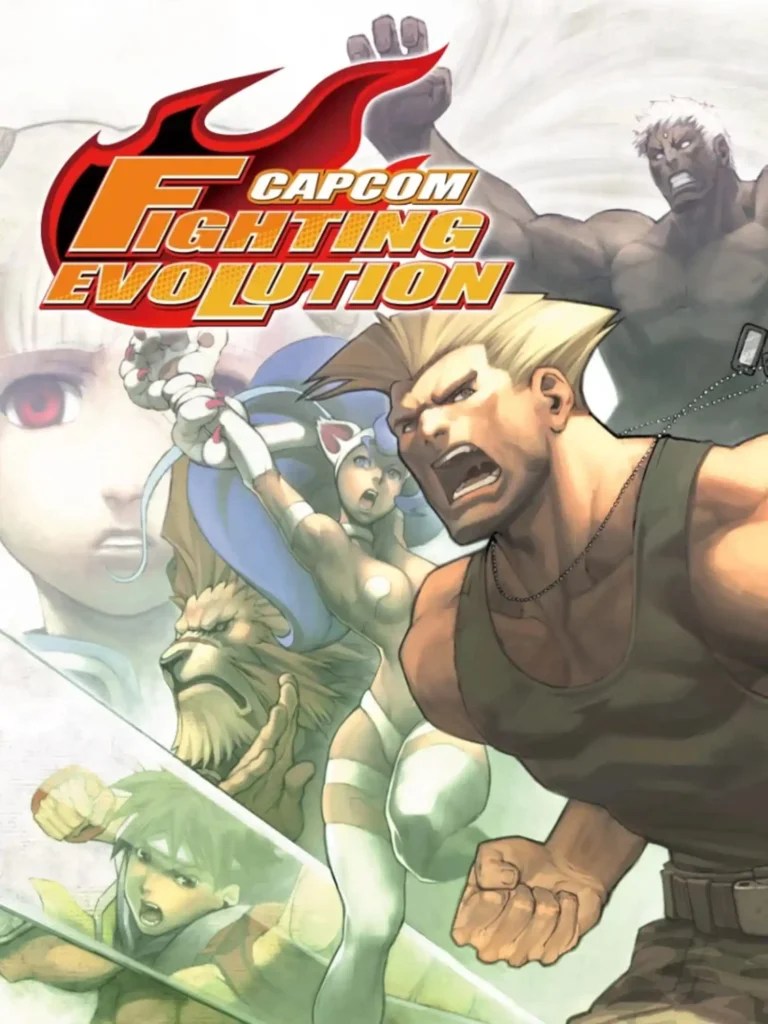
Cover Art
Screenshots