
Summary
- Release Year: 2018
- Genres: Indie, Simulator
- Platforms: Linux, PC (Microsoft Windows)
- Developers: SolGames/Blagovest Penev
- Publishers: SolGames/Blagovest Penev
Signal Simulator
PC (reviewed), also on Steam Deck via Proton
Developer: Blagovest Petrov
Publisher: The same one-man studio
MSRP: $19.99 (leaves Early Access at v1.0 as of March 2024)
The elevator pitch is deliciously simple: you’re the night-shift operator of a cluster of radio dishes in the middle of nowhere, hunting for alien chatter while keeping the power on, the rotors greased, and your sanity intact. Think “Papers, Please meets SETI with a dash of Firewatch” and you’re in the right hemisphere, but that comparison only carries you to the front gate. Once you’re inside, Signal Simulator is a hardcore, systems-driven sandbox that cares more about volts and azimuth angles than cinematic monologues. If you’ve ever caught yourself calibrating a satellite dish in the rain and thought “this could be a game,” congratulations—your extremely specific dream now has a 1.0 build and a twenty-dollar price tag.
The core loop
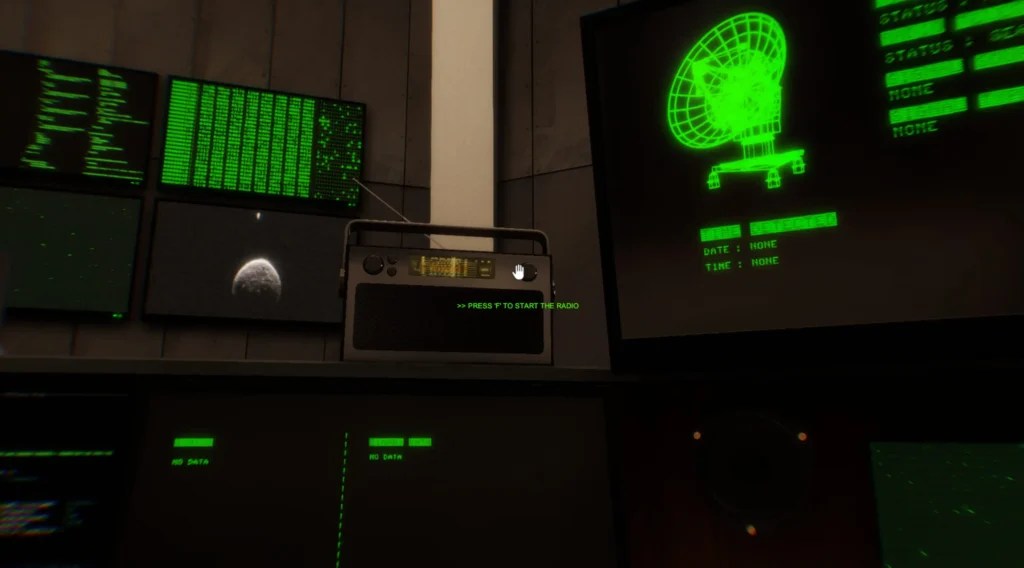
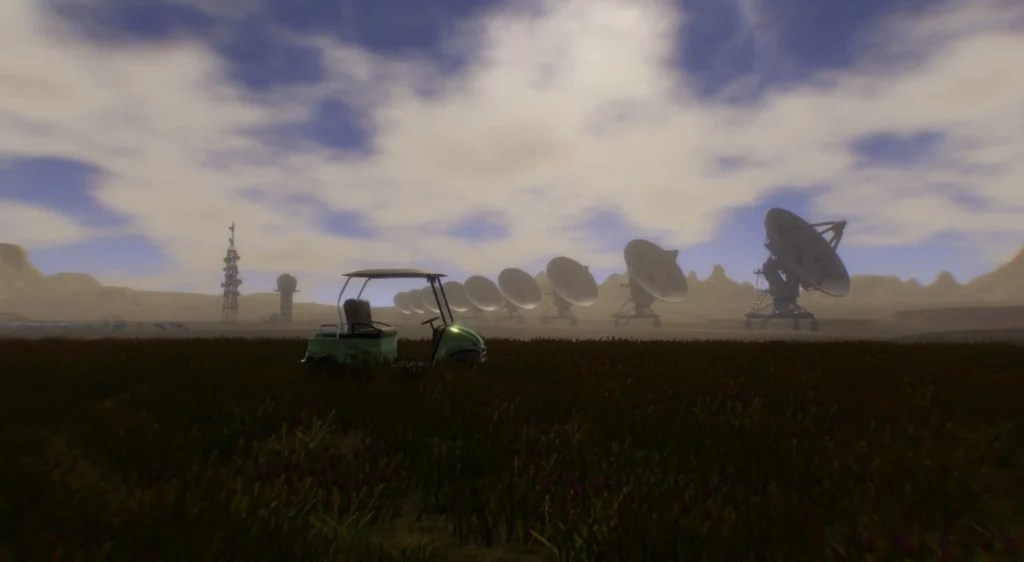
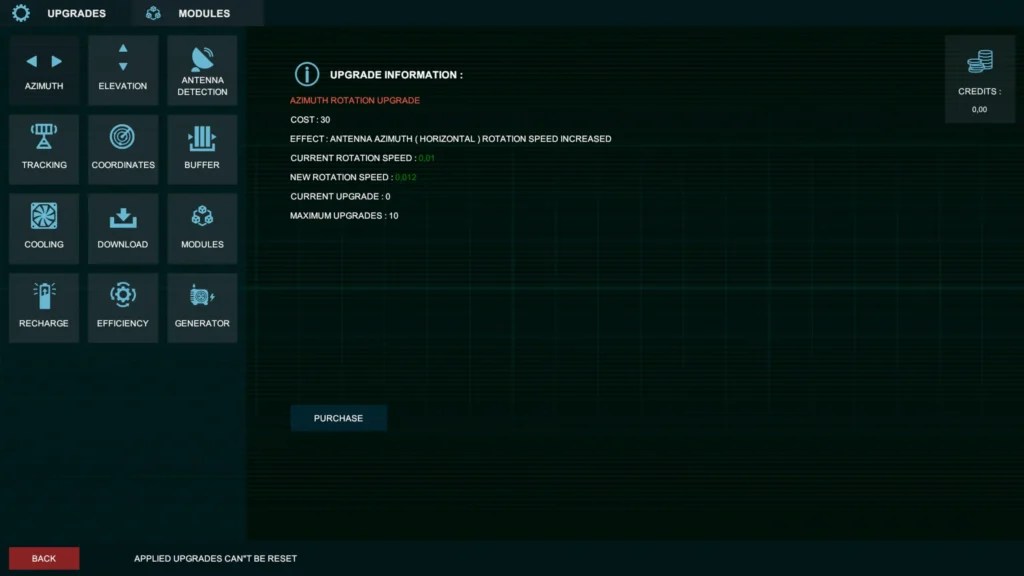
Every shift starts in the cramped control trailer. Check the schedule: maybe 30 minutes of good dark-sky time before the sun blasts the antennas with noise. Spin the power dial, boot the server rack, and pray the breaker doesn’t pop. Outside, three fully simulated 34-meter dishes groan to life; each can be slewed manually or commanded from the PC. Your job is to aim them at exoplanet candidates, start a recording, and squint at a waterfall display looking for anything that isn’t cosmic background. Find a weird pulse? Tag it, run an algorithm to clean the data, then email it to the research institute for reputation points. Rack up enough rep and you’ll unlock bigger budgets, better hardware, and—crucially—insurance against the next thunderstorm that fries your LNAs.
That’s the 30-second version. In practice you’ll spend ten minutes real time just coaxing a finicky rotor to within 0.01 degrees because the wind keeps slapping the dish around. Meanwhile the generator’s sipping the last of the diesel, clouds are rolling in, and the only 24-hour fuel station is a $600 round-trip. Signal Simulator never explicitly tells you what to prioritize; it just quietly tracks how many exabytes of data you’ve lost to brownouts and laughs.
Systems, not checklists
Most “simulator” games hand you a glossy UI and a progress bar. Here every switch, fuse, and coax jumper is physically modeled. Want to swap a burnt amplifier? Walk to storage, unbolt the panel, slide the module out, trudge across the gravel, climb the service ladder, and reverse the process while the clock keeps ticking. There’s no abstracted inventory teleportation. Miss a gasket and humidity will creep into the waveguide, adding noise to the next scan. Over-torque a bolt and you’ll shear it off, forcing an expensive order and three in-game days of downtime. It’s the difference between playing a theme-park ride and actually maintaining a 50-year-old observatory that was never meant to be run by one person.
The upside is genuine mastery. After a dozen hours I could glance at a spectrogram and tell you whether the spike was a GSM intrusion or the real deal. I learned to park the dishes at 45° elevation before a storm so wind loading wouldn’t snap the elevation gear. I began to relish the quiet click of a perfect mesh when the servo loop locks on target. None of that is tutorialized; the game trusts you to read the (excellent) PDF manual or fail spectacularly. If that sounds like homework, it absolutely is—but the payoff is the same dopamine hit EVE Online veterans get when a spreadsheet saves a billion ISK.
Story through environment
There’s no voiced protagonist or branching narrative, but the world isn’t silent. Emails trickle in from a doctoral student who’s convinced she’s found a pattern. Your funding agency sends passive-aggressive reminders about “performance metrics.” A rusted pickup truck appears one morning with no note; the key is tucked above the sun visor. And then there are the signals themselves—synthetic audio files you can export and inspect in Audacity if you’re that kind of nerd. String together enough fragments and you’ll uncover a genuinely creepy hard-sci-fi thread that I won’t spoil, except to say it retroactively justifies every sleepless 3 a.m. you spent coaxing a dish through a hailstorm.
Graphics & atmosphere
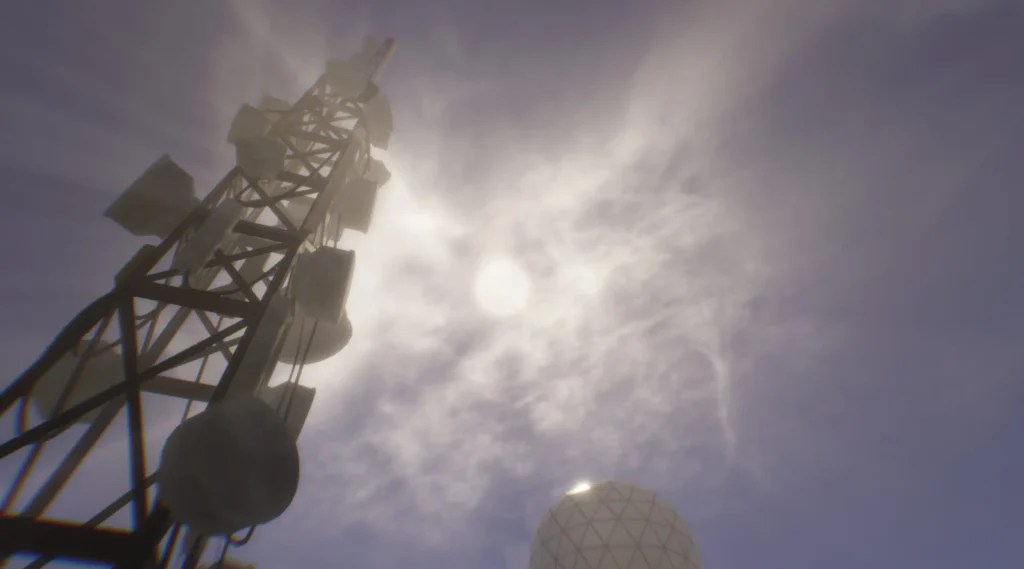
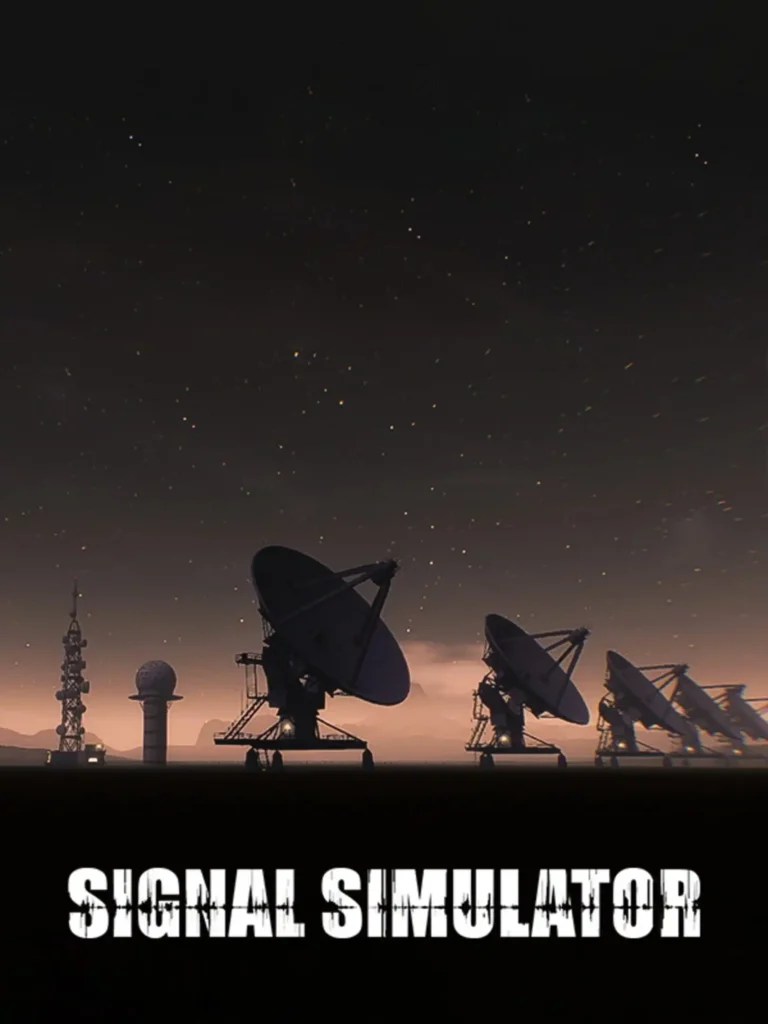
Unreal Engine 4 pushes shockingly crisp starfields and believable metalwork. The dishes sway under gusts of wind with a weight that makes my inner engineer relax; you can watch the azimuth encoder tick in real time as the mount fights inertia. Night is properly dark—no blue Hollywood tint—so when the Milky Way unfurls overhead you’ll reach for the screenshot key. Weather effects are top-tier: rain beads on the control-trailer windows, lightning strobes across the array, and snow accumulation actually changes traction so your character trudges instead of sprints. Yes, it’s an indie asset flip in places (the vending-machine model is straight out of every UE4 starter pack), but the stuff you stare at for 90 % of the game—the antennas—look authentically weather-beaten.
Performance & stability
On a Ryzen 5 5600X / RTX 3060 rig the game held 90-110 fps at 1440p with no stutters. The save system is rock solid; I lost power twice during a storm and reloaded exactly where I left off. A Steam Deck OLED play-through averaged 50-55 fps on high settings, sipping 22 W—perfect for a long-haul flight or, fittingly, a sleepless night in a tent. The 1.0 patch fixed the memory leak that once ballooned past 12 GB after eight-hour sessions, so marathoners can finally relax.
Difficulty & learning curve
There are three presets: Tourist, Operator, and Engineer. Tourist lets you skip rotor alignment and guarantees calm weather; Engineer models every bolt and unleashes tornado season. Even on Operator the curve is brutal: my first save went bankrupt in six days because I forgot to pay the diesel invoice and the bank slapped on a 30 % penalty. The game is unapologetic about it; the manual literally says “RTFM.” But each failure teaches something concrete. Second run I bought a $20 desiccant pack that saved me a $3,000 waveguide swap. Third run I finished the “story” and still had cash reserves for the new 70-meter dish that acts as a post-game trophy.
Length & replay value
A focused sprint to the final signal can be done in 12-15 hours if you min-max budgets and get lucky with weather. Completing the full signal catalogue, upgrading every antenna, and unlocking the secret ending took me 42 hours. After that, Engineer mode plus community mods (the SDK ships with the game) can keep you busy indefinitely. One mod adds a gamma-ray burst detector; another imports real TLEs so you can track Starlink trains for cash. For a $20 title that’s already more sandbox than most $60 games manage, the value proposition is absurd.
What’s missing
Multiplayer is local-only and janky—two players can walk around, but only one has cursor control. The physics engine still forgets momentum occasionally, so a dish can decide to yeet itself 180° in a single frame, shredding cables. And while the starfield is accurate, planetary positions are static; you can’t schedule around a Jupiter transit because the solar system is effectively paused. These are minor blemishes on an indie passion project, but they’re worth noting if you’re expecting the polish of a AAA space game.
Worth your money?
If you’re the kind of player who opens flight sims with a checklist and a cup of coffee, Signal Simulator is a no-brainer. It’s the closest most of us will get to running Arecibo without a PhD or a government contract. If, on the other hand, you need NPC banter or a quest marker every ten meters, the loneliness will crush you faster than a power outage at 02:45.
For everyone in between, the game offers something increasingly rare: the thrill of genuine competence. When you finally lock onto a repeating FRB, export the data, and watch your reputation tick up, you feel like you earned it—not because a cutscene told you so, but because you personally greased every bearing and balanced the budget that kept the lights on. In a year full of shiny but shallow open-universe titles, Signal Simulator is a stubborn, brilliant contraption that asks you to read the manual and then rewards you with the loneliest, most electrifying “hello” humanity has ever broadcast.
Review Score
6.5/10
Art
Cover Art
Screenshots