
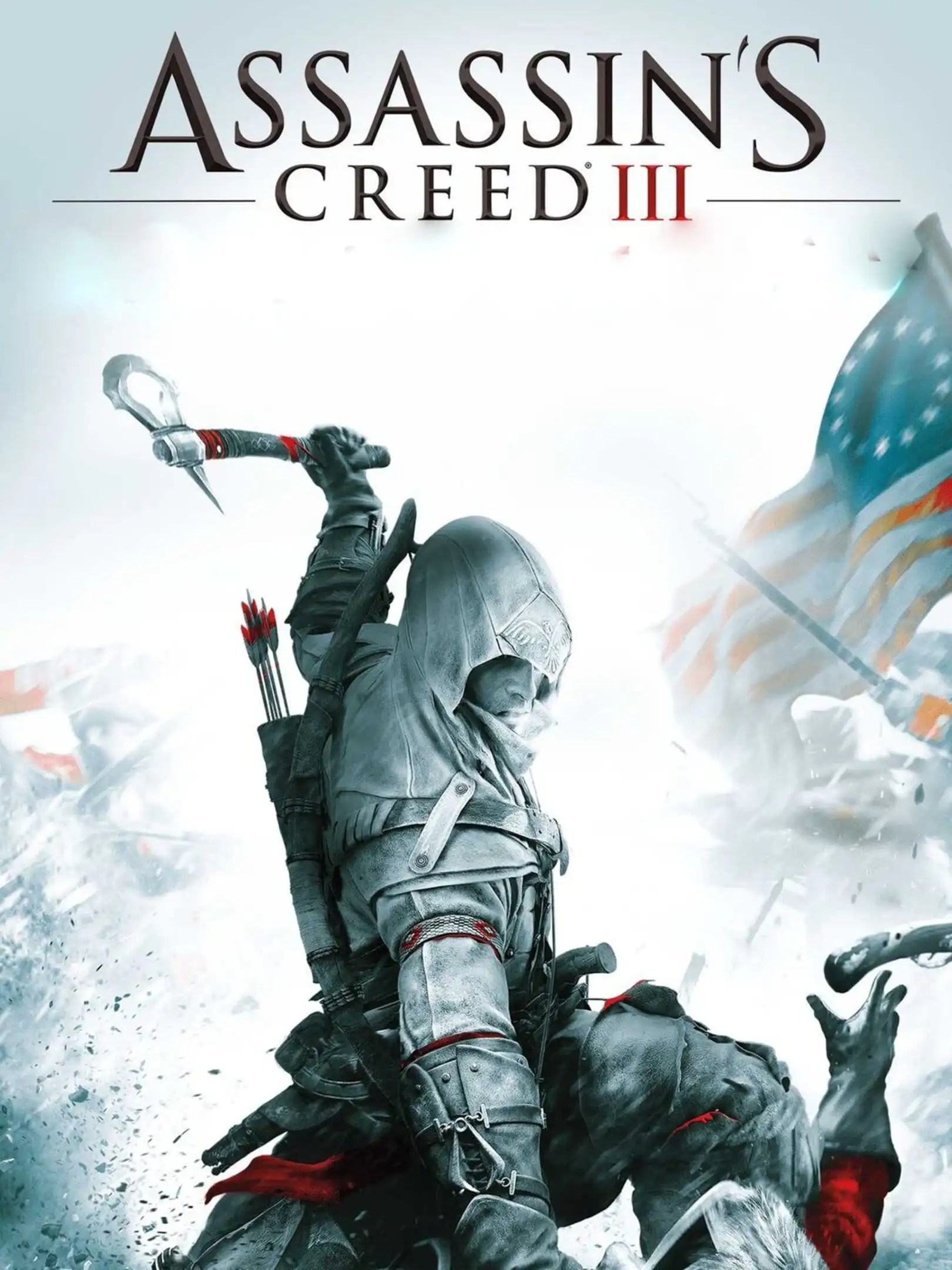
Summary
- Release Year: 2012
- Genres: Adventure
- Platforms: PlayStation 3
- Developers: Ubisoft Montreal
- Publishers: Ubisoft Entertainment
Assassin’s Creed III: Ultimate Edition – The Revolution You Half-Remember
Connor Kenway’s war for American independence has been on sale more times than the Boston Gazette, but the Ultimate Edition is Ubisoft’s final attempt to convince you that 2012’s most polarizing Assassin’s Creed deserves another shot. Released alongside the 2019 Remastered cycle, this is the base game, every scrap of DLC, a Season Pass’s worth of cosmetic tat, and a 4K HDR facelift—often slashed to under twenty bucks. Is it a patriotic steal or an aging monument better left to history class? Grab your tomahawk; we’re diving in.
A World on Fire – Setting & Story
AC3’s greatest triumph is still its stage. The American Revolution is rarely explored in open-world games, and Ubisoft’s Clancy-style “history is our playground” approach means you’ll rub shoulders with Washington, Franklin, Revere, and a young Lafayette. The recreation of 1770s Boston and New York is textbook Assassin’s Creed: dense, climbable, and stuffed with rooftop guards who really hate ledges. Frontier zones stretch for virtual miles, thick with wildlife, dynamic weather, and Redcoat patrols that can be ambushed from the treetops.
The narrative, however, remains the game’s most debated element. You spend the first four hours as Connor’s father, Haytham Kenway, a charming Templar who makes the Creed look like the bad guys. The bait-and-switch is brilliant—until you meet adult Connor and realize he’s a stoic, duty-bound hero who talks like a living Wikipedia page. The clash between Haytham’s swagger and Connor’s wooden earnestness is jarring, and the script never quite reconciles the Assassins’ fight for freedom with the messy realities of slavery, native displacement, and colonialism. What you get is a blockbuster history tour that asks big questions but answers few of them. It’s ambitious, occasionally profound, and often clumsy—very much a 2012 blockbuster in 2025 clothing.
Gameplay – The Good, the Bad, and the Clunky
Combat got a full overhaul for AC3, trading the counter-heavy dance of Ezio’s Italy for Arkham-style flow. Dual-wielding lets you chain tomahawk kills into musket blasts, and the new “human shield” mechanic finally makes those 18th-century firearms feel dangerous. On Normal difficulty you’ll feel like a one-man Continental Army; crank it to Hard and enemies hit like cannons, forcing you to parry, break ranks, and use tools. The Ultimate Edition’s higher-resolution textures mean blood sprays look gnarlier, but the animations are still locked to 30 fps on console, so the weighty feel is intact—some would say sluggish.
Stealth is where age shows most. Enemy cones of vision are inconsistent, bushes sometimes cloak you, sometimes don’t, and the parkour up/down system—revolutionary back then—loves to hurl Connor off a church spire you swear you told him to climb around. Missions are heavily scripted: fail to eavesdrop on a Redcoat at exactly 47 paces and it’s desync. If you loved the freedom of Odyssey or Valhalla, AC3 will feel like a straightjacket with a powdered wig.
Naval combat, on the other hand, is the surprise MVP. The Aquila sections are bite-sized open-sea battles with wind, wave, and cannonball physics that put many 2020s pirate games to shame. The Remaster bumps ocean spray to 4K and adds HDR shimmer; it’s still the best-looking water Ubisoft has ever shipped. Once you upgrade the hull and chase carronades, you’ll volunteer for every privateer contract just to hear the thunderous broadside bass rattle your subwoofer.
All the DLC – Worth the Bloat?
The Season Pass is where Ultimate justifies its existence. “The Tyranny of King Washington” is a three-part alternate-history fever dream where George crowns himself monarch and Connor gains animal-totem superpowers. Mechanically it’s DLC at its 2013 peak: new map zones, flashy spirit abilities, and a story that finally lets Connor emote. Narratively it’s fan-fic gold, revealing what-if guilt and power fantasies in a way the main plot never dared.
“The Hidden Secrets” pack bundles preorder missions like “Lost Mayan Ruins” and “Ghost of War.” They’re short—30 minutes each—but the Mayan mission gifts you a solid-gold sawtooth sword that’s hilariously overpowered for the remainder of the campaign. Multiplayer also gets a second wind with the “Battle Hardened” pack, though lobbies are ghost towns on PC. Console servers still see weekend activity if you queue during U.S. prime time.
The Remaster – A Handsome Face, Same Old Bones
Running on a revised AnvilNext engine, the Remaster delivers 4K textures, new lighting, and a higher poly count for characters. Faces—especially Desmond’s modern-day crew—no longer resemble wax mannequins. Environments pop: snow deforms under Connor’s boots, and summer meadows sway like an oil painting in motion. On PS5 and Series X you’ll hit 60 fps in performance mode; PC players can unlock the frame-rate but will still battle the odd stutter because the engine’s AI routines are tied to ancient code.
Audio, regrettably, is untouched. Muskets still sound like cap guns, and the stirring main theme (one of the best in the franchise) remains compressed. Subtitles and UI are now scalable, a godsend on 65-inch TVs, but don’t expect modern conveniences like seamless swimming or Valhalla’s raven scout. This is a 2012 game wearing a 4K tuxedo, not a ground-up remake.
Length & Replay Value – A Mammoth Campaign
Main story: 15-20 hours. Completionist run: 60+. The Ultimate Edition compresses everything into one launcher, so you can roll credits on the base game, hop straight into Washington, then mop up collectibles. Because mission design is so scripted, replay value hinges on whether you enjoy perfect-sync challenges: finish a fort assault without taking damage, air-assassinate two grenadiers, etc. Newcomers will get their money’s worth; veterans may bail after one nostalgic tour.
Performance & Technical Quirks
PC: Needs 8 GB RAM minimum; 6 GB VRAM for 4K/30 on High. DLSS or FSR mods exist but aren’t official. Expect occasional face-plant glitches when Connor decides a 2-foot fence is Mount Everest. Console: PS5 and Series X run the Remaster via back-compat; Series S hovers around 900p/60 fps. Load times are slashed on SSDs—fast-travel clocks in at 8 seconds versus 45 on PS3. All platforms still feature the iconic “chase Charles Lee” mission that drops to 20 fps on original hardware; the Remaster holds 30 but dips in crowded market scenes. Not ideal, but playable.
Value Proposition – The Twenty-Dollar Question
The Ultimate Edition routinely hits $19.99 on digital storefronts, undercutting a month of Game Pass. For that you get a 60-hour open-world game, a meaty alternate-history DLC, and a time-capsule of seventh-generation design. Even if you own AC3 on 360/PS3, the Remaster’s visual bump and all-in-one DLC convenience justify the upgrade—especially if you’ve skipped Unity, Syndicate, and want to marathon the entire franchise before Mirage. Physical collectors should note the Switch cartridge includes every code on-cart, making it the most future-proof version.
Worth Your Time in 2025?
Assassin’s Creed III: Ultimate Edition is the best way to play a deeply flawed, frequently brilliant entry. The setting remains unmatched, naval combat is still elite, and the Washington DLC swings for the fences. Yet clunky stealth, archaic mission design, and a stoic protagonist keep it firmly in “history buff curiosity” territory rather than “timeless classic.” If you measure Assassin’s Creed by parkour purity and Creed philosophy, Ezio’s trilogy still wins. If you crave Revolutionary-era parkour and want every side dish, Ultimate Edition is the buffet. At twenty bucks, it’s cheaper than a history textbook—and a hell of a lot more fun.
Review Score
7.5/10
Art
Cover Art

Screenshots


