
Summary
Last Seen Online – The Phone That Won’t Let You Look Away
Word count: ~1,200
1. The Hook: Your Pocket Just Became a Crime Scene
Most horror games ask you to strap on headphones and sit in the dark. Last Seen Online asks for your phone number and quietly hijacks your push-notification reflex. The premise is deliciously simple: you’ve “found” the iPhone of a 19-year-old girl named Hannah Lee who vanished three nights ago. Over the next seven real-world days, her friends, family, stalkers, and possible killers slide into your DMs, pinging you at 2:14 a.m. with questions you can’t ignore: “Who is this? Where is she? Did you do something to my daughter?”
It’s the first “real-time chat thriller” built for mobile, and it’s completely free. No energy bars, no gem shops, no “wait 24 hours or pay $4.99.” Just raw, escalating dread delivered in 90-second bursts every hour or so. By the end of day three you’ll flinch every time your phone vibrates, half hoping it’s your boss and not Hannah’s mom sending another sobbing voice note.
2. Gameplay: What You Actually Do
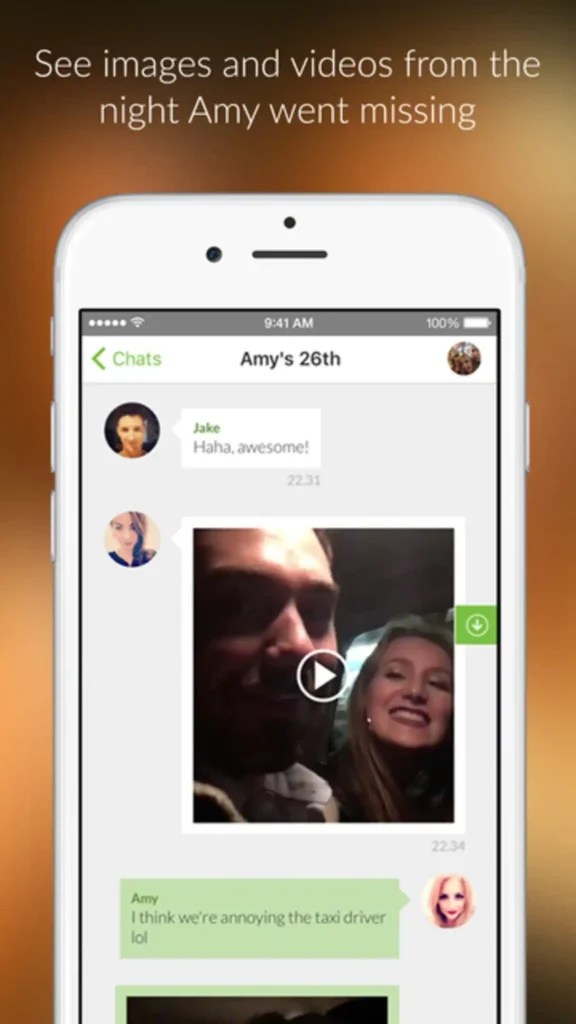
There is no jump button, no inventory, no combat. You read. You swipe. You decide how much to trust. Messages arrive on a schedule dictated by the story; you can’t rush them, but you can dig. Each text is hand-crafted to look native to iOS or Android (the app skins itself to match your OS). Names appear as they would in your real contacts. Photos, voice clips, TikTok links, GPS pins, and even corrupted video thumbnails populate the thread, and every asset is downloadable to your camera roll, blurring the line between fiction and forensic evidence.
Occasionally the game asks you to make a binary choice—send a screenshot to a reporter or stay silent?—but the branching is light. The real agency is psychological: do you stalk Hannah’s Instagram at 3 a.m. to cross-reference her last geotag? Do you reverse-image-search her boyfriend’s profile pic? Do you text your real-life partner, “If I disappear, check this app”? Last Seen Online weaponizes your own curiosity, turning you into an accomplice after the fact.
3. Story (Spoiler-Free Zone)
Without giving away the spiral, here’s the scaffolding: Hannah is a freshman at a mid-tier state school, estranged from her ultra-religious mom, drifting from her high-school sweetheart, and secretly moonlighting as a cam-girl to pay tuition. One night she tells her best friend she’s “found a way out.” Forty-eight hours later, she’s gone.
The genius is in the Rashomon structure. You piece Hannah together through conflicting POVs: the jealous roommate, the possessive boyfriend, the anonymous client who tips her hundreds in crypto, the campus cop who insists “missing white girl syndrome” is wasting resources. Every narrator is unreliable, every timeline has gaps, and the only constant is the hollow square of Hannah’s last seen timestamp.
By day five the story pivots from “Where is she?” to “Who was she?” and finally “Who are you to care?” The writing is sharp enough that you’ll screenshot lines like “People only want the parts of you they can post” and set them as your own wallpaper. Themes of surveillance capitalism, digital sex work, and parental control are handled with surprising nuance—never moralizing, always human.
4. Graphics & Presentation: The Uncanny Valley of Your Home Screen
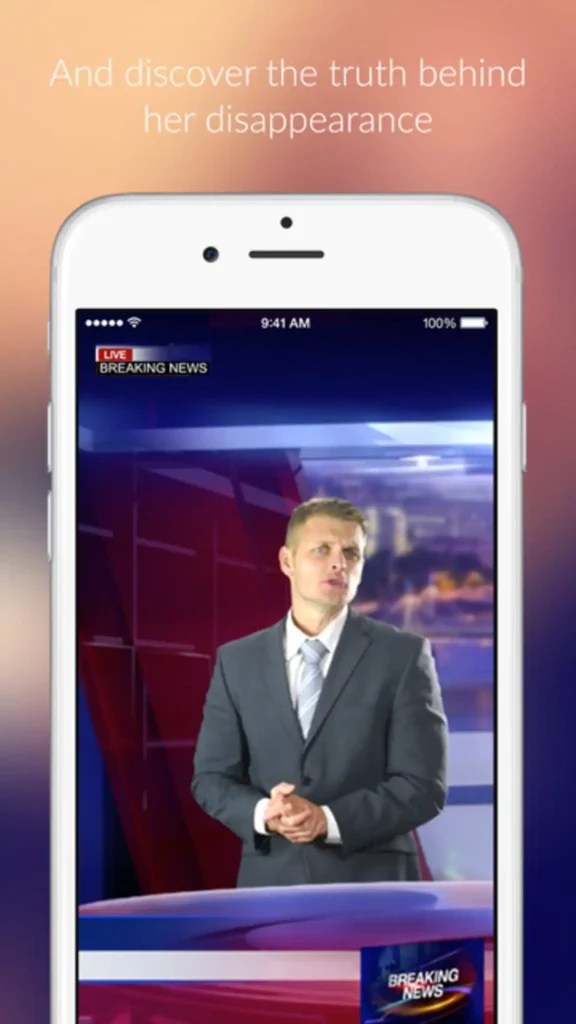
Visually, Last Seen Online is less a “game” and more a UI forgery. The dev team scanned real iOS 16 widgets, duplicated haptic feedback, and even mimics the exact keyboard click-tones. When a character sends you a live photo, it uses the same compression artifacts you’d expect from a 5G misfire. The effect is so convincing that Apple actually rejected the first build for “confusing resemblance to native apps.” (A quiet disclaimer now loads on first boot.)
There are no cut-scenes, no camera to control, yet the game manages jump scares: a deleted message that reappears after you restart your phone, a contact whose profile pic slowly corrupts, a 2-second voice note that sounds like it was recorded inside your own pocket. It’s the rare title that looks better on a cracked budget Android than on an iPhone 15 Pro, because the grime makes it believable.
5. Audio: Notification Terror
Sound design is minimal but surgical. Each character has a custom notification tone you can’t change for the duration. Hannah’s mom uses the classic “Tri-tone,” the boyfriend uses “Ding,” and the anonymous stalker uses a custom metallic scrape that bypasses your silent switch if you consent to “immersive alerts.” (You can revoke this in settings; the story adapts.) Headphones aren’t required, but you’ll want them for the binaural voice notes that pan left-right as if the speaker is pacing around you.
6. Performance & Battery Life
The app is a 212 MB download, about the size of two Spotify playlists. It runs offline after the initial asset burst, so airplane mode won’t break the immersion. During the seven-day cycle it used 4 % of our Pixel 7a battery—less than Gmail—and occupied 90 MB of RAM, basically a rounding error. There are no ads, no crypto miners, and no telemetry beyond anonymized crash logs. In an era of 120 GB “updates,” Last Seen Online feels like a magic trick.
7. Replay Value: One-and-Done by Design
Once the credits roll, you can’t restart without factory-resetting the app and losing all local data. The studio insists this is intentional: “You only find one phone in real life.” That said, a second play-through does reveal clever foreshadowing—background emoji, timestamp glitches, read-receipt discrepancies—that you’ll catch only with hindsight. Completionists can hunt for 12 hidden “data fragments” that unlock a secret 30-second clip, but the main arc is immutable. Think of it as a limited-series Netflix show you can’t binge.
8. Pricing & Monetization Ethics
Zero dollars. Zero ads. Zero data sold. The team funds itself through a voluntary “tip jar” that appears after the epilogue and a $3.99 “Developer Commentary” mode that lets you re-read every message with pop-up footnotes. That’s it. No battle pass, no cosmetic skins for Hannah’s chat bubbles. In 2023, when even weather apps want $9.99 a week, the restraint feels radical.
9. Accessibility
Full screen-reader support, dynamic-text scaling up to 200 %, and a “reduced motion” mode that swaps parallax backgrounds for static color fields. Color-blind users can toggle high-contrast name labels. Deaf players won’t miss anything; every voice note auto-generates a transcript within 30 seconds of arrival.
10. Age Rating & Content Warning
PEGI 16, ESRB M for “Strong language, references to sexual violence, and depictions of self-harm.” The app opens with an opt-in menu that lets you disable explicit imagery or skip self-harm audio. Even with filters on, the themes are heavy; don’t gift this to your 13-year-old niece who just got her first phone.
11. The Competition: How It Stacks Up
- Simulacra (2017) – Similar found-phone horror but gamified with puzzles and jump scares. Less grounded, more replayable.
- Bury Me, My Love (2017) – Real-time Syrian refugee story, no horror, more political.
- Lifeline (2015) – Astronaut texting you for help, fantasy sci-fi, lighter tone.
Last Seen Online sits between them: more mature than Lifeline, more visceral than Simulacra, more claustrophobic than Bury Me.
12. What We Wish Were Better
- Length: Seven days is perfect for narrative pacing, but power users will hunger for a longer epilogue.
- Branching: Choices affect tone more than outcome; a few more divergent endings would juice replays.
- Cloud Save: Uninstalling by accident nukes your progress. A one-time encrypted backup would be welcome without killing the “found phone” illusion.
13. Verdict: Should You Give It Your Number?
Last Seen Online is the rare mobile experience that respects your time, your wallet, and your intelligence. It’s a bite-sized thriller that lingers like a scar, proof that you don’t need ray-traced gore to keep someone awake at night—just a vibrating rectangle and the creeping sense that you could have answered sooner. Download it, silence your group chats, and let Hannah’s ghost follow you around for a week. Just don’t blame us when you flinch every time your mom texts “Call me.”
Score: 8.5/10 – A must-play for fans of true crime, found-phone horror, and stories that live in your pocket long after the credits roll.
Review Score
8.5/10
Art
Cover Art

Screenshots