Summary
- Release Year: 2018
- Genres: Indie, Simulator
- Platforms: PC (Microsoft Windows)
Entre-Deux – Caught Between Life, Death, and a Pregnancy Test
By [Author Name] | May 28, 2024 | 7.5/10
There’s a moment, maybe ten minutes into Entre-Deux, when you realize the zombie apocalypse is only the second-scariest thing on screen. The first is the two blue lines on a plastic pregnancy test clutched by Céleste, a 27-year-old baker’s daughter who has just watched the undead pour out of the woods and into her tiny French village. Developer Nicolas “Nico” Delmas made the entire game in Twine in under a week for a French game-jam, yet the 30-minute visual novella lingers far longer than most 30-hour blockbusters. If you’ve ever argued that games need photorealistic gore or branching skill trees to be “mature,” Entre-Deux is the quiet, cigarette-scented rebuttal that will haunt you for days.
Story – A Bite That Leaves No Marks
The plot is almost insultingly simple: zombies show up, the village evacuates, Céleste is left behind, heavily pregnant, with a rucksack of bread flour and a head full of what-ifs. Where bigger games would pivot to fetch quests or head-shots, Entre-Deux stays stubbornly intimate. Every choice is emotional, not tactical: Do you barricade the boulangerie or search for your grandmother’s meds? Do you tell the father of your child (currently MIA at the front) the truth over a crackling phone line, or spare him the panic? The writing is economical—no paragraph longer than four lines—but each sentence is scalpel-sharp. When Céleste describes kicking a zombie in the knee and feeling the kneecap “slide like a croissant in too much butter,” you’ll never look at a pastry the same way again.
There are six micro-endings, ranging from bittersweet to outright nihilistic, but the game never moralizes. Survival is not framed as victory; motherhood is not framed as sanctity. The undead are simply the pressure cooker that forces Céleste to decide who she wants to be when the world stops giving her instructions. In an industry addicted to power fantasies, playing a woman whose greatest “power” is choosing what to whisper to her unborn child feels almost transgressive.
Gameplay – Click, Breathe, Swallow
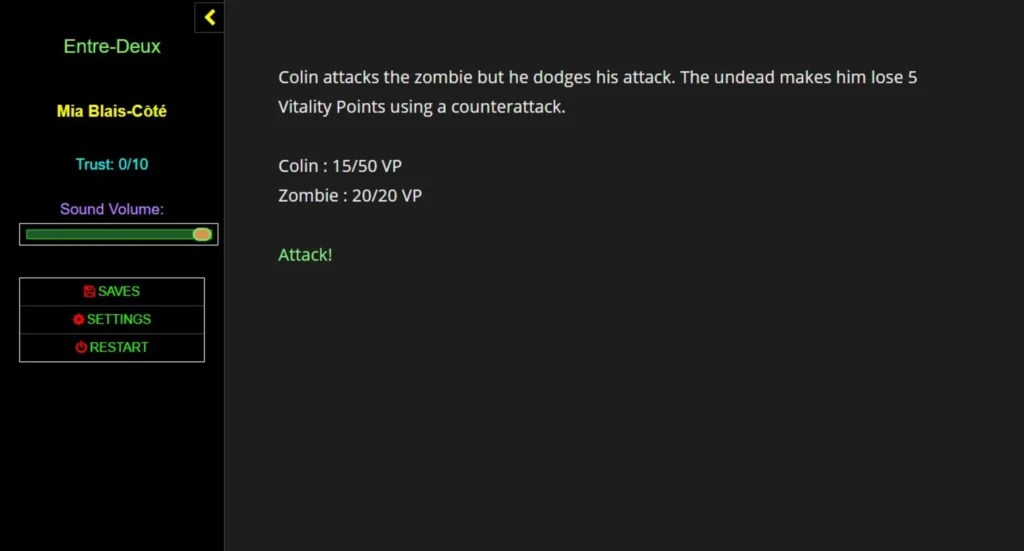
This is Twine at its most stripped-down: white text on black, a single hyperlink at the bottom of each passage. No inventory, no stats, no fade-in effects. And yet the pacing is masterful. Delmas uses negative space like a horror director; the two-sentence pause before a new page loads is the gaming equivalent of the violin screech before the monster appears. You click, you read, you inhale, you click again—until suddenly you realize you’ve been holding your breath for three pages.
Replay value is technically high (you can hit every ending in 90 minutes) but emotionally low—once you’ve seen Céleste’s darkest moment, you may not have the stomach to re-trigger it. The game keeps track of only one variable: whether you’ve chosen “hope” or “resignation” at key junctures. The ending you receive is less about math and more about tone: did you face the abyss with clenched fists or open palms?
Presentation – Black, White, and Red All Over
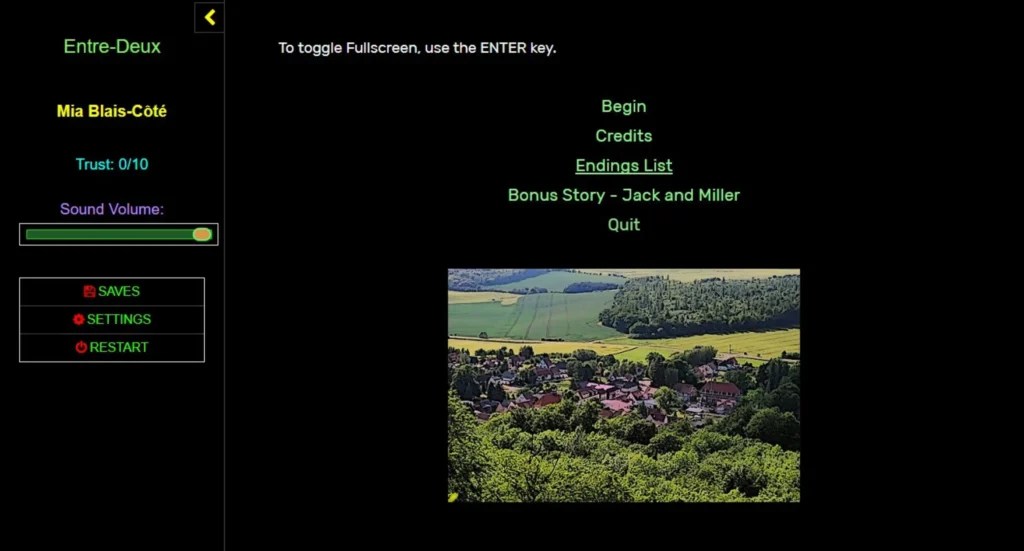
Graphics? Nope. Sound? Barely a crackle. Yet Entre-Deux conjures atmosphere out of pure typography. When Céleste’s contractions begin, the text starts to stutter, words repeating like a skipping record: “Breathe. Breathe. Breathe.” At the climax the screen fills with a single crimson hyperlink—PRESS—offering the only color in the entire story. It’s the cheapest trick in the book, and I jumped harder than I have in any AAA horror title this year.
The French version is the definitive one; the English fan-translation is serviceable but loses the Occitan regionalisms that give Céleste her voice. If you can read even restaurant-menu French, play it natively. The game is free on itch.io, so you have literally zero excuse not to practice your verb conjugations under zombie pressure.
Performance – Runs on a Potato, Breaks Your Heart
It’s Twine. It’ll run on your smart fridge. I played it on a phone browser while waiting for a bus, and the only crash was emotional.
Length & Pricing – The Best Kind of Free
Entre-Deux asks for 20-30 minutes of your life and charges nothing. The suggested tip on itch.io is three euros—roughly the price of an espresso in Céleste’s village. Pay it. You’ll spend more on the croissant you impulse-buy afterward to steady your nerves.
Themes – More Than Zombies
Beneath the undead skin, the game is a meditation on bodies: who controls them, what they owe to society, how quickly society reverts to superstition when the rules evaporate. Céleste’s pregnancy is not a miracle; it’s a liability. The villagers who once pinched her cheek now eye her belly like a ticking clock. One ending implies the baby might be stillborn; another suggests the child could be immune. Delmas refuses to confirm either, because the terror is not in the answer but in the question: does potential life still matter when the world is actively ending?
Comparisons – The Shortlist
If you loved the maternal dread of Papers, Please’s “do I feed my last coin to my sick son or the stranger?” or the quiet apocalypse of The Walking Dead’s maternity-ward scene, Entre-Deux is the minimalist cousin. It has the same ethical whiplash as This War of Mine but dispenses with base-building. Think of it as a single chapter of Kentucky Route Zero written by Cormac McCarthy in a particularly savage mood.
Caveats – Not for Everyone
The trigger list is long: miscarriage, stillbirth, suicide, implied sexual assault, and one extremely graphic description of a zombie cesarean that made a pregnant colleague quit halfway. The game doesn’t revel in gore, but it also doesn’t blink. If you’re looking for empowerment fantasy or cathartic revenge, keep walking. Entre-Deux is here to leave a scar, not a scab.
Verdict – Worth Your Time, Not Just Because It’s Free
Entre-Deux is the rare game that understands stakes are not measured in hit-points. By shrinking the apocalypse to the size of a bakery and a womb, it achieves the kind of emotional specificity most open-world epics never touch. You won’t emerge with new loot, but you will exit with a new vocabulary for fear—and for hope. In a season bloated with 80-dollar “live service” roadmaps, a 30-minute Twine story reminded me why I care about games in the first place: because they can make us feel something true, even when the pixels are only words.
Go play it. Tip the developer. And maybe hug your mom afterward—you’ll understand why when the credits roll.
Replay recommendation: Once, with the lights low, phone on airplane mode, and a pastry you can’t finish.
Review Score
7.5/10
Art
Cover Art
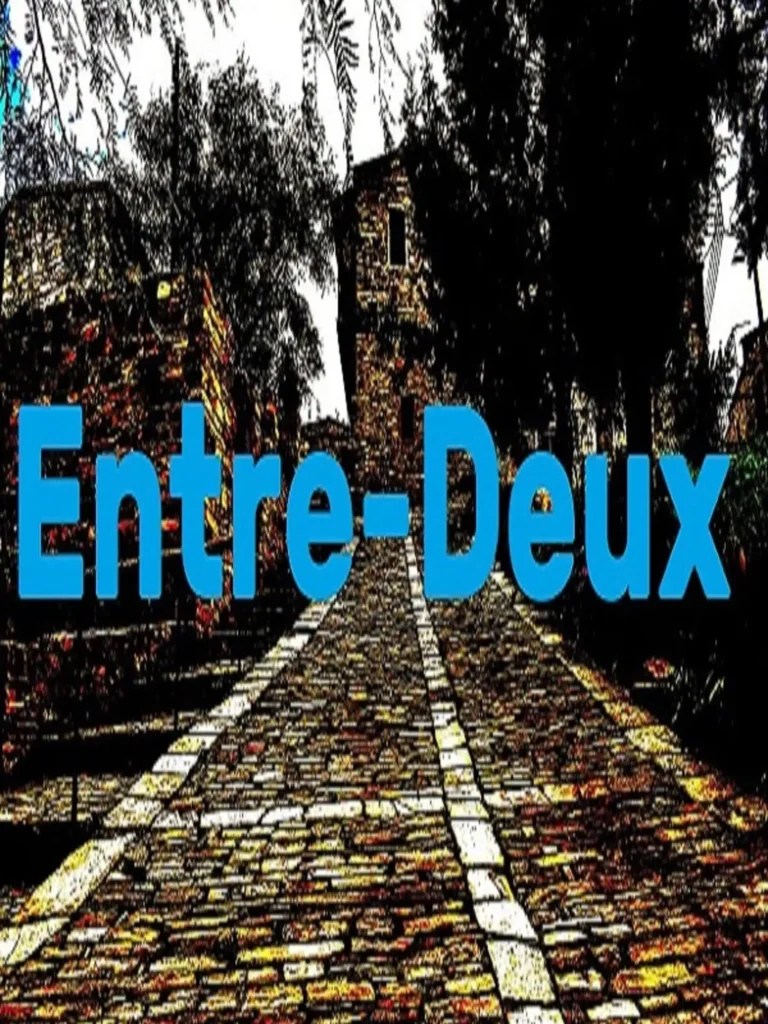
Screenshots