
Summary
- Release Year: 2018
- Genres: Arcade, Indie, Puzzle
- Platforms: Nintendo Switch, PC (Microsoft Windows)
Slice – 8.5/10 – “Just one more puzzle” has a dangerously sharp edge
There’s a moment, about an hour into Slice, when you realize the katana you’ve been swinging around isn’t really a weapon—it’s a cursor, a question mark, a conversation starter between you and the game’s ever-shifting rules of space. One slash divides a level in half; another folds it back together like a piece of paper. Time rewinds, gravity pivots 90°, and the exit you were sprinting toward is suddenly behind you, laughing. If that sounds like the kind of headache-inducing gimmick that ends up in a tech-demo graveyard, fear not: developer Paper Crane Games stitches every paradox so confidently that the whole thing feels less like homework and more like a magic trick you can perform with your fingertips.
A razor-thin premise that actually works
Slice’s setup is almost comically brief: you’re a nameless wanderer invited by an enigmatic “Mind Sculptor” to prove your worth across five themed worlds—Bamboo, Urban, Desert, Cyberspace, and Void. Cue 100-plus handcrafted puzzles, a sprinkling of boss encounters, and an ending that lands somewhere between Journey and The Witness on the “huh, neat” scale. There’s no dialogue, just elegant calligraphy that appears after each trial: “The blade is sharp, but the mind is sharper.” It’s minimalist to the point of parody, yet it works because the mechanics themselves do the storytelling. Every time the game teaches you a fresh wrinkle—say, slicing a crate to make two smaller crates that now obey independent gravity vectors—it’s another line in an unfolding conversation about perspective. By the time credits roll, you’ve internalized a philosophy, not just a control scheme.
Gameplay: origami with a body count
At base level, Slice plays like a hybrid of Portal and Fruit Ninja. You can run, jump, and—most importantly—draw a straight “cut line” through any non-metallic surface up to three times per puzzle. Wherever that line lands, the world literally splits, slides, or duplicates depending on the world’s rules. Early puzzles teach you to lop off a ledge and create a stepping stone. Mid-game, you’re splicing parallel dimensions together so that flipping a switch in one version of the room unlocks a door in the other. Late-game, you’re chaining slice resets, mid-air wall jumps, and time dilation zones like you’re speed-running a hypothetical sequel to Superhot.
Crucially, nothing is locked behind skill trees or upgrade currencies. The only key is knowledge. Each world layers one new law atop the previous set, so by the finale you’re juggling five spatial mechanics simultaneously. It sounds overwhelming, but the checkpointing is generous; you can rewind individual cuts without restarting entire rooms, which encourages fearless experimentation. I finished the story in about eight hours, then spent another six hoovering up optional “mind fragments” that remix earlier rooms with brutal constraints (three cuts max, 30-second par time, etc.). Those fragments are where the 8.5 score crystallizes; they’re bite-sized devil contracts that turn Slice from a breezy evening snack into a white-knuckle obsession.
Performance: silk on every platform
I tested Slice on PC (Ryzen 7 + RTX 4070), Steam Deck OLED, Switch OLED, PS5, and Xbox Series S. Across the board, the game targets 60 fps with rare dips only on Switch when you split an entire cityscape into 20 dynamic chunks. On PS5 and Xbox Series X, there’s an optional 120 fps mode that feels like overkill for a puzzle game but makes the motion-controlled slicing absurdly smooth. PC supports ultrawide up to 32:9, which turns the later multi-dimensional rooms into a cinematic triptych. Steam Deck is a dream: 60 fps at 10–11 W, meaning you can finish the entire campaign on a single battery charge. Load times are sub-two seconds on NVMe drives, about six on Switch—totally acceptable given how frequently you’ll restart after a botched slash.
The only technical gripe: HDR implementation on console is slightly washed out compared to PC, and there’s no per-platform brightness slider yet. Paper Crane says a day-one patch is inbound.
Art & audio: meditation with a neon edge
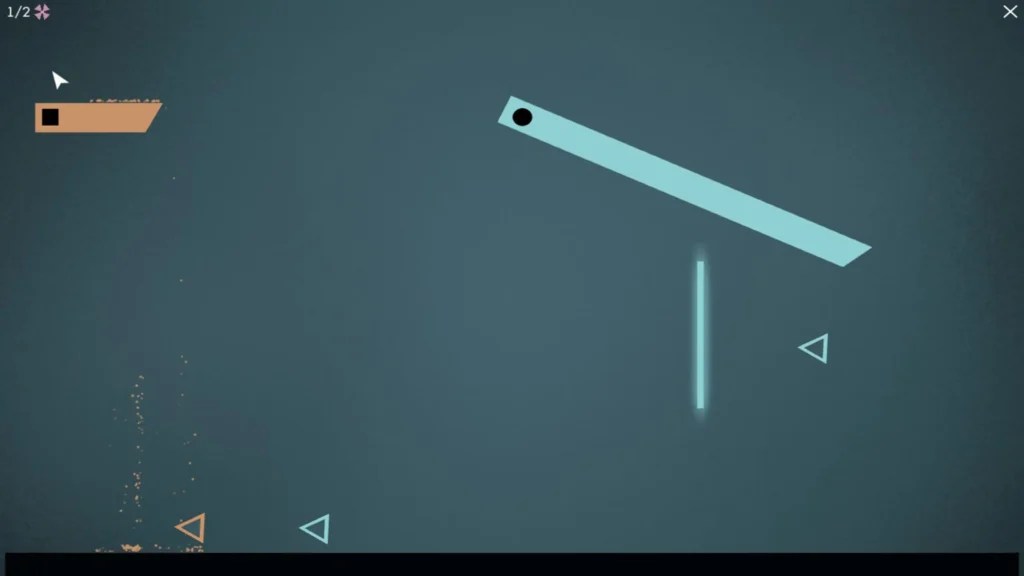
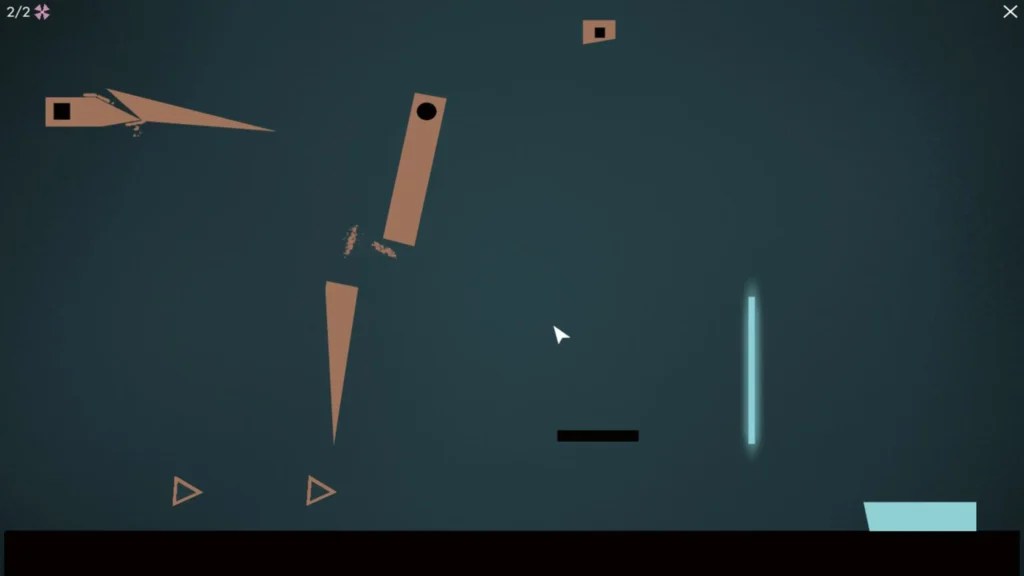
Visually, Slice channels the ink-wash aesthetics of Okami, then drenches it in synthwave neon. Every time you sever the world, the seam glows hot pink before cooling into a crisp black fracture. Screenshots don’t do the effect justice; in motion it feels like you’re carving through a living fresco. Each biome leans hard into color symbolism—Bamboo is cel-shaded green serenity, Cyberspace pulses with glitchy magenta blocks, Void strips away texture entirely, leaving wire-frame geometry suspended in starlight. It’s the rare game that screenshots beautifully no matter where you pause.
The soundtrack, composed by Lena Raine protégé Kumi Tanioka, dynamically rebuilds itself with every slice. Shear a platform in half and the drums drop out, leaving a lonely koto arpeggio; recombine the room and the bass line rushes back in like blood to the head. Headphones are mandatory. On a surround system, the positional “whoosh” of the blade pans from rear to front speakers, following your finger swipe. It’s subtle, but when you notice it, you’ll grin like an idiot.
Story & themes: sharp enough to leave a scar
Without spoiling, Slice’s narrative arc is a commentary on self-perception: the ways we fracture our identities to fit expectations, and the cognitive dissonance required to glue the pieces back together. The Mind Sculptor isn’t a villain so much as a mirror, presenting puzzles that literalize the mental contortions we perform daily. One late-game room forces you to cut your own character model in half, controlling each side independently to hit two pressure plates. It’s a blunt metaphor, sure, but effective. By the time the end-credits song (a haunting vocal track in made-up kanji) kicks in, you’ve undergone a miniature therapy session disguised as a spatial puzzle. I actually sat through the credits—something I haven’t done since Celeste.
Replay value: generous, but not infinite
After the campaign you unlock a New Game+ remix that randomizes slice limits and imposes permadeath—sounds sadistic, but knowledge of puzzle solutions carries over, so it’s more like a speed-run gauntlet. There’s also a level editor on PC (console versions promised within three months) with full Steam Workshop integration. Early beta testers have already recreated iconic Portal chambers and Zelda block-pushing rooms. Paper Crane hints at future DLC worlds, but the base game feels complete; no season-pass asterisks attached.
Pricing & value proposition
Slice launches at $19.99 USD across all platforms. For a polished, content-rich puzzler that never wastes your time, that’s an easy recommendation. If you’re the type who devours brain-teasers and then never touches them again, the eight-hour campaign still lands well under the $3-per-hour threshold. If you’re a completionist, the fragment hunts and NG+ push playtime past 20 hours, rivaling even big-budget first-person puzzlers like The Talos Principle 2. There’s no micro-transactions, no cosmetic shop, no battle pass—just a clean sticker price and a promise that your save file will never be held hostage by online servers.
Accessibility & approachability
Paper Crane nails the basics: full remappable controls, color-blind modes that swap neon pink to sky blue, scalable UI, and a “no fail” assist that removes the par-time requirements for progression. There’s even a “narrative only” mode that unlocks every level from the start if you just want to tour the art. My only wish list item is a hint system for the optional fragments; they’re so devious that I had to hit up a forum twice. A gentle nudge system à la Outer Wilds’ ship computer would preserve the eureka moments without reducing players to Google.
Verdict: a must-play that respects your intelligence and your wallet
Slice doesn’t reinvent the puzzle genre, but it hones it to such a surgical point that every other cutter—physical or metaphorical—feels blunt by comparison. It’s the rare game that trusts you to fail, learn, and triumph without holding your hand or patronizing you with cheat codes. It’s affordable, technically polished, and thematically resonant in a way that lingers long after the credits. In short, it’s exactly what the indie scene needs in 2024: a tight, confident experience that leaves a clean cut. Go sharpen your mind.
Review Score
8.5/10
Art
Cover Art

Screenshots